

The Hamilton Junior Naturalist Club went to Kawhia Harbour, on the wild west coast of New Zealand’s North Island, hoping for the usual haul. The club, known as JUNATS, takes children aged 10 to 18 out hunting for the small treasures of the Waikato coast, shells, crab fossils, the odd shark tooth, and the 2006 field trip, led by the club’s fossil expert Chris Templer, was working the shore platform at low tide when somebody spotted metal in the rock.
That was the consensus, anyway: a rusty old boat propeller, half-swallowed by the mudstone. Kawhia is a working harbour and the sea spits up plenty of iron. It was only on closer inspection that the shape resolved into something stranger, stained bones, large ones, articulated in the stone, and Templer understood that the children had found a fossil skeleton, a big one, lying in the tidal zone where every storm was grinding it away.
Rescuing the propeller
What followed was a genuine amateur rescue. The club sought the blessing of local iwi and returned with volunteers, hand tools and plaster, cutting the block of siltstone free and carrying the enormously heavy slab up the shore, where the exposed, tide-eroded portions were carefully cleaned. For years the specimen lived in the care of the club, a children’s nature society holding, though nobody yet knew it, the most complete skeleton of a giant fossil penguin yet found. In 2017 the club formally donated it to Waikato Museum in Hamilton, and the scientists moved in.
Researchers from Massey University and the Bruce Museum in Connecticut, led by doctoral student Simone Giovanardi, spent years on the analysis, 3D-scanning every bone and comparing the digital skeleton against penguin fossils from around the world. In September 2021, fifteen years after the field trip, they published the verdict in the Journal of Vertebrate Paleontology: the children’s propeller was a new species of giant penguin, and its name honored its most obvious feature. Kairuku waewaeroa, the second word Te reo Māori for “long legs.”
A penguin at eye level with a ten-year-old
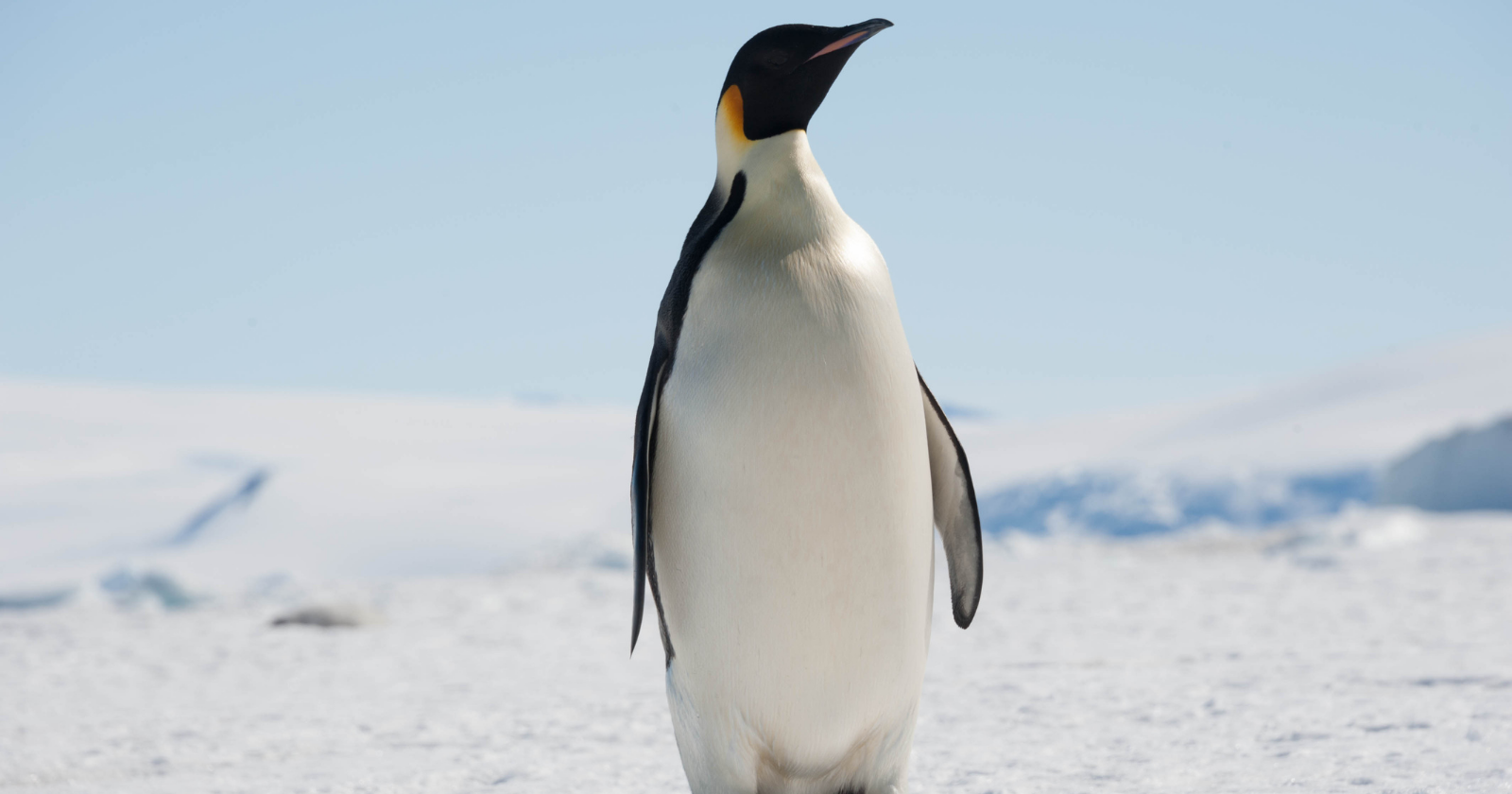
The numbers justify the “giant.” Standing on land, Kairuku waewaeroa reached about 1.4 metres tall, chest-high to an adult and eye to eye with the younger members of the club that found it, and considerably taller than an emperor penguin, the largest species alive today. It belonged to the Kairuku group of giants known from the South Island’s Otago region, slender, long-flippered, spear-beaked divers, but its namesake legs set it apart, adding height and, the researchers suggest, possibly changing how fast it swam or how deep it hunted.
The dating places it in the Oligocene epoch, between roughly 27 and 34.6 million years ago, and the location is its own small mind-bender. The fossil was found in the Waikato because, when the bird died, there was no Waikato to stand on; most of the region lay under the sea, part of the drowned continent of Zealandia, and the penguin sank into soft seafloor mud that would one day be lifted into farmland and harbour cliffs. The children were fossicking on what had been its hunting ground, several hundred metres of ocean, give or take, above where the ground now sits.
New Zealand is the world capital of such finds; penguins have a fossil record in Zealandia reaching back nearly to the dinosaurs, and the giants persisted there for tens of millions of years, probably because the drowned continent offered rich seas with few marine mammal competitors, before whales and seals radiated into the niche and the giant penguins dwindled away.
The club that keeps its receipt
The species description carries an unusually warm coda. The research team 3D-printed a replica of the skeleton for the junior naturalists, so the club that hauled the block off the beach keeps a copy of its own discovery, and club members past and present speak of the penguin as a shared inheritance. One longtime member, Taly Matthews, now with the Department of Conservation, put the fifteen-year arc simply: finding any fossil is exciting given how long the animal lay hidden, but a giant penguin is another level.
Dr Daniel Thomas of Massey, one of the paper’s authors, drew the moral the story begs for: the discovery, made by children out exploring their own coast, is a reminder of how much is still lying in plain sight, and of the value of pointing young people at the world and letting them rummage. The formal holotype of Kairuku waewaeroa now resides in a museum, permanently attached to the story of how it was found: misidentified as marine junk by a group of schoolchildren, rescued by their club, and named a decade and a half later as a bird that once flew, in the way penguins fly, through the water over everything they knew.