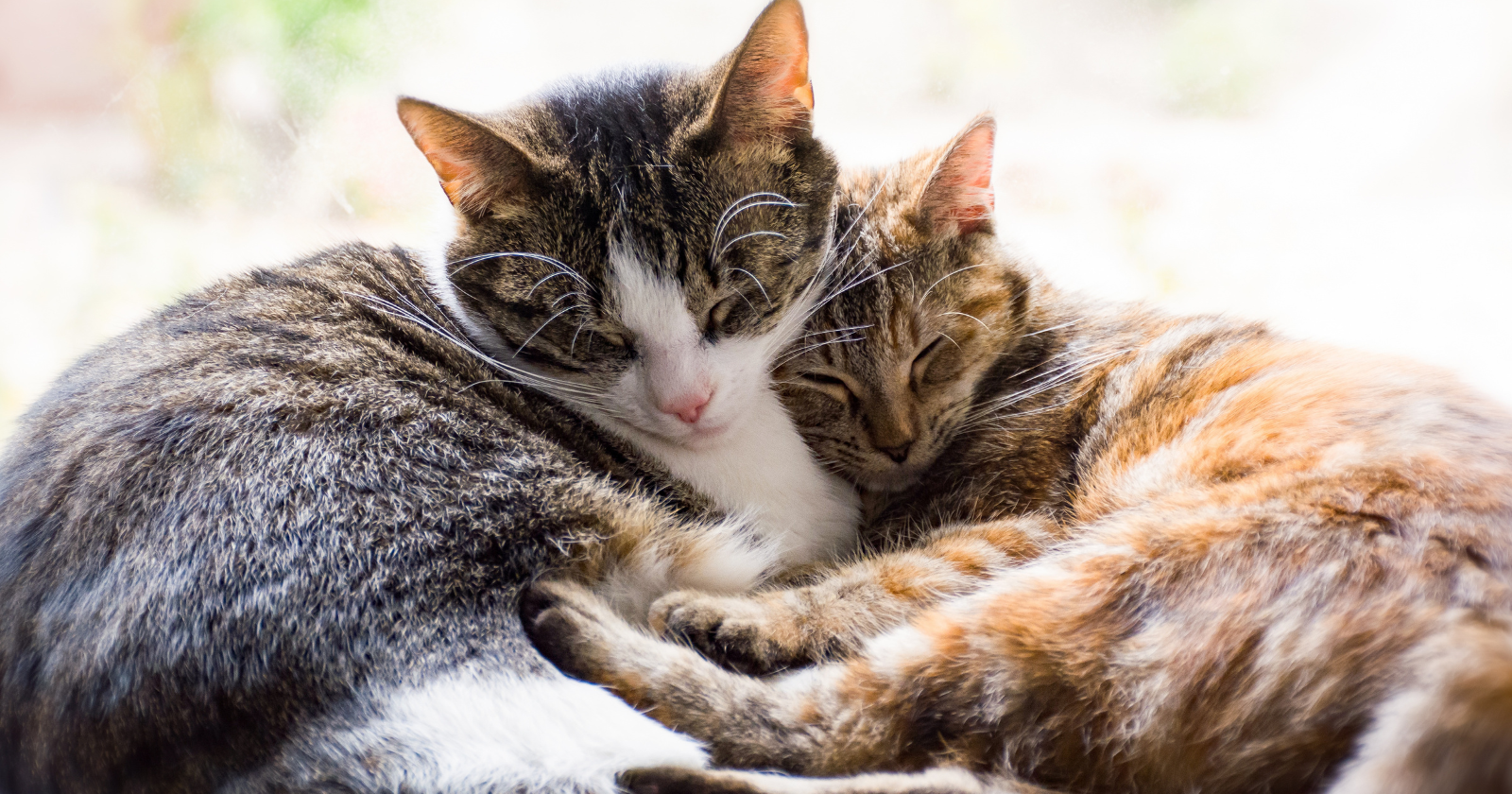
The cat has a reputation to maintain. Aloof, self-contained, attached to the house rather than its inhabitants, tolerating the other animals rather than caring for them. Of all the household’s members, the cat is the one we assume would take a death in stride.
Two psychologists at Oakland University in Michigan decided to check, and the cats did not cooperate with their reputation.
Asking the people who would know
Brittany Greene and Jennifer Vonk ran an online survey of 412 caregivers, each of whom currently lived with at least one cat and had recently lost another pet from the same household, covering 452 surviving cats in all. About two-thirds of the animals that died were cats; the rest were dogs. The owners answered detailed questions about the relationship between the two animals, their own bond with the pet that died, and exactly how the surviving cat behaved in the weeks and months afterward.
The pattern that emerged, published in Applied Animal Behaviour Science, looked strikingly like mourning. The surviving cats ate less, played less and slept less soundly at first, spent more time alone or hiding, sought more attention from their humans, vocalized more, and, most hauntingly, appeared to search for the animal that was gone, sniffing and lingering in the places their companion used to occupy.
The dog result
The detail that makes the study more than a curiosity is who the cats were mourning. When the researchers compared responses, the cats’ behavioral changes after losing a dog were comparable to those after losing another cat. The species of the missing companion barely mattered. What mattered was the relationship: cats that had lived longer with the deceased animal, and cats whose owners reported a friendlier bond between the two, showed the bigger changes in eating, sleeping and play. Whether the cat had actually witnessed the death made no measurable difference, and neither did the number of other pets in the home.
That relationship-over-species pattern echoes what has been found in dogs. A 2022 Italian study of dogs that lost a canine housemate reported the same suite of behaviors, and an earlier survey of dogs and cats in Australia and New Zealand found both species seeking out the dead companion’s favorite spots. Cats, descended from a largely solitary wild ancestor, were the species everyone expected to be the exception. On this evidence, they are not. As Greene and Vonk put it, the results fit the idea that cats may experience loss much as dogs do, despite evolving from a less social ancestor.
The projection problem
Now the caveat, which the authors treat as seriously as the finding. Every data point in this study passed through a grieving human first, and grieving humans are not neutral instruments.
The survey found that owners who reported the deepest grief of their own also reported the most grief-like behavior in their cats, particularly the quiet kinds: sleeping more, hiding, withdrawing. That could mean the most bonded households genuinely contain the saddest cats. It could equally mean that heartbroken people see their own sorrow reflected in an animal that is merely reacting to a changed routine, a phenomenon psychologists know well. There is also a third possibility that cat owners will recognize: the cat may be responding not to the absent animal but to the present human, whose behavior, schedule and emotional weather have all shifted.
Vonk herself has been candid about all three readings, and the paper calls for follow-up work with more objective measures, activity trackers, feeding records, cortisol, rather than memory and questionnaires. This is only the second study ever to examine feline responses to a companion’s death; the science of cat grief is roughly two papers old.
What to do with a mourning cat
For anyone living with this situation, the practical guidance from behaviorists is gentle and unglamorous. Keep routines steady, since the surviving cat’s world has already changed once. Let the cat find its own pace with food, but involve a vet if eating stops for more than a day or two, because appetite loss is genuinely dangerous in cats. Offer attention when the cat seeks it rather than forcing comfort on an animal that wants to hide. And resist rushing out for a replacement companion; a new pet imposed on a stressed cat tends to add stress, not relieve it.
Whatever is happening inside the cat, something real is happening. An animal we have spent centuries describing as indifferent responds to a housemate’s disappearance by eating less, searching the empty rooms, and asking its humans for more than usual. Science cannot yet say whether that is grief in the way we mean the word. The cats, characteristically, are not saying either.