

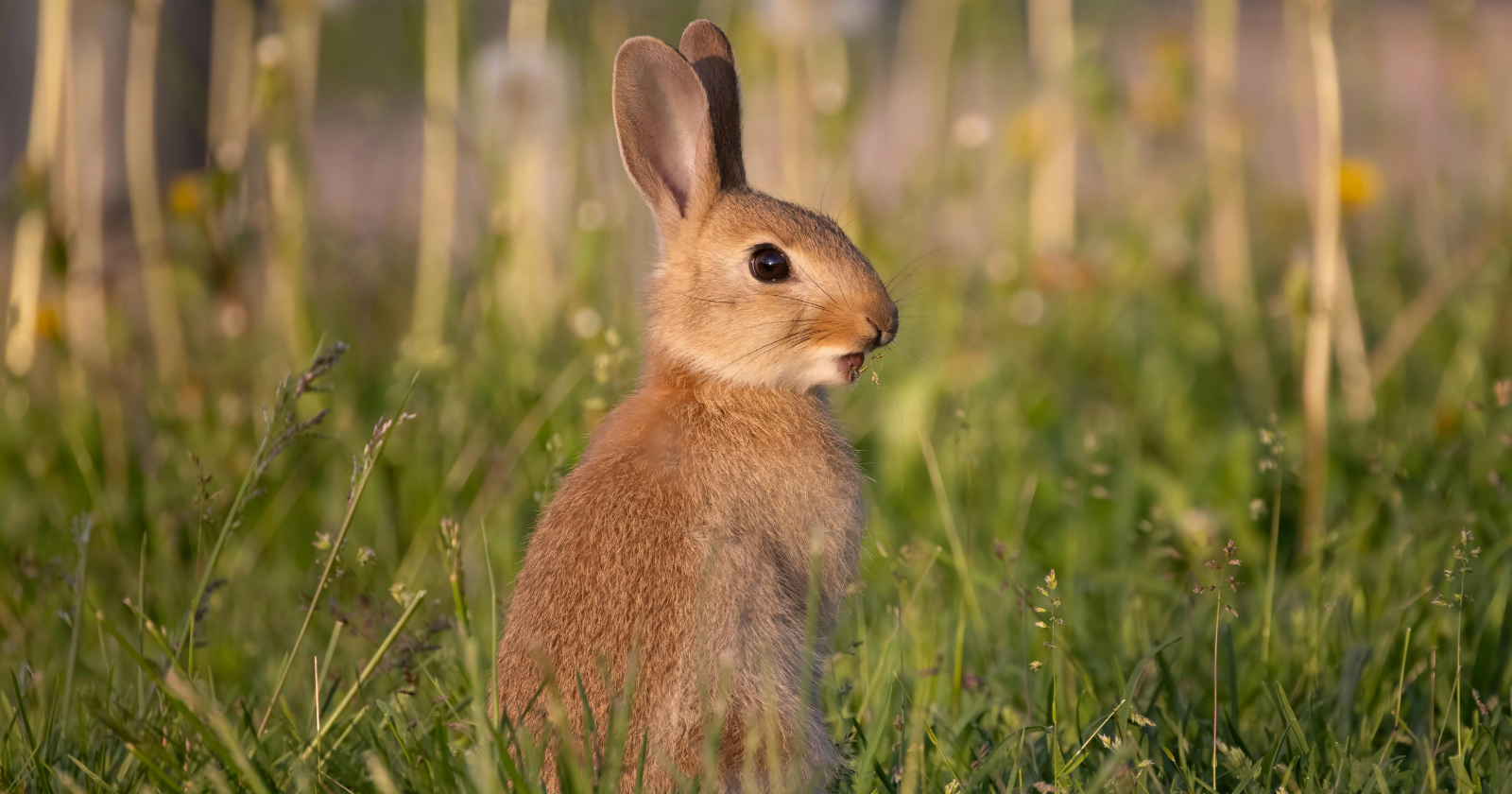
Thomas Austin was not careless, by the standards of his time. He was methodical. A wealthy English settler with a grand property called Barwon Park near Geelong, in Victoria, he missed one specific pleasure of home: shooting. In England a gentleman spent his weekends walking his land with a gun, and the land obliged by containing rabbits. Australia’s did not.
So in 1859 Austin wrote to his nephew in England and asked him to ship out some animals. The consignment that arrived on the clipper Lightning that Christmas included two dozen wild rabbits, and Austin released them on his estate with a sentiment that has been quoted ever since, essentially: a few rabbits could do little harm and might provide a touch of home, and some sport, for the weekends.
It ranks among the most spectacularly wrong predictions ever made about an animal.
The experiment nobody could stop
Treat what happened next as the experiment Austin unknowingly designed. Take a species that breeds from a few months old, gestates in a month, and can produce several litters a year. Place a small founding population, a couple of dozen animals, on a continent with mild winters, endless grass, and, thanks to a century of dingo control and a shortage of comparable predators, almost nothing efficient at killing it. Then wait.
The early readings looked like success. Within a few years Barwon Park had rabbits enough that Austin was hosting celebrated shooting parties; when Queen Victoria’s son Prince Alfred visited in 1867, the day’s sport was rabbit shooting on Austin’s land, and the guests killed hundreds without denting the supply. Austin had achieved exactly what he wanted. That was the last moment anyone could have called it a success.
The rabbits did not stay for the weekend. They spread out of the estate and kept going, and the speed remains a benchmark in invasion biology: the front advanced across Victoria, into New South Wales and South Australia, then Queensland and eventually clear across the arid interior to the west coast, an expansion commonly described as the fastest of any colonizing mammal anywhere on Earth. Within about 70 years of that Christmas release, rabbits occupied some two-thirds of the continent, and the population at its peak has been put at 10 billion.
What 24 rabbits become
The destruction was not dramatic; it was arithmetical. A rabbit is a small grazing machine, and billions of them constituted a second, invisible national herd competing with every sheep and cow in the country while paying no one. They stripped pasture, ringbarked seedlings, and grazed young plants down to the roots faster than regeneration could occur, converting grassland to bare soil that blew and washed away. Whole tree species stopped reproducing across their range because no seedling survived its first year. Native burrowing animals, including the bilby and the burrowing bettong, were pushed toward extinction as rabbits took their food and their ground.
Australia fought back with an escalation that reads like satire. Governments paid bounties; trappers took hundreds of millions of skins; and between 1901 and 1907 Western Australia built the famous rabbit-proof fence, more than 1,800 kilometers of it, the longest fence on Earth at the time, only to find rabbits already on the wrong side before it was finished.
The weapons that finally worked were diseases. In 1950, scientists released the myxoma virus, and myxomatosis tore through the population, killing on the order of 99 percent of infected animals at first and collapsing the plague from its billions to a fraction of that. Then evolution reasserted itself: resistant rabbits bred, the virus attenuated, and numbers climbed again, so in 1996 Australia deployed a second pathogen, rabbit haemorrhagic disease, and later fresher strains of it, in what has become a permanent arms race between a country and the descendants of one Christmas shipment.
The verdict of the DNA
For a long time a reasonable person could doubt that Austin deserved the whole blame, since rabbits had arrived with the First Fleet in 1788 and been released in small numbers many times without catastrophe. In 2022, geneticists settled it. A study in PNAS analyzed the genomes of rabbits from across Australia and traced the mainland invasion overwhelmingly to a single introduction in southern Victoria, timing and location matching Barwon Park, with the founders carrying wild-rabbit ancestry, unlike the tame domestic rabbits of earlier releases, which had lacked the wariness to survive and spread. Dozens of introductions failed quietly; the one designed by a man who specifically wanted wild, sporting rabbits succeeded beyond imagination. Austin had, in effect, selected his invaders for fitness.
That is the cold heart of the story. The catastrophe was not bad luck compounding a small mistake. It was one correct decision, from the hunter’s point of view, executed once, with 24 animals.
The bill, still running
Rabbits remain Australia’s most destructive introduced pest, blamed for more native species losses than any other invader and costing agriculture on the order of hundreds of millions of dollars every year, a century and a half after release. Barwon Park still stands, a bluestone mansion now run by the National Trust, and Austin’s rabbits still surround it in the sense that matters: every wild rabbit on the mainland is, genetically speaking, family. He wanted a touch of home and a bit of sport on the weekends. He got the most successful experiment in invasion history, and Australia is still funding the cleanup of a hunting trip planned in 1859.