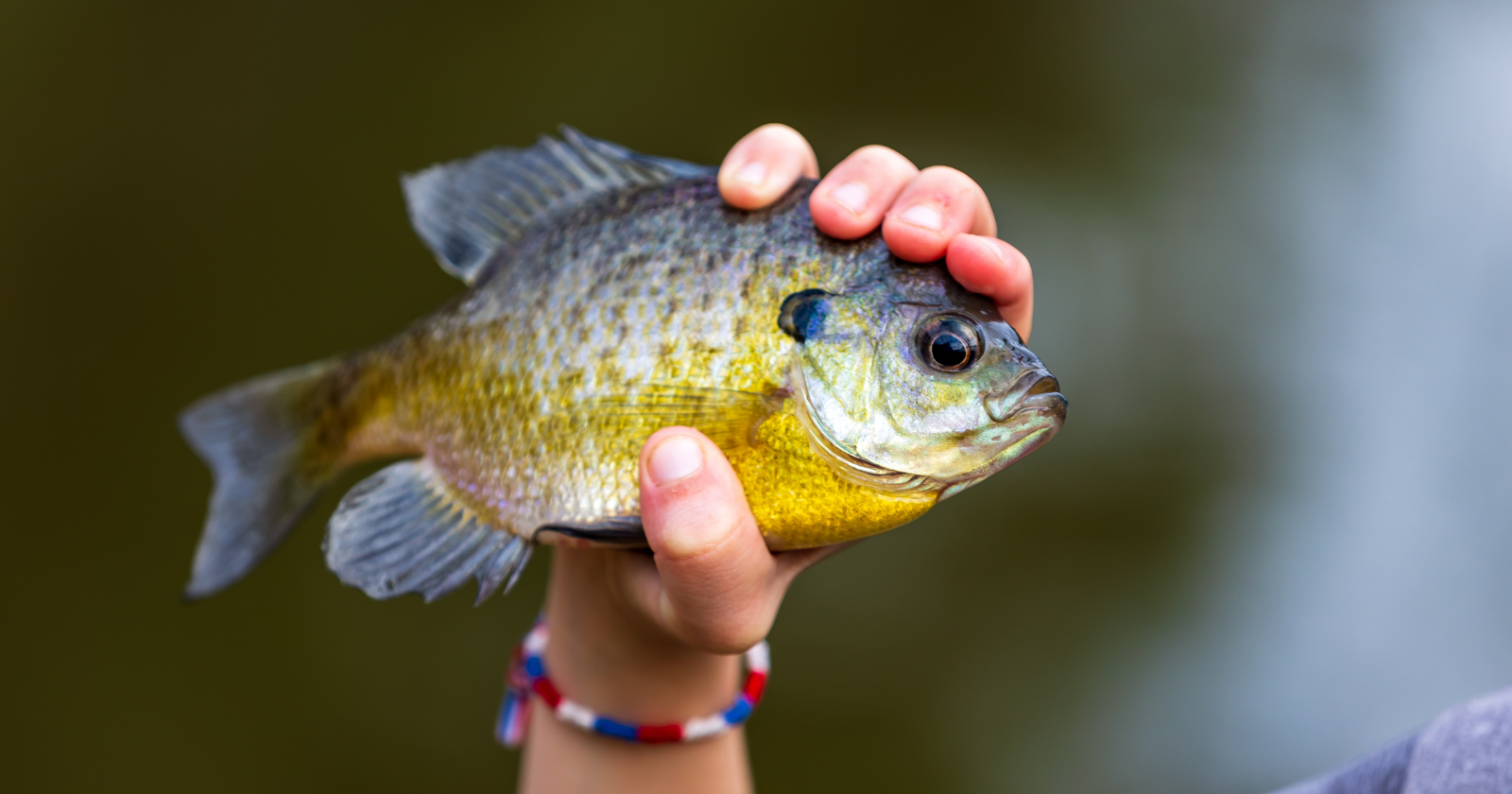
When Crown Prince Akihito of Japan toured the United States in the autumn of 1960, his stop in Chicago came with one personal request. The 26-year-old prince, a serious ichthyologist who would go on to publish peer-reviewed papers on goby fish, wanted to visit the Shedd Aquarium.
Mayor Richard J. Daley, an avid angler himself, met the prince on October 3 with a gift chosen to suit the guest: 18 live bluegill, the little native sunfish of the Midwest, future state fish of Illinois, pulled from Shedd stock. It was a warm gesture at a delicate moment, fifteen years after the war, a fish for a fish scientist, from one great lake city to a nation of them.
Fifteen of the bluegill survived the flight across the Pacific. As experiments go, the starting conditions could not have been more modest: fifteen small fish, one hopeful prince, and a plan.
The plan
Akihito did not release his gift into a pond. He handed the fish to Japan’s national Fisheries Agency with a purpose: breed them, study them, and see whether the American bluegill could become something useful for Japan, a hardy new food and game fish for a country still rebuilding its protein supply. The bluegill even acquired an affectionate nickname in his honor: the prince fish.
For years the plan proceeded exactly as designed. The agency’s brood stock multiplied, and in 1966 the first offspring were released into a lake near Ito City in Shizuoka Prefecture; a stone monument went up on the shore three years later to commemorate the successful introduction. More releases followed across Japan’s fresh waters. Nothing about the fish looked dangerous. As Katsuki Nakai, a scientist at the Lake Biwa Museum, later put it, Japan had no serious experience of invasive species then, and the bluegill, a placid pan fish, did not look fierce.
The bluegill’s actual talents took time to reveal. It eats almost anything, including the eggs and fry of other fish. It breeds early, often, and in colonies. And it tolerates the warm, murky, engineered shorelines that modern development creates, conditions that punish Japan’s native specialists. When bluegill reached Lake Biwa, the country’s largest and oldest lake, a body of water with fish found nowhere else on Earth, they found native competitors already reeling from another American import, the largemouth bass, and they took the lake.
Tens of millions of princes
By 2007 the bluegill population of Lake Biwa alone was estimated at some 25 million, and the species swarmed ponds, moats and rivers nationwide, every one of them descended from the Chicago fifteen. Genetics eventually confirmed the lineage beyond doubt: a team led by Kouichi Kawamura at Mie University compared dozens of Japanese populations against U.S. source stocks and traced the entire invasion to the 15 bluegills gifted to Akihito, matching their DNA to a stretch of the Mississippi near Guttenberg, Iowa, where the Shedd’s fish had originally been collected. A founding population small enough to fit in a bucket had colonized an archipelago; the inbreeding that should have hobbled them never slowed them down.
The damage ran through exactly the waters Japan valued most. In Lake Biwa the bluegill helped decimate the endemic crucian carp used for funazushi, the region’s centuries-old fermented delicacy, and pushed other natives toward the edge. Shiga Prefecture put a bounty on bluegill by the kilogram, banned restocking under $1,000 fines, and by 2005 the national Invasive Alien Species Act had blacklisted the prince fish outright. In one flourish of symbolism no novelist would risk, the imperial moat around Akihito’s own palace in Tokyo had to be partially drained to purge black bass and bluegill, the descendants of the gift laying siege to the giver.
It pains my heart
Emperors do not, as a rule, discuss their errors in public. In November 2007, at a national fisheries event on the shore of Lake Biwa, Akihito, by then emperor, departed from that tradition. Bluegill, he noted, had been brought back from America fifty years earlier by him, with high hopes for it as a food fish, and it saddened his heart, he said, that it had turned out this way, doing such damage to the lake. The Japan Times called the statement a rare public expression of contrition from the throne. Nakai’s reaction, when he heard it, was forgiving in the way the record supports: nobody, in 1960, predicted invasiveness. The concept barely existed.
That is what separates this story from the usual invasion tale, and what makes it the cleanest natural experiment in the genre. There was no ballast tank, no accidental stowaway, no anonymous chain of custody. One mayor chose the species, one prince carried it, one agency bred it, one monument celebrated it, and one emperor, standing beside the lake his gift had conquered, read out the result. Fifteen fish went in; tens of millions came out; and the man who ran the experiment lived long enough to publish, in the most public venue in Japan, its conclusion.