

The phone call in 1999 was the kind that ends with an apology. A conservation group needed somewhere to put a herd of elephants — seven animals with a reputation. They were escape artists and fence-breakers, labeled rogue, and they had run out of chances. If Lawrence Anthony wouldn’t take them, they would be shot.
Anthony ran Thula Thula, a 5,000-acre former hunting ground in Zululand, KwaZulu-Natal, that he was trying to rebuild into a game reserve. He had no elephant experience to speak of.
He said yes anyway, on the theory that a death sentence deserved a second opinion.
The man who moved in with the herd
The elephants arrived traumatized — the matriarch and a calf had been shot during their capture — and they behaved exactly as advertised. Within days they had flattened the fence of their holding boma and struck out for their old home, and were rounded up just short of being shot again.
Anthony concluded that the problem was not the fence. It was trust — the herd had none left, and no reason to acquire any. So he did the thing that made him famous: he moved to the boma, living beside the herd, sleeping in his Land Rover, talking to the new matriarch, Nana, through the wire for hours — day after day, night after night, staying calmly present until the elephants’ fury ran out of material.
It worked, slowly. Nana stopped charging the fence. Then, one day, she reached her trunk through it toward him. The gates opened, the herd stayed, and the breakouts ended — a rehabilitation he recounted in his bestseller The Elephant Whisperer. The herd grew, raised calves, and returned to something like wild normalcy on the reserve. Anthony went on to other improbable rescues, most famously the animals of the Baghdad Zoo in the middle of the 2003 invasion.
March 2012
Lawrence Anthony died of a heart attack on March 2, 2012, at 61, away from the reserve on a business trip to Johannesburg.
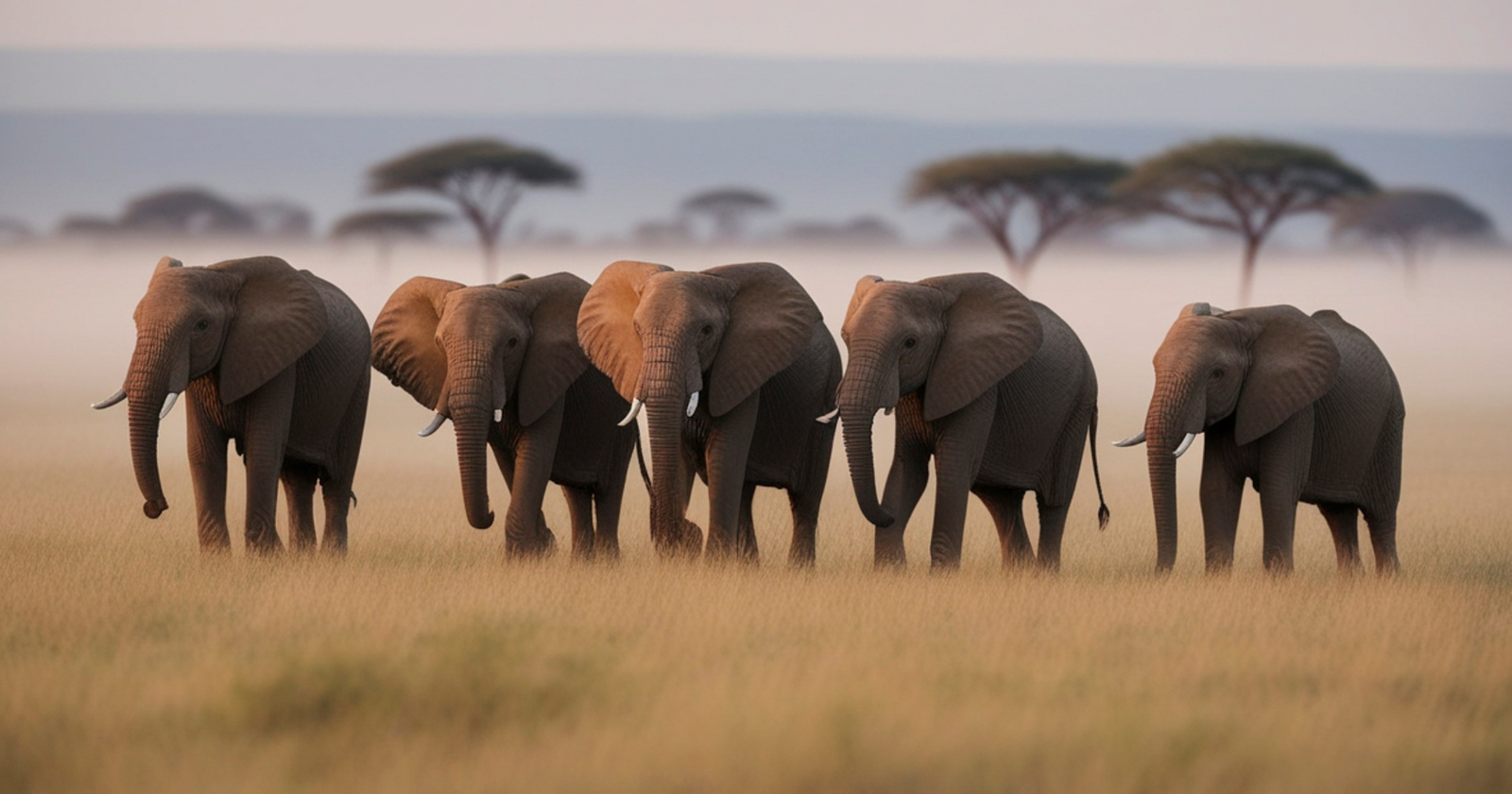
What happened next is why his name still circulates. In the days after his death, Thula Thula’s elephants — by then two separate herds — appeared at the family compound. According to his son Dylan, quoted in the news accounts of the time, the herds had not visited the house in a year and a half, and the journey from where they had been grazing must have taken them about twelve hours. The first herd arrived on a Sunday; the second, a day later. They loitered around the house for about two days, the family said, and then filed back into the bush. A family photograph of the line of elephants approaching the house traveled around the world.
Reserve staff have said the elephants returned around the anniversary in following years. The story entered the permanent inventory of things people tell each other about animals.
What can and can’t be claimed
It is worth being precise, because this story is usually told bigger than its sourcing.
The vigil itself is family-attested and contemporaneously reported — the herds did come to the house, after a long absence, shortly after Anthony died, and stayed. That much has witnesses. The twelve hours is Dylan’s estimate of the walk, not a tracked journey. And the part everyone wants — that the elephants knew — is precisely the part no one can demonstrate. Nobody knows what brought them. Skeptics point out that unusual vehicle traffic, gatherings and commotion at a compound are exactly the cues sharp-sensed animals notice, and that a remarkable coincidence, retold with love, hardens into telepathy.
But the sober scientific frame does not make the behavior ordinary. Elephant grief is one of the best-documented emotional phenomena in any non-human animal: elephants linger over their dead, touch and turn the bones of relatives, revisit death sites for years. They communicate across kilometers in infrasound below human hearing, and they are, demonstrably, animals that keep accounts of individuals over decades. A herd that once tried to kill every human near it had spent thirteen years learning that one particular human meant safety. Whatever cue brought them down to the house that week, what they did when they got there — gather, stay, leave — sits comfortably inside what elephants are known to do for their own.
The debt, as the herd kept it
Anthony liked to say that he hadn’t saved the elephants so much as negotiated with them, and that the herd had taught him more than the reverse.
The version of the story that survives him is cleaner than the truth and does not really need to be. Strip away every unprovable claim and what remains is still remarkable: seven condemned elephants got thirteen more years and two generations of calves because one man was willing to sleep next to their anger until it subsided — and when he died, the animals that had once broken every fence on the property walked to his house, of all places, and stood there. What they understood, no one can say. Where they chose to stand is a matter of record.