

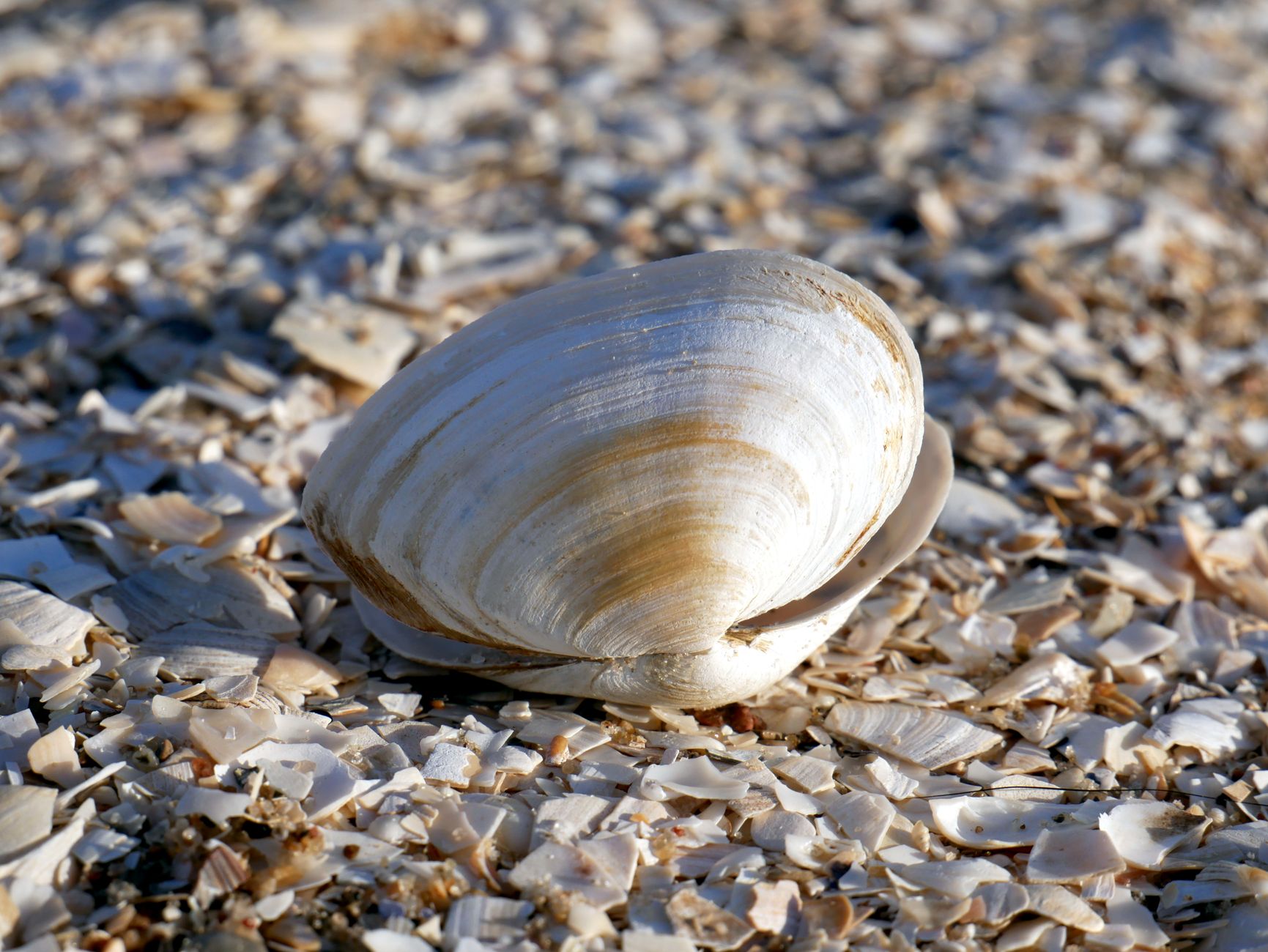
In 2006, a Bangor University research cruise dredged roughly 200 living ocean quahogs from waters off Iceland. The clams were frozen aboard the vessel as biological samples, and none had yet been singled out as exceptional. Only later did one shell reveal a life spanning more than five centuries.
The animal became known as Ming because it had been alive during China’s Ming dynasty.
Its final age, 507 years, made it the longest-lived non-colonial animal whose age had been determined accurately. It did not prove that no older clam existed, and the researchers did not knowingly kill a record-holder to establish its age.
The clam was not killed to win a record
The order of events is crucial. As National Geographic reported after speaking with the researchers, about 200 clams were collected alive from the Icelandic shelf and frozen together on board. The team was reconstructing past ocean climate, not hunting for a longevity champion. Ming died in the same preservation process as the other specimens, before any shell rings had been examined.
Bangor University later explained that age cannot be read reliably from an unopened animal’s size. Ocean quahogs grow relatively quickly early in life, then add less shell each year as they age. A specimen that fits in a hand therefore does not reveal whether it is decades or centuries old. Ming’s extreme age emerged only after the shell had been opened and prepared for microscopic analysis.
This corrects a persistent version of the story. Opening and sectioning the shell made the detailed count possible, but freezing the live batch had already killed the animal.
How a shell becomes a calendar
Ocean quahogs build their shells by adding calcium carbonate in layers. Seasonal changes leave annual increments, called annuli, which can be counted in a prepared cross-section. NOAA’s guide to ocean quahog ageing describes how researchers cut a valve with a diamond blade, make acetate peels and count the dark annual lines under a microscope.
The yearly rhythm is supported by evidence, not assumed because the pattern resembles tree rings. In mark-and-recapture work, quahogs recovered several years after release carried the expected number of new annuli. Radiometric analyses provide another check on the annual interpretation.
Extreme age creates a practical problem. Growth slows sharply, crowding many later increments into a narrow strip at the outer edge of the shell. The first analysis, announced in 2007, put Ming between 405 and 410 years old because some of those tightly packed lines were difficult to distinguish. Even that estimate was a record.
A more careful recount resolved the compressed bands and revised the total to 507. Cross-matching Ming’s pattern against other shells from the same region and radiocarbon evidence supported the chronology. The result placed the beginning of the animal’s life at about 1499, with a small margin of uncertainty around the exact calendar year.
Five centuries recorded in a few centimetres
The nickname still fitted after the revision because the Ming dynasty ruled China from 1368 to 1644. When this clam began growing, printed books were spreading across Europe and Leonardo da Vinci was alive. It then persisted through the lifetimes of Copernicus, Shakespeare, Galileo, Newton and Darwin, and through the development of telescopes, steam engines, electric grids, antibiotics, nuclear weapons and the internet.
Ming did not witness human history in any meaningful sense. It spent those centuries buried in cold North Atlantic sediment, drawing oxygen and food particles through its siphons. What it experienced directly was an environmental history of currents, temperatures and food supply, written increment by increment into its shell.
That record was the reason the expedition collected quahogs. The width of each annual layer changes with growing conditions, while the shell’s chemical composition preserves information about the surrounding seawater. Scientists can match distinctive growth patterns across living animals and empty shells, much as dendrochronologists cross-date overlapping tree-ring sequences.
The climate archive mattered more than the record
The team’s peer-reviewed study in Palaeogeography, Palaeoclimatology, Palaeoecology combined multiple shells into an absolutely dated, 1,357-year chronology for the North Icelandic shelf. Ming occupied the recent end of that much longer archive. The scientific value did not come from one spectacular lifespan alone, but from aligning many individual records across time.
Those shell chronologies provide annual evidence from centuries before regular ocean measurements began. They allow researchers to examine long-term North Atlantic variability and give modern observations a historical baseline. Ming became famous for longevity, but it was collected because its shell was also an environmental instrument.
The species remains scientifically useful for another reason. Ocean quahogs survive for centuries without becoming enormous, and studies have investigated their resistance to oxidative stress, maintenance of proteins and other possible features of slow ageing. These findings offer hypotheses about exceptional longevity, not a simple mechanism that can be transferred to humans.
What the record does and does not mean
“Oldest accurately aged non-colonial animal” is more precise than “oldest animal ever.” Colonial corals, sponges and clonal organisms can persist much longer, but defining an individual and assigning it a birth year may be difficult. The distinction also excludes ages inferred only as broad statistical ranges.
For comparison, a ScienceBlog analysis of the best-known Greenland shark explains that its central estimate of 392 years came with a possible range from 272 to 512 years. That shark remains the oldest vertebrate identified, but its birth year cannot be read as precisely as the annual sequence in Ming’s shell.
Ming was not necessarily the oldest ocean quahog alive in 2006. The research cruise sampled only a tiny fraction of the population, and Bangor scientists said longer-lived individuals almost certainly remained in Icelandic waters. The record belongs to the oldest specimen that researchers happened to collect and age securely.
The tragedy is therefore both real and frequently exaggerated. Researchers killed a clam that had survived for roughly 507 years, but they did so while preserving an ordinary-looking batch whose members could not yet be aged. By the time 507 annual lines came into focus, the longest accurately dated solitary animal on record had already become part of the climate archive it helped reveal.