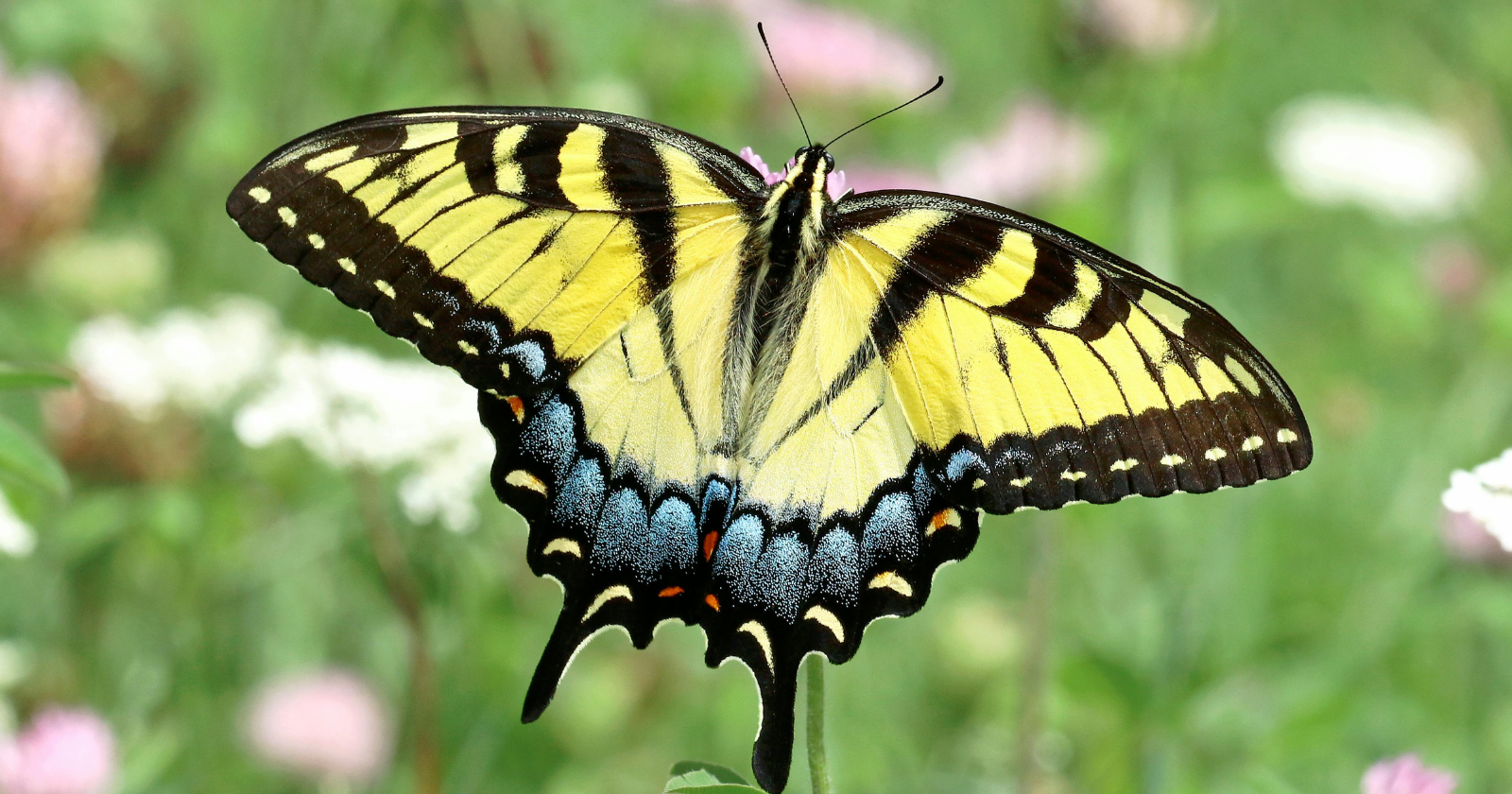
The question that started it was the kind only a child would take seriously enough to test. Jo Nagai, an elementary schooler in Kobe, Japan, had been hand-raising Asian swallowtail butterflies since he was small, and he noticed that when he released them, his butterflies behaved wrongly. Wild swallowtails flee from people. His would circle in the air and come back, sometimes landing on his hand.
Which made him wonder: did they remember him? And if a butterfly could remember its caterpillar days, how had the memory survived what happens inside a chrysalis?
The problem with remembering through goo
The reason that question is genuinely deep is the biology of metamorphosis. A caterpillar’s tissues and nervous system are extensively remodelled during pupation, but the animal does not literally dissolve into featureless goo or build an entirely new brain from scratch. Some larval neurons and neural structures persist and are reorganised, which gives learned associations a possible biological route into adulthood.
There was already peer-reviewed evidence against a total memory reset. In 2008, Georgetown University biologists Martha Weiss, Douglas Blackiston and Elena Silva Casey reported in PLOS ONE that fifth-instar tobacco hornworm caterpillars trained to avoid an odour retained that aversion as adult moths. The age of training mattered, which was consistent with persistence and reorganisation of late-developing neural regions.
Jo found that research, and then, remarkably, wrote to Weiss, who wrote back and encouraged him to try it on his swallowtails.
Lavender and a massage machine
His method was household-grade and cleverly humane. Using a home muscle-therapy device, the kind that delivers a mild vibrating pulse, he trained a group of his caterpillars to associate the scent of lavender oil with the unpleasant buzz, testing the stimulus on his own arm first to make sure it was harmless. A control group of caterpillars grew up smelling nothing in particular. Then all of them spun their chrysalises, dissolved, and rebuilt themselves as butterflies.
The test was a Y-shaped maze, one arm scented with lavender, the other neutral. The control butterflies split between the arms roughly evenly. The trained butterflies avoided the lavender arm decisively, with coverage of the work reporting around 70 percent steering away from the scent. The aversion they had learned as crawling, leaf-eating larvae had come through the goo intact, in a different body, with rebuilt eyes and a new brain plan, just as Weiss’s hornworms had shown was possible.
Jo wrote the whole thing up in a 33-page report, and in 2024, at the International Congress of Entomology held in Kyoto, the boy presented his research to an audience of professional entomologists, with Weiss flying in from Washington to meet him. He was, by every account of the meeting, a sensation. He has said he wants to be a veterinarian.
The bigger claim, and the right amount of salt
The version of the story that has traveled around the internet this year goes further. Jo reportedly bred his trained butterflies and found that their offspring, and even grandoffspring, avoided lavender without ever having been trained, which would suggest that a learned aversion can be inherited, a phenomenon scientists study under the banner of transgenerational epigenetics.
That is the part to hold loosely. Inherited learned behavior is a real and hotly researched area, with suggestive results in worms and mice, but it is also one of biology’s most contested topics, and Jo’s project is a school student’s independent study, presented at a conference but not peer-reviewed. Commentators covering the story have been careful to note that the generational findings are preliminary and would need independent replication before anyone rewrites a textbook. The memory-through-metamorphosis result stands on firmer ground, because it replicates, in a new species, a peer-reviewed finding that has held up since 2008.
Why the story deserves its wings anyway
Strip away the viral gloss and what remains is quietly wonderful. The core result, that a butterfly can carry a caterpillar’s memory through the most extreme transformation in the animal kingdom, is real science with a real pedigree, and a child in Kobe independently extended it to a new species with a massage gadget and a bottle of lavender oil. The instinct that started it, noticing that his butterflies came back, is the same instinct that drives professional ethology, applied at age ten with better patience than most adults can manage.
Somewhere inside every swallowtail that dissolves itself and re-emerges, something persists, some thread of the animal it was. It took the scientific establishment until 2008 to demonstrate that. It took Jo Nagai two years of raising caterpillars in Kobe, and 33 pages, to show it again.