Just before midnight on August 10, the largest nuclear power station in Western Europe began switching itself off. At Gravelines, on the French coast between Dunkirk and Calais, three of the six 900-megawatt reactors tripped offline in succession as the filter drums of their seawater pumping stations clogged solid, and by morning a fourth unit had been cut to half power. With a fifth already down for maintenance, a plant capable of powering millions of homes was reduced, for days, to a single reactor running flat out.
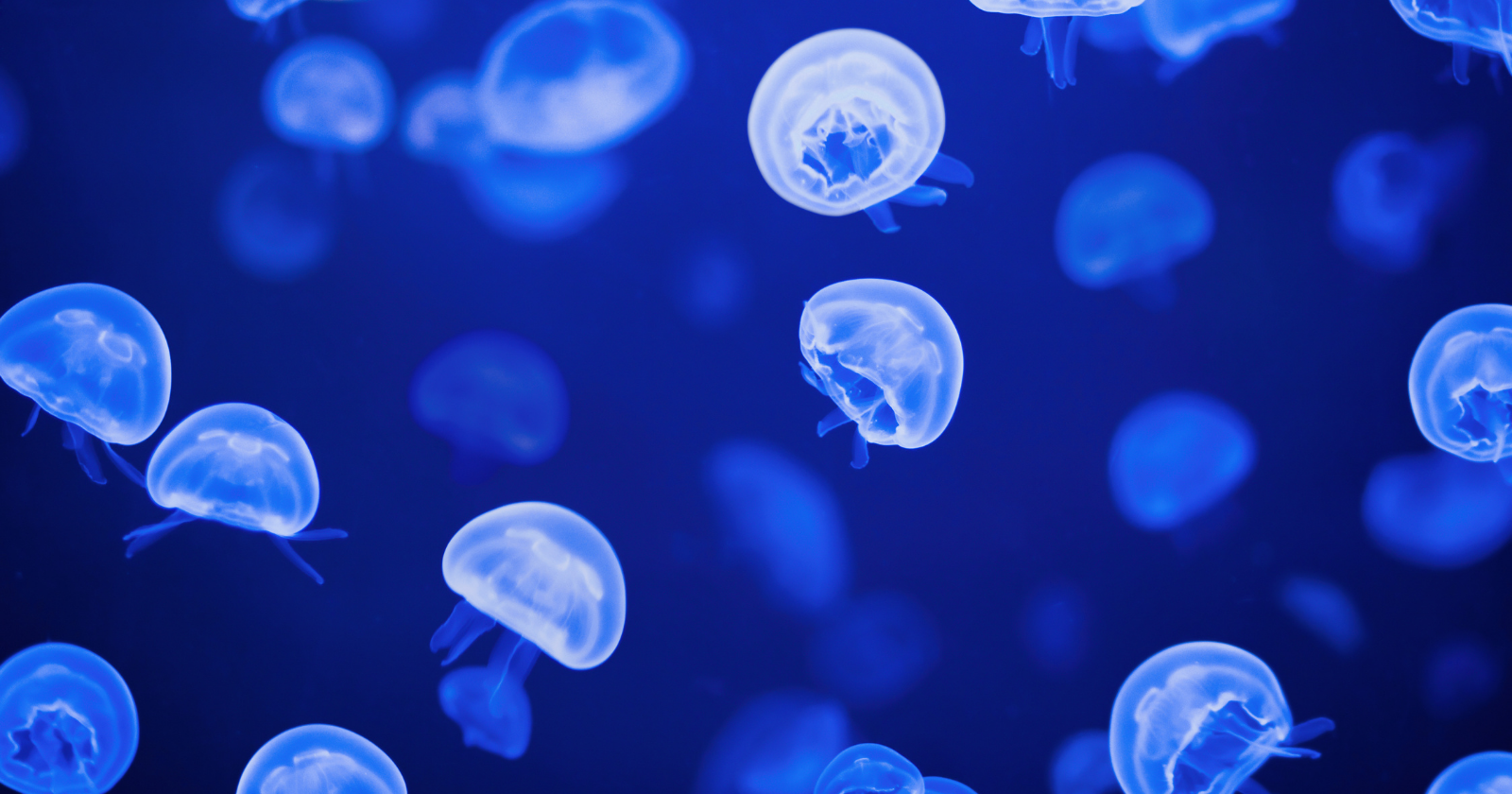
The attacker was not a storm, a strike or a cyberweapon. It was barrel jellyfish, Rhizostoma octopus, a creature that is 95 percent water, has no brain, and cannot swim against a current, arriving in a swarm so dense that local fishermen eventually hauled 26 tonnes of them out of the intake channels.
The soft spot in a hard machine
A nuclear plant is armored against almost everything, but its one non-negotiable appetite is cooling water. Gravelines drinks from a canal connected to the North Sea, swallowing enormous volumes continuously to condense steam and cool equipment, and that water arrives through intakes guarded by rotating drum screens designed to strain out debris. The screens are the soft spot. A jellyfish bloom is, from the filter’s point of view, the sea turning to wet gelatin: thousands of tonnes of soft bodies that pull apart, pack into mesh, and renew themselves endlessly from the water column. When the screens can no longer pass enough water, the reactors do the only safe thing available and shut themselves down automatically, exactly as designed. EDF’s statements each time stress that safety was never at issue, and that is true; the jellyfish cannot break a nuclear plant. They can only make it stop, which, for a machine whose product is measured by the hour, is expensive enough.
What makes Gravelines the case study is the sequel structure. The same thing happened at the same plant, on nearly the same date, the year before: in August 2025 a swarm jammed the pumping stations, all four operating reactors tripped, and with the other two already in maintenance the entire station went dark, taking some ten days to fully reconnect. EDF responded with money and hardware, hundreds of thousands of euros’ worth of cameras, thermal imagers and three fishing boats trawling preventively around the intakes day and night. This August 11 the bloom came anyway, and by the operator’s own admission the swarm grew faster than the patrol boats could work. A unit restarted on August 18 was knocked out again within days by a fresh influx. Against a bloom, the state of the art is a net and a hope.
An old enemy, thriving
None of this is new, which is rather the point. In the summer of 2011, moon jellyfish swamped the intakes at Torness on Scotland’s east coast and shut both of its reactors for about a week while crews scooped the screens clear. Sweden’s Oskarshamn plant, then the site of one of the world’s largest boiling-water reactors, was stopped for days by a bloom in 2013. Japan’s coastal plants have battled giant Nomura’s jellyfish; plants in Israel, Florida and California have throttled or tripped on gelatin; and France’s Paluel station, up the Channel coast from Gravelines, lost reactors to a swarm barely a month after the 2025 Gravelines blackout. The industry has a folder for these events, and the folder is getting thicker.
The thickening is the story’s second layer. Jellyfish are among the few marine animals for whom the modern ocean keeps improving: warming water extends their breeding seasons and speeds reproduction, overfishing removes both their predators and their competitors for plankton, and coastal construction offers endless hard surfaces for their polyp stage to colonize. Marine scientists argue about whether jellyfish are rising globally or oscillating locally, but the operators of seawater-cooled plants are not waiting on the literature; EDF’s patrol boats, and the bloom-forecasting systems being trialled around the North Sea, are bets that the problem is structural. It is a neat irony that the low-carbon power source most often promoted as an answer to warming seas keeps being interrupted by one of warming’s clearest beneficiaries.
The moral of the gelatin
There is a temptation to file the jellyfish shutdowns under nature’s revenge, and the marketing writes itself: the brainless blob versus the atom. The engineering reality is less poetic and more instructive. Every thermal power station, nuclear, coal or gas, is a heat engine that must reject heat, and the ones parked on coastlines solved that problem by assuming the sea would always be available as an infinite, well-behaved coolant. The assumption held for decades because the sea’s contents were an afterthought. A bloom inverts it: the coolant arrives pre-mixed with more biology than any screen can process, and the mightiest machine on the coast discovers that its output depends on plankton dynamics it neither controls nor predicts.
The reactors at Gravelines came back, as they always do, once the screens were cleared and the sea thinned out. The jellyfish will also come back, on something close to an annual schedule, and the plant’s defense next August will be what it was this August: boats, cameras, and the willingness to stop. Against an enemy that is mostly water, arriving by the tonne through the one pipe you cannot close, stopping is not a failure of the design. It is the design, and the jellyfish have learned nothing, planned nothing, and won anyway, twice.