

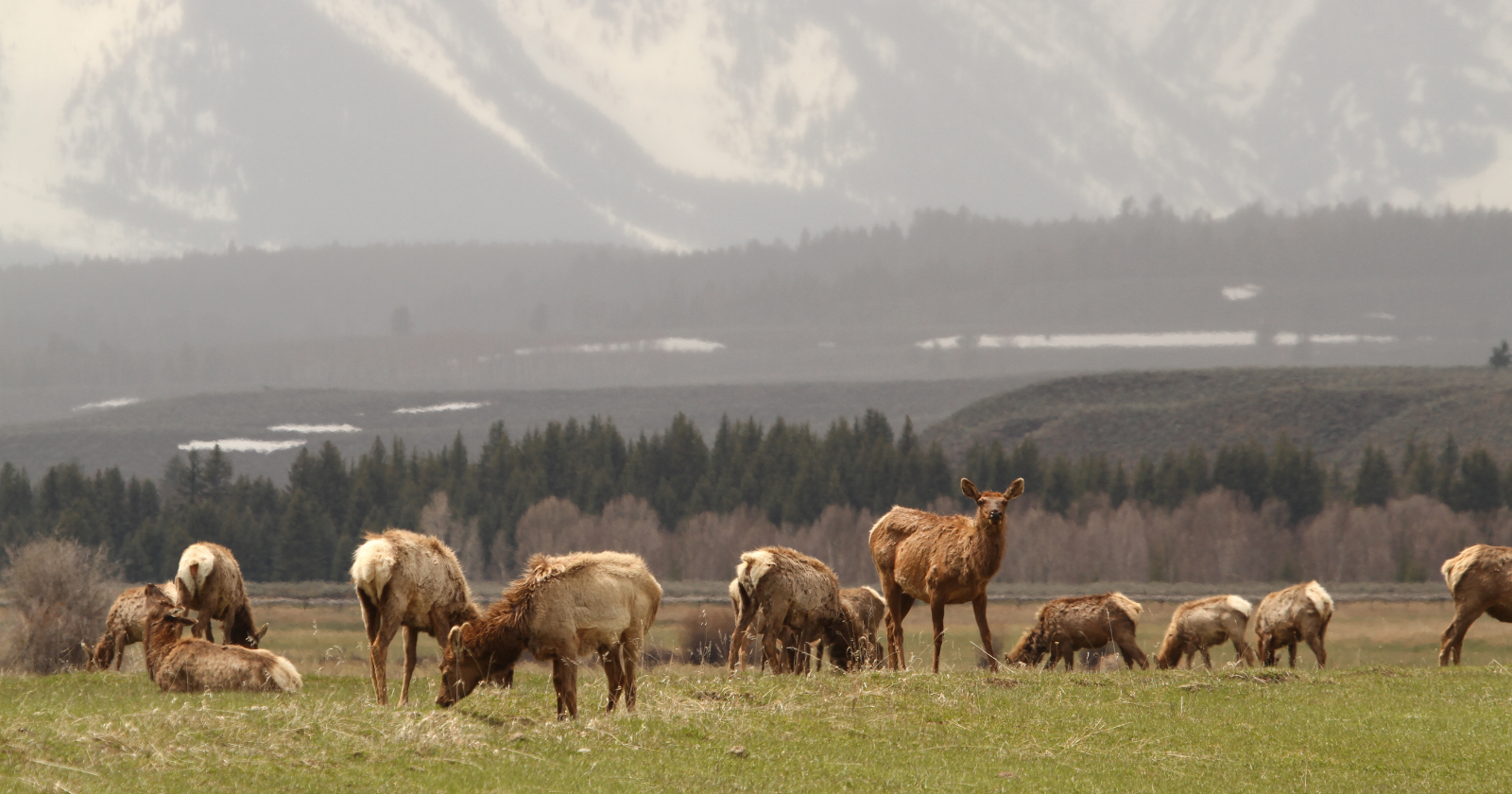
The last elk anyone saw in Kentucky was shot around the time of the Civil War. The eastern elk, the subspecies that had grazed the Appalachians since the ice retreated, was hunted out of the state by the mid-1800s and extinct everywhere by the late 1870s, and for well over a century the idea of elk in the eastern mountains belonged to the same category as the passenger pigeon: gone, and staying gone, because the world that held them was gone. The East had grown back as dense forest and farmland, and an elk is not a forest animal at heart. It is a creature of open country, a 700-pound grazing machine built for grass.
Then the coal industry, entirely by accident, rebuilt the open country.
What a dragline leaves behind
Surface mining in Appalachia does not dig holes so much as rearrange geography. Mountaintops and ridgelines across eastern Kentucky were blasted and scraped for their coal seams, and federal law required the industry to reclaim what it unmade: regrade the rubble, stabilize the slopes, and revegetate. The cheap, reliable way to revegetate crushed rock is grass, tough, fast-rooting pasture mixes seeded by the square mile. The result, spread across the coalfields by the 1990s, was something Appalachia had not offered since the Pleistocene: hundreds of thousands of acres of rolling, treeless grassland, sitting mostly empty on corporate land in the poorest corner of the state.
Wildlife biologists looked at those man-made prairies and saw a niche with no occupant. A 1997 feasibility study by the Kentucky Department of Fish and Wildlife concluded the habitat could carry elk, and the Rocky Mountain Elk Foundation put up funding for one of the most aggressive restorations ever attempted. Rather than trickling in a token herd, Kentucky opted for what participants later called a carpet bombing of elk: between December 1997 and 2002, trappers in Kansas, Arizona, New Mexico, North Dakota, Oregon and Utah caught, disease-tested and shipped east a total of 1,541 elk, released across a 16-county restoration zone of more than four million acres in the state’s southeastern coalfields.
The niche answers
The elk took to the mined land as if it had been graded for them, which, in a sense, it had. The reclaimed benches and plateaus supplied limitless forage, the surrounding second-growth forest supplied cover and calving shelter, winters were mild by Rocky Mountain standards, and the region’s wolves and grizzlies had been gone even longer than its elk. The herd did what a grazer does when handed grassland without competitors or predators: it compounded. Within two decades Kentucky’s elk had passed the program’s original target of 10,000, and the population now runs around 13,000 animals, the largest wild herd east of the Rocky Mountains, occupying the exact counties where the coal economy was collapsing as the elk economy arrived.
That last coincidence is not decoration; it is the program’s second act. Kentucky began holding elk hunts while restoration was still underway. For 2026, the Department of Fish and Wildlife offered 500 drawing permits, and its current rules list a $10 application fee. Guide services, tourism and hunting spending now contribute to coalfield counties, and Kentucky’s herd has also supplied elk for restorations in other states.
The honest ecology of it
It is worth being precise about what this success is made of, because it resists the usual moral. Reclaimed strip mines are not restored ecosystems; they are compacted rubble under exotic grasses, often planted with invasive species, poor ground for the hardwood forest that preceded them, and conservationists rightly refuse to score mountaintop removal as habitat creation. The elk are not thriving because mining healed the land. They are thriving because mining converted it, from a forested landscape that could not feed big grazers into a savanna that can, and because an opportunistic, adaptable animal was deliberately loosed into the conversion.
Nor is the herd’s future frictionless: managers juggle vehicle collisions, crop and garden complaints on the zone’s edges, disease vigilance, and the slow question of what happens as reclaimed grasslands shrub over and mature, which is pushing agencies and landowners into active habitat management, mowing, burning and planting the old mines to keep them open, gardening the accident on purpose.
But the core of the story stands as one of conservation’s strangest ledger entries. The industry most blamed for scarring Appalachia left behind, in its scars, the one landscape feature the region’s largest missing herbivore required, and a state agency had the nerve to notice. The eastern elk itself is extinct and stays extinct; what grazes the coalfields is its western cousin, naturalized onto ground neither species ever knew. Sixteen counties that spent a century shipping their landscape away as fuel now watch six-hundred-pound animals fatten on the leveled remainder, and the largest elk herd east of the Rockies lives where it lives for the flattest of reasons: an elk eats grass, and Appalachia, for the first time in ten thousand years, had some.