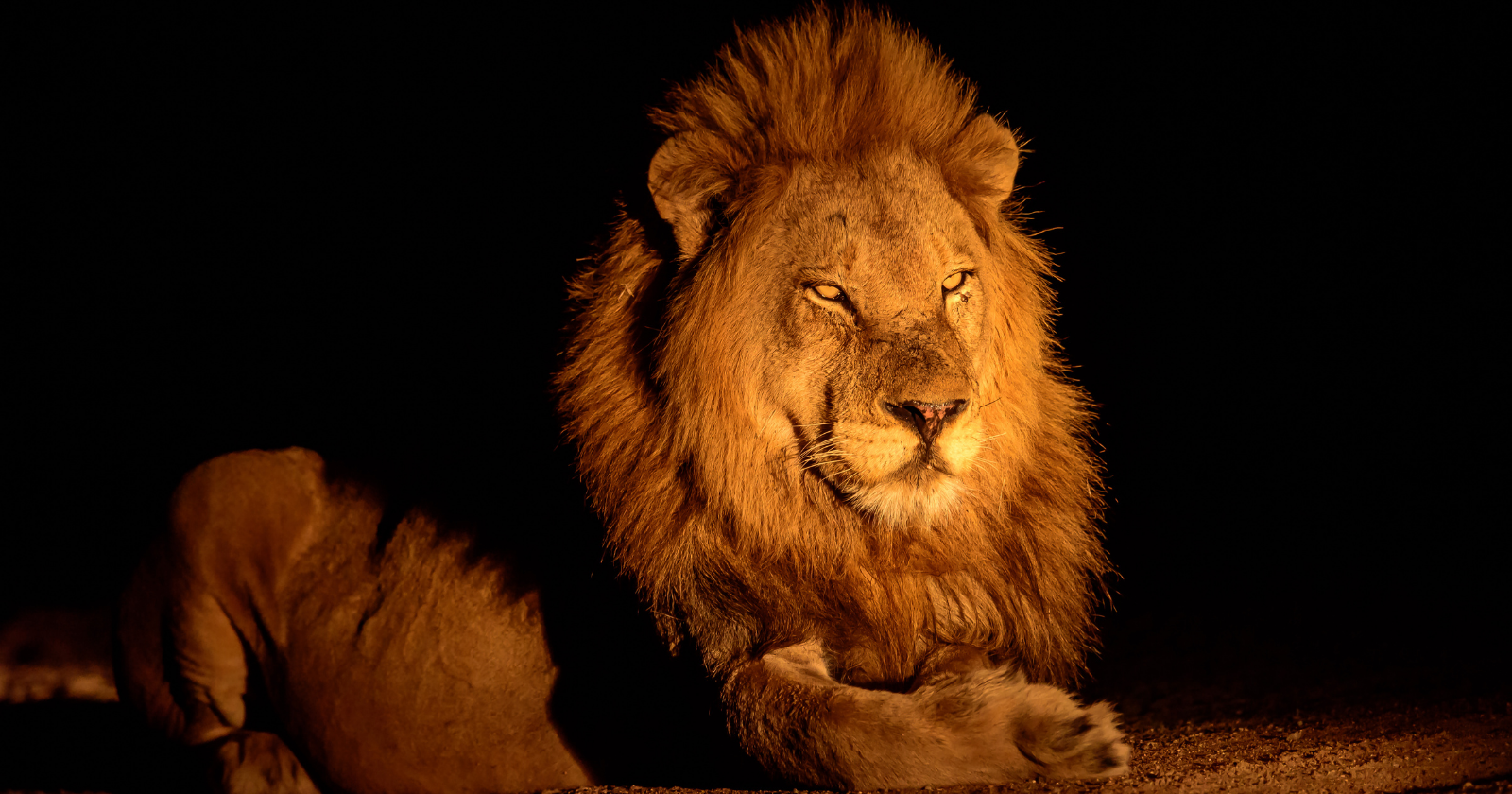
Richard Turere was nine when he took over the family cattle. That is the standard age for a Maasai herder’s son, and the job came with the standard enemy.
His family’s homestead sits in Kitengela, on the unfenced southern edge of Nairobi National Park in Kenya — a park with one of the densest lion populations anywhere. At night, the lions simply walked out of the park and into the bomas, the livestock pens. Turere’s family was losing cattle week after week, and he grew up, by his own account, hating lions.
By eleven, he had decided to solve the problem himself.
Everything failed except one thing
His first ideas were the obvious ones, and the lions ignored them.
Fire didn’t work. Scarecrows didn’t work — lions are clever, and a scarecrow that never moves stops being scary on the second night. A dark shed hid the cows from view, but the lions could still smell them.
Then came the observation that made everything else possible. Walking the pen at night with a torch, Turere noticed the lions stayed away. It wasn’t the light itself. It was the moving light — the sight of a human patrolling. Lions avoided any ranch where someone was up and walking with a flashlight.
The problem was that no eleven-year-old can patrol all night, every night. So he built something that would do the walking for him.
A radio, a battery, a solar panel
Turere had no technical books and no training — his electronics education was taking apart his mother’s new radio, which did not make him popular at home.
But the rig he assembled from scavenged parts was genuinely clever. He took LED bulbs from broken flashlights, arranged them in small clusters on poles around the outside of the cattle pen, facing out into the dark. He wired them through a switch box to an old car battery, kept charged by the solar panel that also ran the family’s television.
The crucial part was the flashing. The lights blink in an irregular sequence that changes over time, so that from the grass beyond the fence, it looks exactly like a man wandering the boma with a torch. A steady light, a lion learns to ignore. A moving one means a human is awake.
Turere told WIPO Magazine the result in one line: the family went from losing three cows a week to losing none.
75 farms, then 750
The neighbors noticed that the Turere boma had gone quiet. Families who had been losing animals — and killing lions in retaliation — asked for the same rig, and within a couple of years 75 systems had been set up around Kenya. Each one cost less than $10 in parts.
The idea kept traveling. The BBC later reported the system in more than 750 homesteads, and variants have been used against leopards, hyenas — and elephants, which read the flashing the same way and leave crops alone.
The stakes are bigger than any one herd. Kenya’s lion population had crashed from around 15,000 to about 2,000 in a couple of decades, and retaliatory killings by herders were a major reason. A $10 rig that keeps lions out of the pens protects the cattle and the lions at once — no lion attack, no revenge hunt.
The boy on the TED stage
The invention found its way out of Kitengela fast. A Kenyan conservationist, Paula Kahumbu of the Big Cats Initiative, wrote up the family’s system; a scholarship to Brookhouse, one of Kenya’s top schools, followed; and at 13, Turere stood on the TED stage in California explaining Lion Lights to a standing ovation.
He has kept building ever since. Lion Lights became a proper venture, refined through later versions, and in 2023 the European Patent Office named Turere — by then 22 — winner of its Young Inventors Prize.
The trick is the story you tell the lion
Strip the biography away and what remains is a beautifully honest piece of engineering.
Turere didn’t build a wall, a weapon or an alarm. He built a story, told in light, aimed at a lion’s brain: someone is awake here, walking the fence, and it is not worth the risk. The lion reads the flashing exactly as intended and takes its hunger somewhere else.
Every part of the rig was already lying around the homestead — the bulbs, the battery, the panel, the wire. The only new component was the observation, made by a kid on night watch, that the most powerful lion deterrent in East Africa was never the torch. It was the man holding it, and a man can be simulated for ten dollars.