Seismologists know what the planet’s rumbles look like. An earthquake is a violent scribble that dies away in minutes. A volcano builds and rises. What appeared on monitoring stations around the world in mid-September 2023 looked like neither. It was a single smooth pulse, arriving every 92 seconds, over and over, with the patience of a metronome.
Stations in Alaska saw it. So did stations in Europe, and all the way down in Antarctica. Days passed and it kept coming. The scientists trading emails about it had no idea what it was, so they gave it a name that captured the mood: a USO, an unidentified seismic object.
Something too slow to feel
Part of the mystery was that no human being could sense the thing directly. A vibration that peaks once every minute and a half is far below anything a body can feel, which is why nine days of the entire planet gently flexing passed without a single person noticing.
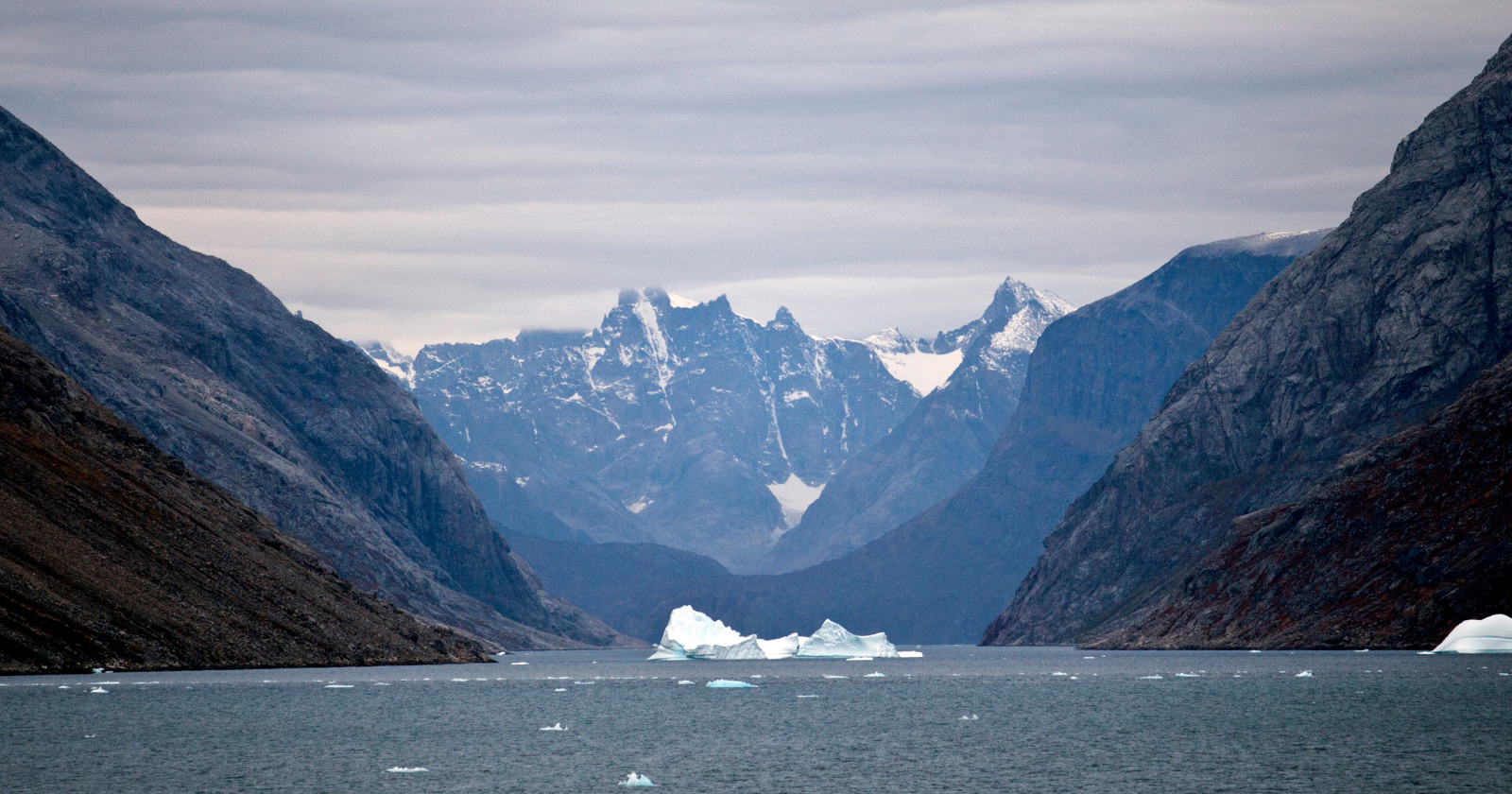
The other oddity was the persistence. Seismic energy is supposed to fade quickly, yet this hum stayed strong day after day. Sixty-eight scientists from around the world ended up joining the hunt for its source, cross-checking the global data until it pointed at one of the loneliest places on Earth: Dickson Fjord, a narrow arm of sea on the uninhabited east coast of Greenland.
The mountain that fell
Satellite photos of the fjord told the story. On 16 September, a mountainside about 1,200 metres above the water had given way. Roughly 25 million cubic metres of rock and glacier ice, enough to fill about 10,000 Olympic swimming pools, avalanched into the sea in seconds.
The splash was almost beyond description. Water surged an estimated 200 metres up the fjord walls, the height of a 50-storey building. A wave raced 70 kilometres down the fjord system and hit Ella Island still standing 60 metres tall, where it wrecked an old research station that was, mercifully, empty at the time. Sailors had used the site for generations. Nobody was there that day, and nobody died.
The mountain did not fall for no reason. The glacier at its base had been thinning for decades as the Arctic warms, and glaciers in fjords act as buttresses, propping up the steep rock behind them. When enough ice melted away, the slope lost its support.
The wave that would not stop
Here is where the story turns strange. Most of the tsunami’s energy escaped down the fjord and was gone within hours. But Dickson Fjord is narrow, deep and walled with rock, and a portion of the water got trapped, rocking from one side to the other like water in a bathtub after you stand up.
Scientists call this a seiche, and they are common in lakes and harbours, where they die out quickly. This one did not. The trapped wave, about seven metres high at first, sloshed across the fjord and back on a cycle of roughly 90 seconds, and every slosh shoved the rock walls hard enough to send a pulse through the crust of the Earth. That was the signal. The fjord had become a bell, struck once by a falling mountain, and the water was the clapper.
The study published in Science in September 2024 showed the physics lining up almost perfectly: the simulated slosh settled at a rhythm within a few seconds of the observed 92, and the force of the water, peaking at 500 billion newtons, matched the strength of the signal recorded worldwide. Three days after the collapse, a Danish naval vessel sailed through the fjord and noticed nothing. By then the wave was too small to see, and still ringing.
Proof from orbit
One loose end remained. Nobody had actually observed the water moving; the seiche existed in models and seismic data. That gap closed in 2025, when researchers at Oxford used a new satellite called SWOT, which maps the height of water surfaces in fine detail, and caught the slope of the sloshing water directly in Dickson Fjord. Their measurements, published in Nature Communications, matched the seismic record and pinned the wave’s starting height at about eight metres.
The satellite data confirmed something else, too. A month after the first collapse, in October 2023, the same gully let go again. A second landslide, a second trapped wave, a second, shorter ring of the planet. The bell had been struck twice.
A warning from an empty place
No one lives anywhere near Dickson Fjord, which is precisely why the event matters. The only reason the world knows it happened is that the Earth itself carried the news.
Cruise ships regularly thread these Greenland fjords, and a vessel in the wrong inlet on 16 September would have met a wave taller than its mast with no warning at all. As the Arctic keeps warming and more glaciers thin away from the slopes they hold up, researchers expect more mountains to fall. The nine-day hum of 2023 was harmless. It was also the planet registering, on every continent at once, that something in the far north has begun to come loose.