

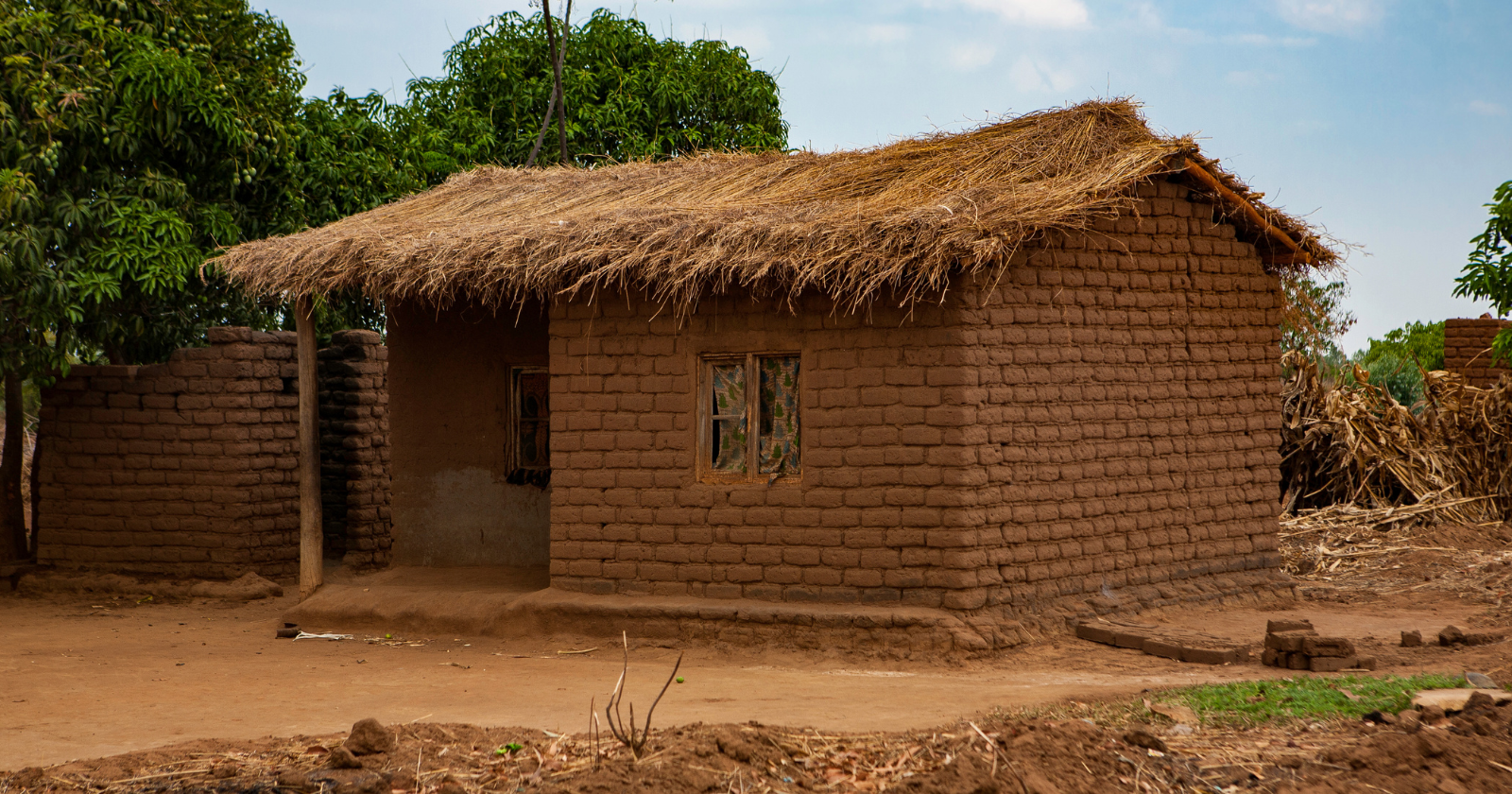
The famine came first. In 2001 the rains failed across Malawi, the maize crop collapsed, and by the following year families in the farming village of Wimbe were living on one meal a day, then less. Among them were the Kamkwambas, tobacco farmers with seven children, and when the school year came due, the roughly $80 in fees for their only son, William, was money that did not exist.
So at 14, William Kamkwamba was sent home from secondary school after a few weeks. In a country where, in 2002 about 2 percent of the rural population had access to electricity, and rather less than that in rural districts like his, a farm boy without schooling had a predictable future, and it ran on kerosene, sunlight and hand labor.
What saved him was a small village library stocked by an aid program, and one book in it.
The book with the windmills
Unable to attend classes, William kept sneaking an education, borrowing books from the library near his old primary school. Most were in English, which he barely read, so he studied the diagrams. One battered American textbook, called Using Energy, had photographs of wind turbines on its cover, towers with spinning blades, and the text explained that they could pump water and generate electricity.
For a hungry farm family, that sentence was not abstract. Electric light meant studying after dark. A pump meant a second maize crop in the dry season, and an end to hunger as an annual gamble. William later put the calculation with brutal simplicity: with a windmill, they could finally be released from the misery of the dark, and of hunger. Malawi had plenty of wind. The book said the machine was possible. He decided to build one from whatever the village could supply.
Junkyard physics
The supply list read like a scavenger hunt through rural poverty. From a scrapyard across from his old school he pulled a broken bicycle with one wheel, a rusted tractor cooling fan, and an old shock absorber. He melted plastic pipes over a fire and flattened them into blades to extend the fan’s reach, drilling holes with a nail heated in the coals. His father’s maize-mill machinery gave up a ball bearing; bottle caps became washers; and after months of saving and help from a friend, he got the crucial component, a bicycle dynamo, the little bottle-shaped generator that rubs against a wheel to power a headlamp.
The design logic was pure improvisation on a sound principle. Wind turns the blades, the blades turn the bicycle wheel, the wheel’s chain-and-sprocket gearing spins the dynamo fast enough to make useful current. With his cousin and his friend he raised a tower of blue gum tree poles, about five metres tall, lashed and nailed together, and hauled the machine to the top.
The village had watched all this with open scorn. Neighbors, and at times his own mother, thought the boy dragging scrap through town had lost his mind; the word that followed him around Wimbe was misala, crazy. A crowd of a few dozen gathered under the tower for what most expected to be a public failure.
William connected the wires to a small bulb. The wind picked up, the blades spun, and the bulb flickered, then burned steadily in his hand.
The queue at the crazy boy’s house
The machine worked, and then it kept working. Wired into the family house, the windmill ran four light bulbs and two radios, and William added a car battery to store power for calm days, plus homemade light switches and a circuit breaker built from nails, magnet wire and melted rubber. The family that could not afford school fees now had the only electric light for miles.
The laughter converted instantly into a queue. Neighbors who had called him crazy began lining up at the house to charge mobile phones, which were spreading through rural Malawi years ahead of the grid. William, characteristically, responded to demand by upgrading: taller towers, better blades, more machines, including a windmill dedicated to pumping water for irrigation, the original dream that had started with a hungry season.
From Wimbe to everywhere
For five years the windmill was purely local legend. Then in late 2006 a Malawian newspaper wrote up the boy engineer of Wimbe, a blogger spotted the story, and the internet did the rest. William was invited to TEDGlobal in Tanzania in 2007, where he told the story in halting English to a standing ovation, and the education that $80 had interrupted resumed on a global scale: the African Leadership Academy in Johannesburg, then Dartmouth College in the United States, class of 2014.
His memoir, The Boy Who Harnessed the Wind, became a bestseller and, in 2019, a Netflix film directed by and starring Chiwetel Ejiofor. William has spent the years since on exactly the problem he started with, working on projects that teach young Africans to build their own solutions with what’s at hand.
The original windmill’s arithmetic remains the sharpest part of the story. The gap between a bright teenager and an engineer turned out to be one library book and a scrapyard. What the fee system priced at $80, the wind delivered for free, and the village that laughed queued up to plug in.
Correction, 15 September 2026: The headline and body were revised to identify the roughly 2% figure as rural electricity access rather than Malawi’s national rate, and direct sources were added for the project’s central details.
