

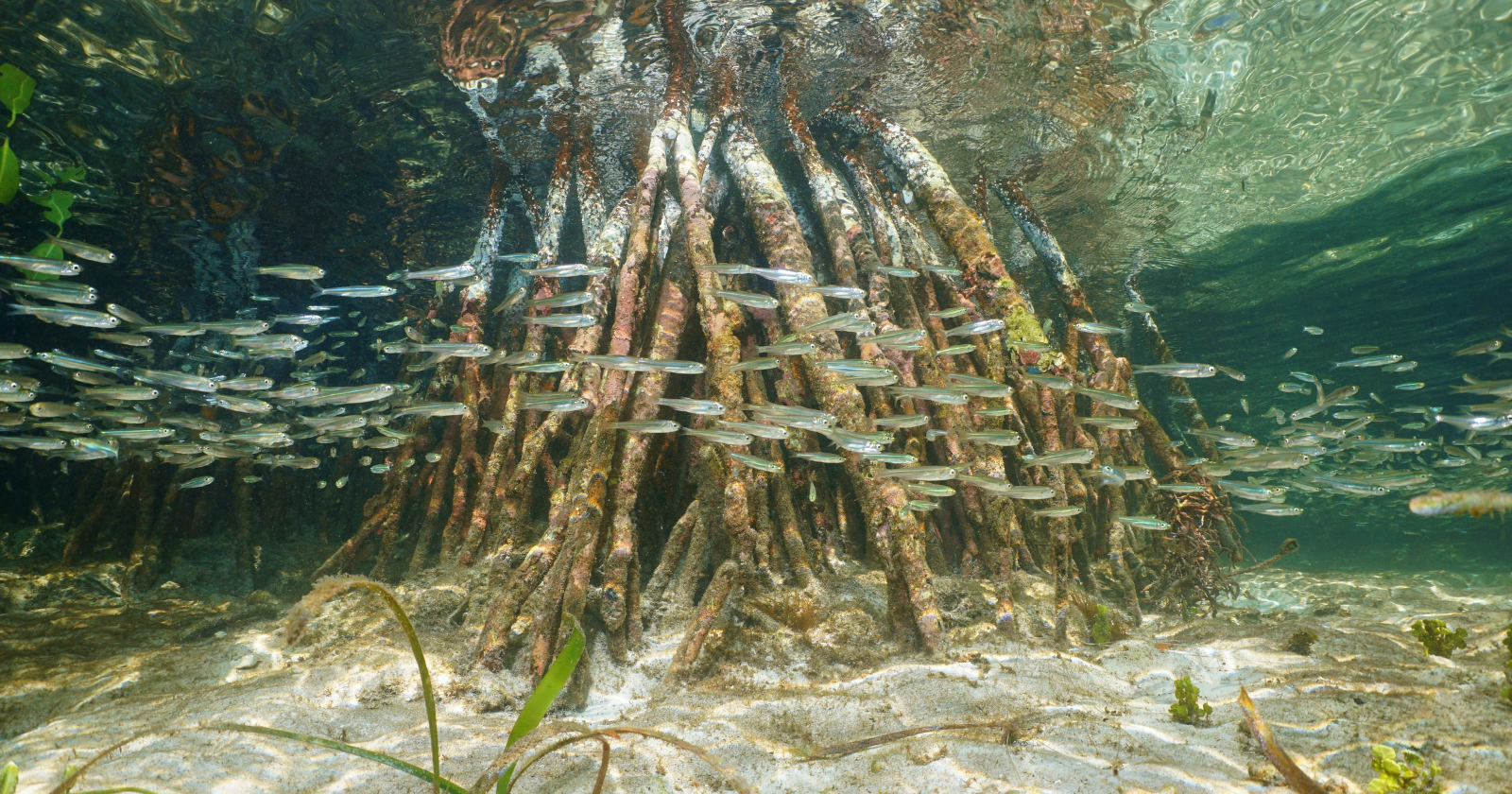
Correction, 17 September 2026: an earlier version of this article said Singapore pours incineration ash into the open sea and that nature walks take place on coral and mangroves growing on the landfill itself. It has been amended to say that the ash is placed in lined cells inside a sealed rock bund, and that the walks take place on the natural shore of Pulau Semakau, whose reefs, seagrass and mangroves pre-date the landfill.
Singapore has a problem most countries can ignore: it is running out of ground to stand on, let alone to bury things in. A city-state of six million people on an island smaller than New York City cannot spare land for a dump.
So it doesn’t use land. It built its landfill in the sea — and turned it into a nature reserve.
Semakau Landfill, eight kilometers off the main island, is the world’s first landfill created entirely from ocean space, and one of the strangest success stories in waste management: a working ash dump that runs guided intertidal walks past living coral, and where birdwatchers and stargazers book weekend trips to a place whose actual job is swallowing the nation’s trash.
Burn first, then bank the ash
The system starts in fire. Singapore incinerates the overwhelming majority of its solid waste at waste-to-energy plants, which does two jobs at once: it generates electricity, and it shrinks the garbage by up to 90 percent, leaving only ash and the fraction of material that can’t be burned.
That leftover — roughly a couple of thousand tonnes a day — is what goes to sea. Barges carry the incineration ash and non-burnable waste out to Semakau each night, where it is tipped into engineered cells and capped. Burning first is the move that makes an offshore landfill thinkable at all: you are not floating a mountain of raw rubbish, only the concentrated mineral residue left after the fire.
The engineering that contains it is the project’s spine. Rather than pile fill on existing land, planners enclosed 350 hectares of sea between two small islands, Pulau Semakau and Pulau Sakeng, inside a seven-kilometre perimeter rock bund — a rock wall drawn around a patch of ocean. The bund was lined with an impermeable membrane and a layer of marine clay, sealing the enclosed water off from the strait so that leachate — the toxic liquid that drains from any landfill — stays inside and gets treated on site rather than leaking into the sea. Cells within the ring are pumped dry and filled with ash. Opened on April 1, 1999, Semakau became Singapore’s only landfill, and is expected to keep taking the country’s ash into the 2030s.
The part that grows
An ash landfill ringed by clean water could have been merely tidy. What makes Semakau famous is that the marine life not only survived next door — it was deliberately built back in.
The construction was not bloodless: about 13 hectares of mangrove were destroyed to raise the bund. Singapore’s response set the tone for the whole project. Ecologists, including senior Singaporean biologists, were brought in to replant mangroves at the disturbed sites as compensation — a serious undertaking at a time when mangrove restoration was barely understood — and the new stands were planted partly as living sentinels: if the mangroves stayed healthy, the containment was working. They took.
Around the landfill’s western shores, the original seagrass meadows, coral reefs and remaining mangroves were protected through construction and largely came through intact. The result is a landfill fringed by functioning ecosystems: reefs, seagrass and mangrove rich enough that the intertidal flats host creatures now rarely seen on Singapore’s developed mainland.
By 2005 the government did the thing that turns the story from clever engineering into genuine paradox: it opened the working landfill to the public for recreation — guided intertidal walks, birdwatching, sport fishing and stargazing, the last helped by skies darker than the lit-up mainland’s. Visitors walk the reef flats at low tide, spotting starfish and octopus and living coral, on the natural shore of Pulau Semakau, next to cells filled with incinerated garbage.
The model, and its meter
It would be easy to oversell Semakau as a utopia, and its own managers don’t. It is a landfill; it is filling up; the ash still has to go somewhere, and Singapore is researching how to recycle incineration ash into construction material precisely because even this ingenious hole has a bottom. The mangrove replanting was compensation for damage the project itself caused, not a free gift. And the whole scheme works only because Singapore first burns almost everything, which carries its own emissions and its own debates.
But as a piece of design philosophy it is close to unimprovable, and it inverts the usual relationship between a dump and its surroundings. A conventional landfill degrades the land around it; Semakau was engineered so that the ecosystem around it is the proof the landfill is sealed — the coral and the mangrove function as instruments, their health a public readout on the containment. Singapore, denied the option of hiding its waste in the ground, was forced to put it somewhere it could not pretend was empty, and so had to make the disposal site survivable for coral, birds and school groups.
The upshot is a sentence that still sounds like a mistake: the country’s trash goes to a nature reserve, and you can book the tour. Semakau is a garbage dump built in the ocean, and its measure of success is that the reef beside it is still alive.