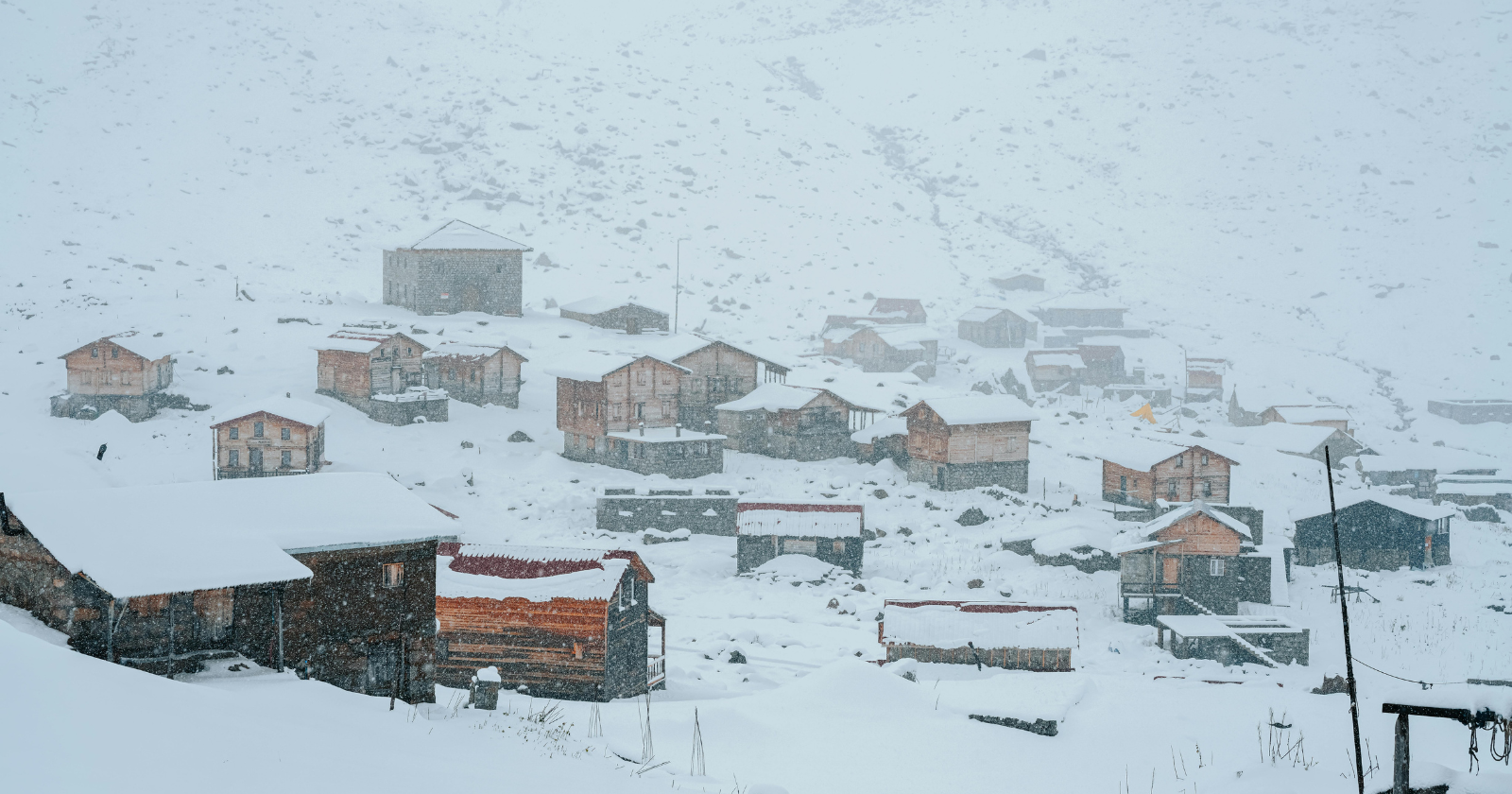
On July 18, 2026, at 6:25 in the morning local time, a thermometer outside a small French-Italian research station in the middle of Antarctica registered minus 119.4 degrees Fahrenheit.
Nine minutes later, it did it again. The station’s automated weather system logged the reading twice, confirming it was not an equipment glitch.
At the same moment, most of the northern hemisphere was in the middle of a punishing summer. Salt Lake City had just hit 109 degrees Fahrenheit. Southern Europe was breaking heat records. The Mediterranean was seeing surface water temperatures above 30 degrees. Wildfires were burning across Greece, Spain, and California. Global average temperatures for 2026 were tracking toward the second-warmest year on record.
Somewhere in East Antarctica, in the dark middle of the polar winter, a small group of researchers stood inside a heated building and watched the coldest temperature anywhere on Earth in fourteen years get recorded outside their window.
Where the reading came from
Concordia Research Station sits on the East Antarctic Plateau at approximately 3,230 metres of altitude — high enough that the air above it is thin, dry, and holds almost no capacity to retain the little heat that reaches the surface.
The station is jointly operated by the French Institut polaire and the Italian Antarctic Programme, and has been running year-round since 2005. Its position at a location called Dome C was chosen partly because the geographical and atmospheric conditions produce some of the most extreme cold on Earth — conditions that make the site scientifically valuable for atmospheric research, glaciology, and astronomical observation.
The July 18 reading of -119.4°F (-84.1°C) was recorded during the middle of Antarctica’s polar night. In this part of the continent, the sun disappears in early May and does not return until August. For four full months every year, the station operates in continuous darkness.
The temperature came within about a degree of Concordia’s own all-time record — minus 120.5°F, logged in the winter of 2010. It is still substantially warmer than Earth’s absolute cold record: minus 128.6°F, measured at Russia’s Vostok Station in July 1983, and still recognised by the World Meteorological Organization as the coldest naturally-occurring temperature ever verified on the surface of the planet.
What that temperature actually means
At -119°F, human physiology stops working the way it normally does.
Breathing very cold, dry air can cool and dry the airways and trigger bronchoconstriction, especially during heavy breathing or in people with asthma or other respiratory disease. A face covering can help warm and humidify inhaled air. The more immediate outdoor hazards are frostbite and hypothermia; exposed skin can freeze rapidly. Metal tools become brittle enough to shatter. Standard batteries lose most of their capacity almost immediately. Diesel fuel gels. Ordinary rubber and plastic become as fragile as glass.
The station itself is engineered specifically for these conditions. The main habitat consists of two connected cylindrical towers, elevated on pillars to prevent snow accumulation, insulated to standards that would be excessive anywhere else on Earth. Inside, the temperature is kept around 20°C — a temperature differential of over 100 degrees Celsius across the wall of the building.
Approximately thirteen people are wintering at the station this year. Their nearest neighbours, at Vostok Station about 600 kilometres away, are the only other humans within an area the size of continental Europe.
Why nobody can reach them
Once the Antarctic winter sets in, Concordia is completely cut off.
No aircraft can operate at these temperatures. Jet fuel gels at around -47°C. Aviation hydraulics fail. Metal fatigue in aircraft components becomes catastrophic. The last plane of the summer season lands in early February. The next plane does not arrive until early November — nine months later.
For those nine months, the thirteen researchers at Concordia have no way in or out. Medical emergencies cannot be evacuated. Supplies cannot be delivered. Communication is by satellite only. If something goes seriously wrong, it has to be dealt with using the resources already on the station.
The European Space Agency uses Concordia as one of its analogue sites for studying the psychological and physiological effects of long-duration space missions — the isolation, the confined quarters, the small group living together for extended periods, the impossibility of external help — because the specific experience of overwintering at Concordia is close to what a crew on a Mars mission would face.
What the paradox means
The specific coincidence of the July 18 record with the ongoing northern hemisphere heat wave is worth taking seriously without misreading it.
Antarctica getting cold and Europe getting hot are not contradictory. Global average warming does not mean every place on Earth becomes warmer uniformly. Regional weather patterns, seasonal cycles, and atmospheric processes continue to operate. Antarctica remains, on average, the coldest place on Earth by a substantial margin. Its interior can and does produce extreme cold readings that have nothing to do with the long-term climate trend.
But the coincidence is a reminder of the specific scale of Earth’s climate system. On a single day in July 2026, a person in southern Europe was struggling through 40°C of heat. On the same day, a person in East Antarctica was standing beside a thermometer reading -84°C. The temperature range across which humans currently live, on the same planet, at the same moment, was approximately 124 degrees Celsius.
Concordia will keep operating through the rest of the winter. More extreme low readings may still come — Antarctic temperatures usually bottom out in late August, just before the sun returns. The researchers currently at the station will be there until November. The thermometer outside their window will keep recording whatever the air does.
Somewhere on the ice, at the end of the planet, thirteen people are quietly measuring the coldest temperatures that Earth still produces — and cannot leave until spring.