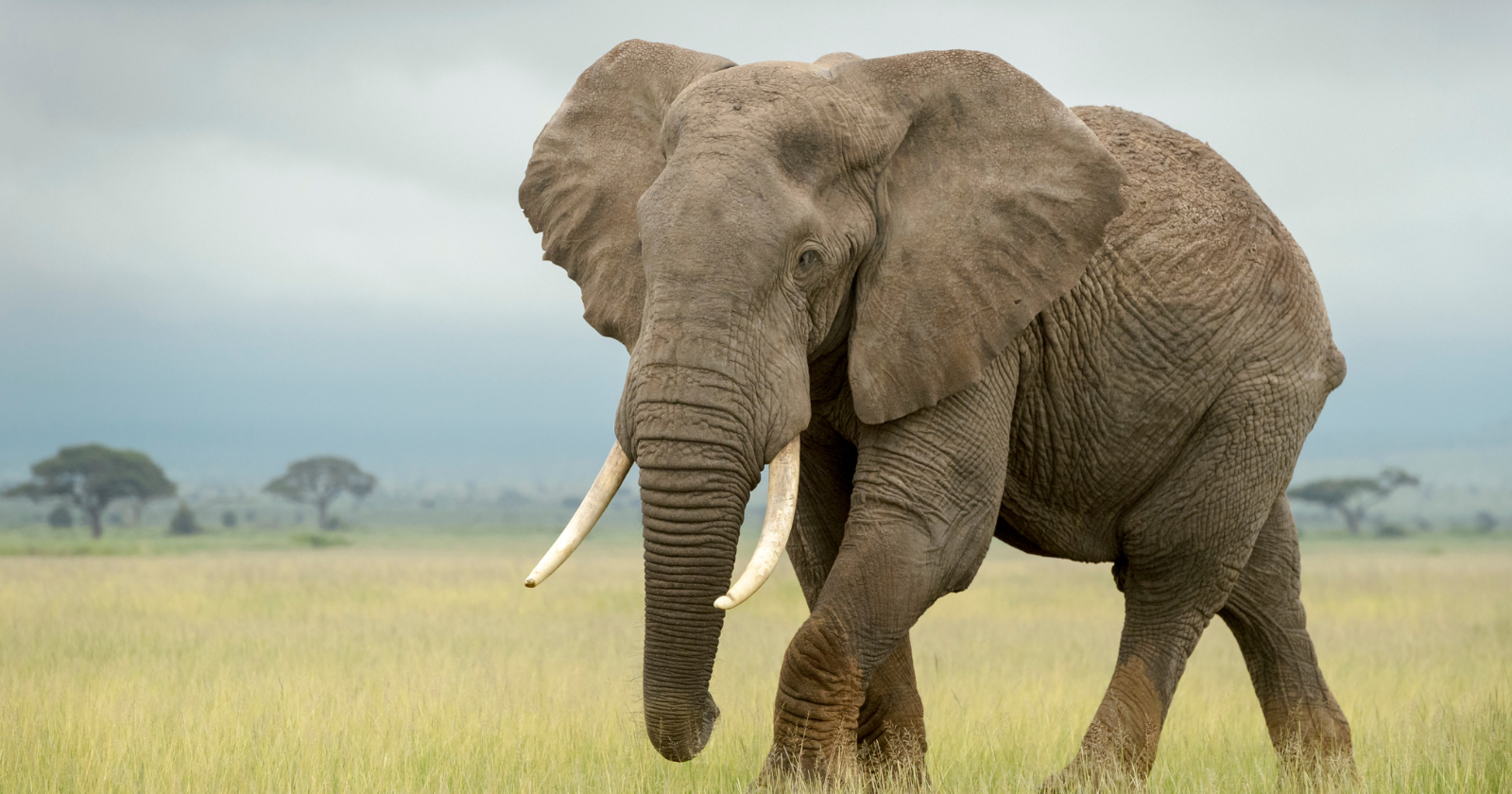
In two Kenyan national parks, a team of biologists spent 14 months following elephants in a vehicle and recording every rumble the animals made.
Over the four years the wider project ran, they compiled a specific dataset that included 469 identifiable calls. For each call, they knew which elephant had made the sound and, based on the specific social context, which elephant was being addressed.
When they fed the recordings into a machine-learning system, the algorithm found something remarkable. Each elephant’s calls contained a unique acoustic signature that was different depending on who the elephant was addressing. When those recordings were played back through a hidden speaker in the field, the elephant whose “name” had been called perked up and responded. Others nearby, whose names had not been called, largely ignored the sound.
This is the closest thing yet documented, outside human language, to one animal calling another by name.
What the researchers actually did
The study, published in Nature Ecology & Evolution in June 2024, was led by behavioral ecologist Michael Pardo. Pardo carried out the research as a postdoctoral fellow at Colorado State University, working in collaboration with the conservation organisations Save the Elephants and ElephantVoices.
The team drew on decades of accumulated field recordings from Kenya’s Amboseli National Park and the Samburu and Buffalo Springs National Reserves, spanning the years 1986 to 2022. From that archive, they extracted 469 calls from 101 unique callers and 117 unique receivers.
Elephants communicate largely through low-frequency rumbling sounds. Many of these rumbles fall in the infrasound range — below 20 hertz, too low for the human ear to hear. Infrasound has a specific practical advantage in an elephant’s world: low-frequency sound waves travel much further than higher-frequency ones, and elephant rumbles can carry as far as 10 kilometres across open savanna.
The team analysed the acoustic structure of the calls using a machine-learning algorithm. If elephants used names, the algorithm should be able to identify the intended recipient of a call from the sound alone, without knowing anything about the social context. It could.
The playback experiment
Machine-learning analysis is one thing. What the elephants themselves actually recognised was another.
To test whether the acoustic signatures functioned as genuine names — recognisable and meaningful to the elephants themselves — the team ran playback experiments in the field. They approached specific elephants with a portable speaker and played back either a call that had originally been addressed to that elephant, or a call from the same caller that had been addressed to a different elephant.
The elephants responded differently to the two types of playback. When they heard a call originally addressed to them, they perked up. They moved toward the sound. They vocalised in response more quickly and more often. When they heard a call from the same individual but originally addressed to someone else, they largely ignored it.
The specific pattern held across multiple test subjects. Elephants were, by measurable behavioural criteria, recognising when a call was intended for them.
Why this is different from dolphins and parrots
Scientists have known for decades that some non-human species use vocal identifiers. Bottlenose dolphins produce specific whistles called signature whistles that function as individual identifiers. Parrots imitate the calls of specific individuals in their flock.
But dolphins and parrots both work through imitation. A dolphin calls another dolphin by copying that dolphin’s own signature whistle. A parrot calls another parrot by mimicking that individual’s characteristic call. In both cases, the “name” is essentially the animal’s own signature reflected back at them.
Elephants appear to be doing something structurally different. The acoustic signatures Pardo’s team identified are not imitations of the receiver’s own calls. They are separate, distinct vocal patterns generated by the caller and directed specifically at the receiver.
In other words, elephants seem to be inventing arbitrary vocal labels for each other — the specific way humans invent arbitrary names. This makes elephants, according to the study team, the first non-human species documented to use non-imitative names for individuals.
The distinction matters. Imitative naming is a specific form of vocal mimicry, which many species use for other purposes. Non-imitative naming implies something more complex: the specific cognitive ability to associate an arbitrary sound with a specific individual and use that sound to address them.
What this implies about elephant cognition
The elephant naming study fits into a broader picture of elephant social intelligence that has been slowly emerging over decades.
Elephants live in complex matriarchal societies, with individual relationships that can span decades. They recognise the voices of specific herd members, remember individuals they have not seen for years, and can distinguish between the calls of family and strangers.
The naming finding adds a specific new dimension to that picture. It suggests that elephants have the cognitive infrastructure required to hold in memory a specific arbitrary label associated with each individual in their social network, and to retrieve that label at will when addressing another elephant.
This does not mean elephants have language. Language, as humans use it, involves grammar, syntax, and the ability to combine symbols into infinitely many novel meanings. The elephant finding is much narrower — one specific type of vocal label used for one specific communicative purpose.
But the finding is significant precisely because it identifies one of the specific cognitive building blocks that language depends on. Arbitrary vocal labels for individuals are a prerequisite for anything resembling naming in a human sense. Elephants apparently have them.
What has happened since
The Pardo study opened up a specific research question about how many other species use non-imitative names. The answer is already looking larger than anyone assumed.
In 2024, researchers reported in Science that marmoset monkeys appear to use vocal labels for one another. The tiny primates produce specific long-distance “phee calls,” and experiments suggested these calls can be directed to specific individuals.
Similar research is now being conducted on other species with complex social structures and vocal capabilities. Sperm whales are one obvious target — their coda-based communication has structural properties consistent with individual identification. Chimpanzees and bonobos are others.
The specific finding that elephants use names for each other is only two years old. The specific research programme it opened up is just getting started.
Meanwhile, in Kenya, elephants continue to rumble across the savanna. Some of those rumbles, on close analysis, appear to include specific labels for specific individuals — labels the elephants themselves recognise, respond to, and use to keep track of who is talking to whom, in a social world that scientists are still learning how to describe.