

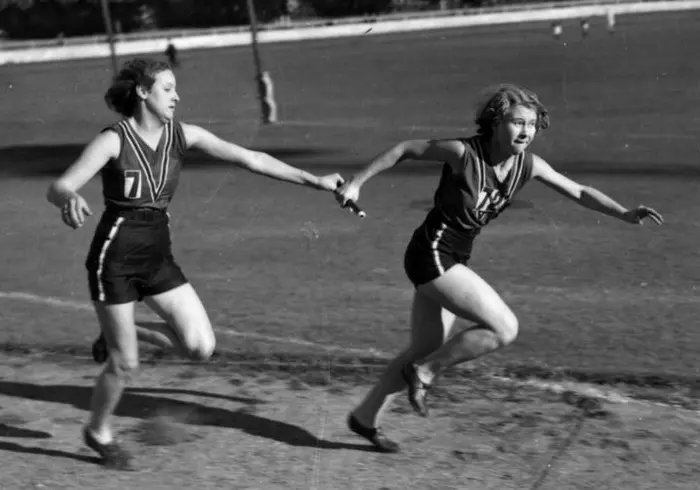
The brain performs an intricate dance every time you watch a bird fly across your field of view, seamlessly transferring visual processing duties between its left and right hemispheres like relay runners passing a baton. New research from MIT reveals the precise neural mechanisms behind this remarkable coordination, showing how the brain anticipates and orchestrates these handoffs to maintain our unified visual experience.
The Neural Relay Race
While each hemisphere of the brain primarily processes vision from the opposite side of your visual field, you never notice any gaps or jumps when objects move from left to right or vice versa. This study, published in the Journal of Neuroscience, uncovered how different brain wave frequencies work in concert to achieve this feat.
Earl Miller, a neuroscientist at MIT’s Picower Institute, notes the surprising disconnect between brain anatomy and perception.
“It’s surprising to some people to hear that there’s some independence between the hemispheres, because that doesn’t really correspond to how we perceive reality. In our consciousness, everything seems to be unified.”
The research team, led by Matthew Broschard and Jefferson Roy, recorded neural activity in the brains of macaque monkeys as they tracked moving targets. They discovered that the handoff process involves multiple layers of coordination, with different brain regions and frequencies playing distinct roles.
Higher frequency gamma waves, concentrated in the ventrolateral prefrontal cortex, handled immediate sensory information. Meanwhile, lower frequency alpha and theta waves in the dorsolateral region managed the actual transfer logistics. About 250 milliseconds before a target crossed the visual midline, alpha waves ramped up in both hemispheres, creating an anticipatory bridge.
Preventing Dropped Calls
The process mirrors how cellular networks manage calls as you travel between towers.
“The brain seems to anticipate the transfer and acknowledge its completion,”
the researchers wrote, describing a sophisticated handshaking protocol that prevents information loss.
After the target completed its journey to the new hemisphere, theta waves peaked in the receiving region, essentially signaling “message received.” This redundant system ensures that both hemispheres briefly hold the same information during transitions, much like how your phone connects to a new cell tower before releasing the previous one.
The study also revealed clear functional divisions within prefrontal brain regions. The ventral areas showed stronger responses to sensory events, while dorsal regions specialized in coordinating the handoff process. During tracking periods, information flowed from ventral to dorsal areas via gamma waves, while alpha and beta waves carried signals in the opposite direction for top-down control.
This research has implications beyond basic neuroscience. The authors note that interhemispheric coordination problems appear in various neurological conditions, including schizophrenia, autism, depression, and dyslexia. Understanding the specific neural dynamics required for successful handoffs could inform future therapeutic approaches for these disorders.
The findings suggest that our seamless visual experience results from active neural cooperation rather than passive switching between hemispheres. Every time you watch a tennis match or track a passing car, your brain orchestrates this elaborate relay system dozens of times per minute, maintaining the illusion that vision is processed by a single, unified system rather than two separate hemispheres working in careful coordination.