

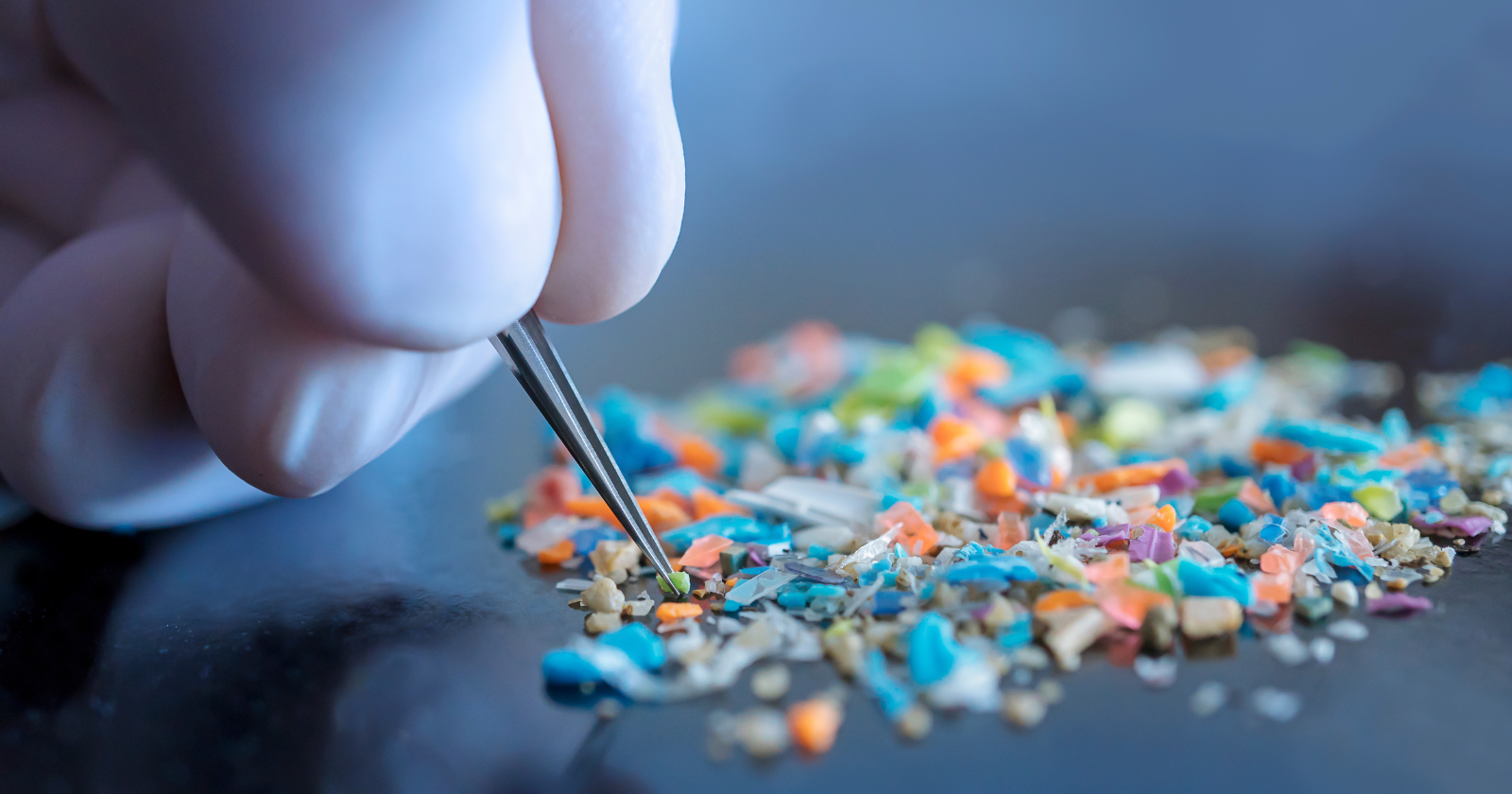
Boil a kettle, drop in a teabag, and somewhere at the back of your mind sits a number you half-remember reading: billions of plastic particles, in your cup, right now.
That number came from a 2019 paper by Laura Hernandez and colleagues at McGill University, published in Environmental Science & Technology. Steeping a single plastic teabag at 95°C, the team reported, released roughly 11.6 billion microplastic particles and 3.1 billion nanoplastics into one cup. Only 2.3 million of those microplastics measured more than a micrometre across, which matters because that is the size range where another laboratory could later check the work particle by particle. McGill’s own announcement asked “Some plastic with your tea?” and the story went everywhere.
Germany’s food safety agency then did something that happens far too rarely.
It ran the experiment again.
Counting it a second time
Researchers at the German Federal Institute for Risk Assessment, the body Germans know as the BfR, brewed teabags the same way and counted what came out. Their figure for particles above one micrometre landed between 5,800 and 20,400 per bag, two to three orders of magnitude below 2.3 million. In plain terms, the original count was somewhere between a hundred and a thousand times too high.
That work ran as a formal comment in the same journal, with Kristin Busse as lead author and co-authors drawn from several German research institutes.
Same brewing temperature, wildly different answer. Almost the entire gap comes down to one step in the laboratory preparation.
The drying problem
Hernandez’s team took the brewed water, dried a droplet of it onto a silicon wafer, photographed the residue with an electron microscope, and counted every speck.
Drying is where BfR thinks it went wrong. Substances dissolved in that water, invisible while wet, can precipitate or crystallise into solid lumps as the liquid evaporates. Such lumps are hard to tell from debris under a microscope, and because Hernandez’s method fingerprinted the dried film as a whole and not each speck individually, BfR expects a good share of them were logged as plastic.
Busse’s group sidestepped the problem with micro-Raman spectroscopy, which fires a laser at each individual particle and reads its chemical fingerprint, instead of analysing a dried film and assuming everything caught in it was plastic. Between 1.6 and 5.3 per cent of what they counted came back as polyamide, the nylon of the bag itself. BfR’s verdict on the sample preparation was blunt: unsuitable for the question being asked.
What those specks actually were
Mostly oligomers.
That word sounds worse than the thing it describes. A polymer is a long molecular chain, thousands of identical links joined end to end, and both nylon and PET are polymers. An oligomer is a stubby offcut from the same manufacturing process, a few links long and small enough to dissolve in hot water instead of drifting about in it as grit.
Dissolved is the operative word. Plastic that dissolves is a chemical migration question, covered by food contact rules, and these particular compounds have already been assessed. At the quantities measured, BfR found no health risk. Very little of what got counted was microplastic in any meaningful sense.
Hernandez and colleagues published a reply defending the original work. Germany’s institute maintains that the response leaves the central criticism untouched.
The particles that were there all along
One finding in the follow-up work is stranger than the arithmetic.
Busse’s team photographed teabag surfaces before and after brewing. Particles were already sitting on the mesh beforehand. Slightly fewer were there afterwards. The mesh itself showed no pitting or fraying of the sort you would expect if hot water were shredding it.
Whatever plastic reaches the cup, then, was mostly dust already on the bag before the kettle boiled. Your teabag is being rinsed rather than eroded.
A wider review of the evidence
In October 2025 the European Food Safety Authority put out a literature review of micro and nanoplastic release from food packaging. Its team screened more than 1,700 papers and judged fewer than one in ten solid enough to use.
The complaints were unusually direct for an EU agency: inconsistent test conditions, contamination creeping in from lab air, unreliable identification of whatever had been found. Where release does happen, the review concluded, mechanical stress drives it, meaning abrasion, friction and fibre shedding rather than anything leaching chemically out of the plastic. Real-world release runs well below the reported figures, and the data remain too patchy to estimate how much anyone is actually swallowing.
Fibrous and porous materials do shed under heat and agitation, teabags included. Nobody is claiming zero.
Why the correction never travelled
That 2019 paper has a number in it. Eleven point six billion fits in a headline and survives a dinner party. “Between 5,800 and 20,400, of which a few per cent were actually plastic” does neither.
Replication is the least glamorous job in science and quietly does the most work. Somebody redid the experiment, spotted the flaw, and had the correction in print inside twelve months. It never caught up, because the original figure had a head start and better rhythm.
Corrections do get made. This one landed in 2020, got restated in plain language in 2025, and is still losing to a headline from 2019.