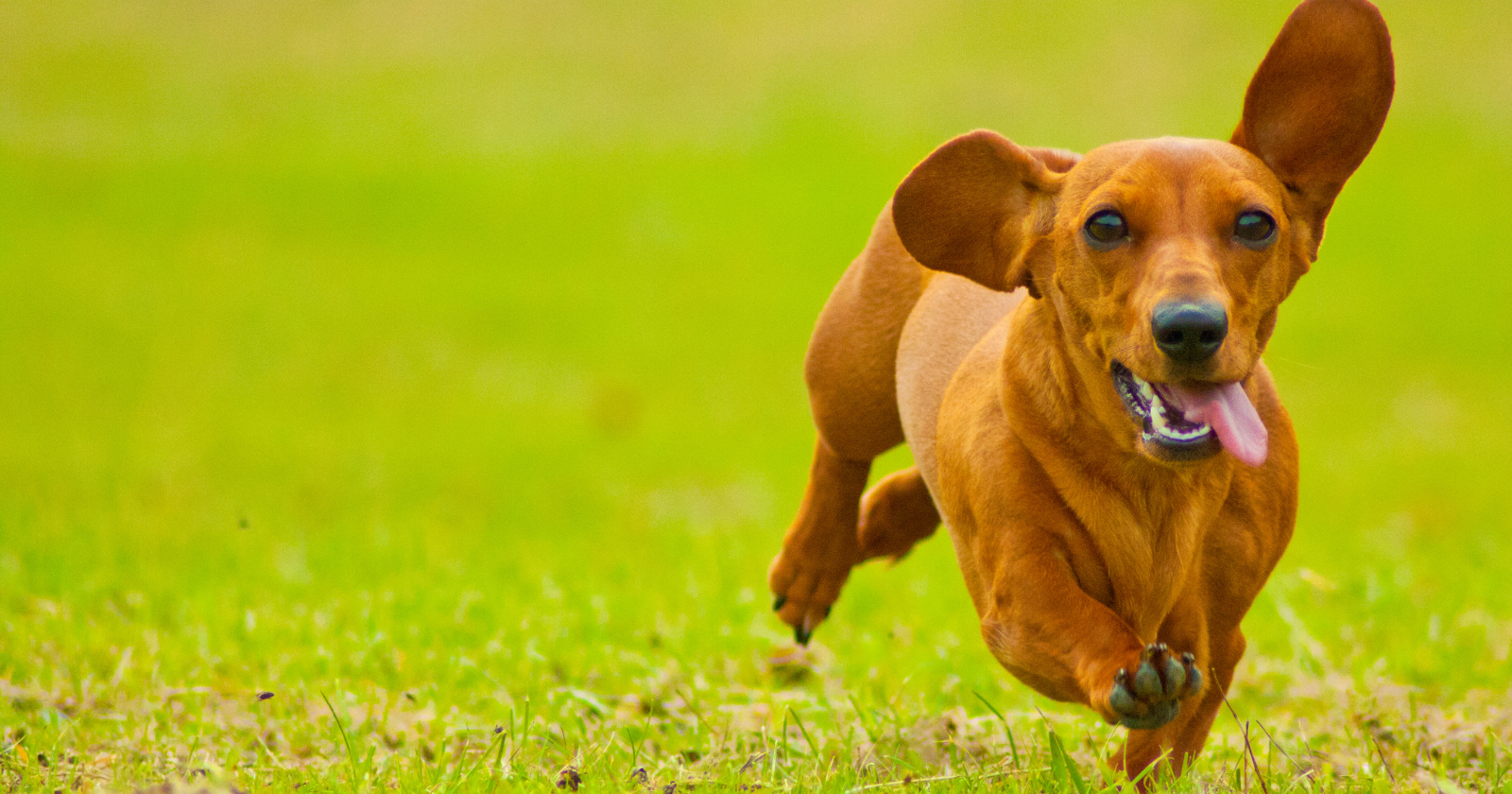
Valerie weighed four kilograms when she squeezed out of her canvas pen, which is roughly a large bag of sugar with legs and opinions.
She came home at nearly six.
In November 2023, a one-year-old miniature dachshund escaped a camping enclosure at Stokes Bay on Kangaroo Island while her owners, Georgia Gardner and Josh Fishlock, walked a couple of hundred metres away to catch squid. Nearby campers tried to help and spooked her instead. She bolted into the scrub. They searched for five days, then drove back to Albury in New South Wales expecting never to see her again.
They saw her 529 days later. ABC News reported that Kangala Wildlife Rescue had finally trapped her and described her as fit and well, and a vet later cleared her in what the charity called perfect health. She had also gained close to two kilograms, and most of it was muscle. “She’s put on a lot more muscle. Like, she’s jacked,” Gardner told The Farmer’s Dog Digest.
What the island had on offer
Kangaroo Island isn’t a soft landing for a lapdog. Smithsonian magazine counted at least two venomous snake species and wedge-tailed eagles that routinely take prey far heavier than a four-kilogram dog, and Kangala’s updates listed goannas, wallabies, possums and feral cats competing for the same feed.
So what was she eating? Farmer Ivan Smith, whose property Valerie haunted for months, told ABC’s Australian Story that the best guess was skinks, mice and roadkill. Kangala director Lisa Karran was blunter about the menu, pointing out that a dead sheep or cow makes a fine food source if you’re patient.
One piece of luck: director Jared Karran noted the island has no foxes and no dingoes, removing the two predators most likely to have ended the story in week one.
Why being tiny helped
Why would being small count in Valerie’s favour? Ethologist Marc Bekoff, who had no role in the rescue but has spent his career studying how dogs might survive without humans, was asked to weigh in. Small dogs need fewer calories, he said, and they can be quicker, more acrobatic and less appealing to a predator sizing up a meal. His conclusion: size isn’t necessarily a disadvantage.
Bekoff also floated something that should unsettle every owner who buys enrichment toys: the snuffle mats and food puzzles Valerie grew up with may have been rehearsal. That’s one researcher’s reading rather than a tested finding, though a tidy one.
The job the breed was built for
“Independent, bold and slightly combative” is how the American Kennel Club’s breed history describes the temperament German breeders were after. Dachshund translates as badger dog, and from the late 1600s into the 1700s, foresters and hunters engineered exactly that: an animal that would follow a badger down a tunnel, fight it head-on with no room to turn around, and keep going for hours. The result needed a long ribcage for lung capacity and a jaw built to give as good as it got.
Nobody was breeding a companion. They built a compact, stubborn, self-directed hunter, and a few centuries later it got jumpers and a ramp for the stairs.
Valerie’s owners had done exactly that. She slept in their bed. She was, as Gardner has put it, an “absolute princess.”
How they finally caught her
Sharon Tucker farmed nearby and spotted Valerie dozens of times over fifteen months without ever getting close. The dog would look at her, almost smiling, as if to say, “You’re not going to catch me, I’m having a great time,” Tucker recalled in ABC’s Australian Story. What worked in the end was memory.
Lisa Karran rebuilt Valerie’s home sleeping setup inside a crate at the trap site, working from photographs Gardner had sent, complete with her old toys and bedding. She knew it was working when the camera caught Valerie grabbing a toy and thrashing it about for two seconds, tail going, as though she were back in a lounge room.
Then came the shirts. Gardner sent over tops she had worn through full 12-hour shifts, and the team tore them into strips and laid them as an arrow pointing to the trap.
Volunteers from Kangala Wildlife Rescue put in more than 1,000 hours and covered roughly 5,000 kilometres to reach that point, as documented by ABC News.
The last detail should kill any lingering idea that this was a lucky pet. A doctor in Canada emailed Jared Karran suggesting he add a slide bar to the door. He thought it was unnecessary, then added it anyway. When the door dropped, Valerie went straight to the bottom rung, grabbed the wire and pulled, testing whether it would give. Without the bar, Karran reckons, she would have been gone.
The part still being argued about on the island
Was Valerie really out there alone the whole time? Kangaroo Island’s mayor, Michael Pengilly, doesn’t think so. He has said publicly that he believes somebody was quietly feeding and watering her, which would undercut the whole survival story. Jared Karran, who fielded the theory directly in his Farmer’s Dog Digest interview, rejects it outright. He can account for every person living in the area she used, he says, and none of them fed her.
It’ll probably stay unresolved, since the only witness is a dog.
One change is beyond argument. Since the reunion, Valerie’s separation anxiety, the thing that may well have sent her out of that pen in the first place, has eased, Gardner says. She’ll meet strangers now. She plays tug of war with the family’s other dachshund and, being the stronger animal by some distance, lets her win.