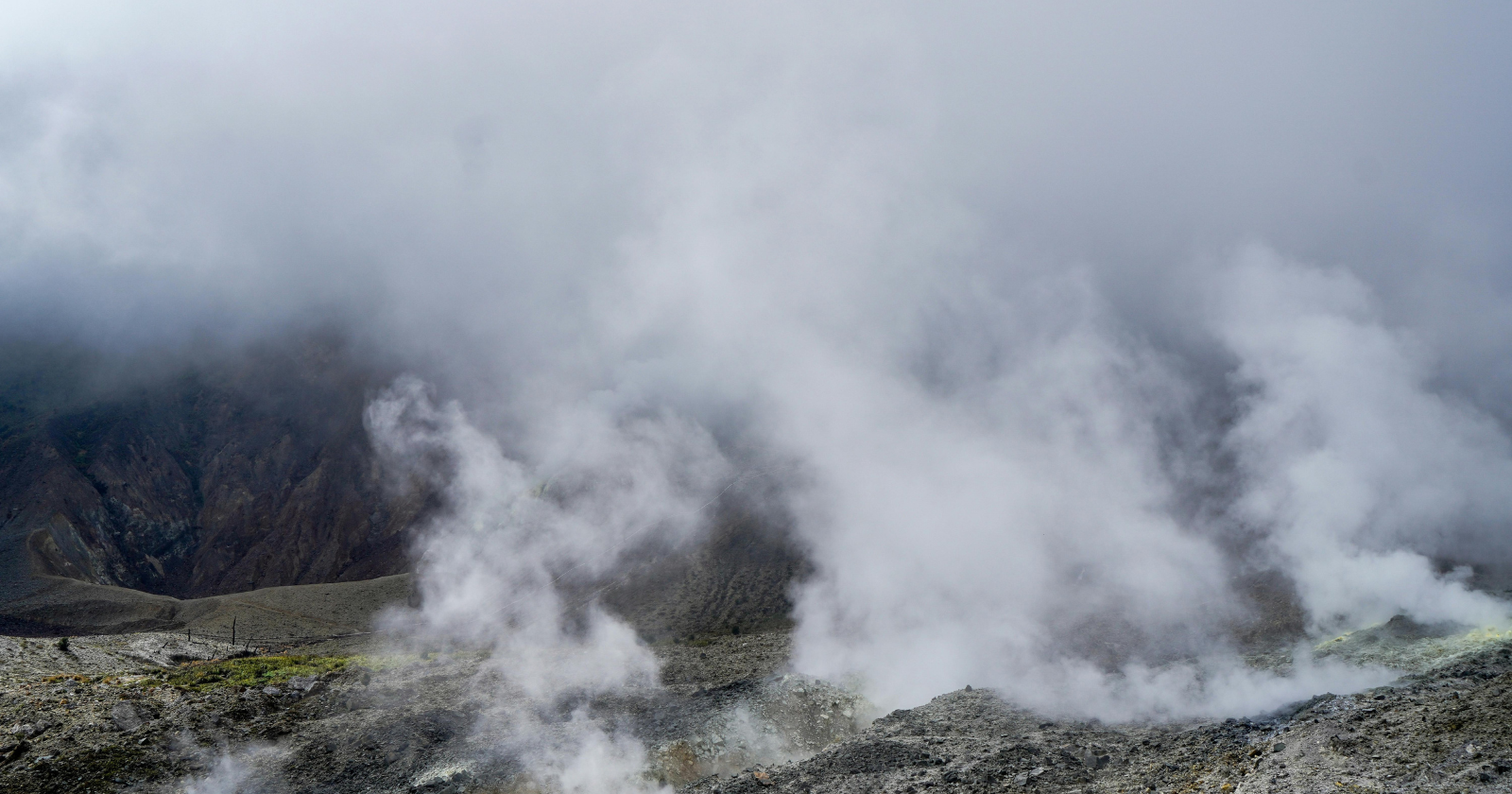
Somewhere north-west of Nairobi, in a valley where the ground hisses and the air smells faintly of struck matches, sits a power station with no fuel bill.
No coal barges. No gas pipeline, no diesel tankers grinding up the escarpment. Just a field of fat silver pipes threading between volcanic hills, carrying steam that arrives under its own pressure from a couple of kilometres down. Zebras graze around the wellheads, because the whole complex sits inside Hell’s Gate National Park.
Why the ground is hot
Kenya’s Rift Valley is a continent coming apart at the seams. Geologist Lucía Pérez Díaz, writing in The Conversation, explains that the East African Rift is an active rift, driven by a swell of abnormally hot mantle pushing up beneath the crust, stretching it thin and cracking it along enormous faults. Volcanoes and earthquakes are the surface symptoms of that stretch.
At Olkaria, the geothermal field in question, the heat sits absurdly close to the surface. KenGen, the state-owned generator that runs the site, puts the magma intrusions feeding the field at less than six kilometres deep, and notes that one of the lava flows dotting the landscape erupted only about two centuries ago.
How steam becomes electricity
So what’s actually happening a few kilometres beneath those wellheads? Wells at Olkaria go down between 600 and 3,000 metres, into fractured trachyte and rhyolite that has been marinating in heat for the better part of a million years. What comes back up is a messy mix, roughly three-quarters hot water to one-quarter steam. Cyclone separators spin the two apart, dry steam goes off to the turbine hall, and the leftover brine gets pumped back down to keep reservoir pressure from sagging.
It is a deeply unglamorous arrangement that runs around the clock.
Olkaria I, commissioned in June 1981, was the first geothermal plant in Africa: three units of 15 MW apiece, fed by 33 wells. KenGen reports it has averaged better than 95 per cent availability from the day it started.
Forty per cent of the grid
Geothermal supplied 39.51 per cent of all electricity generated in Kenya in the financial year to June 2025, per the Energy and Petroleum Regulatory Authority. Hydro came second at about a quarter. Renewables together made up just over 80 per cent of generation.
That number matters more than it first appears. Hydro output swings with the rains, and Kenya has had enough dry years to know what that costs. Steam does not care whether it rained. A geothermal field behaves like a coal station minus the coal, which is why grid operators treat it as baseload, and why it now anchors the Kenyan grid.
Roses, pyrethrum and a very large hot bath
At Eburru, further along the rift, villagers have been drying pyrethrum flowers over a shallow steam well since a drying plant went up there in the 1920s, decades before anyone in Kenya thought to make electricity from the same heat. Irene Jepkorir Ronoh, in a paper presented at Stanford’s geothermal reservoir engineering workshop, catalogues where else the warmth ends up. Fifty hectares of greenhouses at the Oserian rose farm get heated in the small hours, roughly 2am to 7am, to keep fungus off flowers headed for export markets in Europe and the US. A spa at Olkaria runs off the same cooling brine, its lagoons cascading down from 90 degrees to bathwater and pulling in some 45,000 visitors a year.
Who was living there first
Building all this cost somebody their grazing land.
Four Maasai villages were relocated in 2014 to make room for the 140 MW Olkaria IV plant. Jackson Shaa of the Narasha Community Development Group and Annabel Perreras of the International Accountability Project, writing for the Bretton Woods Project, record that the community’s land shrank from 4,200 hectares to 1,700, and that the replacement site was poor country for livestock. They also note that the World Bank’s own Inspection Panel found the Bank should have triggered its indigenous peoples policy and failed to, having decided the policy was for hunter-gatherers rather than pastoralists. The Bank later conceded the point, and mediation followed. Houses at the new site are solid; herds are smaller.
Drilling the next 1,600 megawatts
Steam fields are a gamble, and an expensive one. A single well runs into millions of dollars and can come up dry, which is why private money has historically preferred buying steam to hunting for it. Kenya’s workaround was the state-owned Geothermal Development Company, which drills first and sells the steam to whoever wants to bolt a turbine onto it. At Menengai, a collapsed volcanic caldera near Nakuru with an estimated 1,600 MW sitting under it, GDC has sunk 53 wells and contracted three independent operators for the first phase, two of them now feeding the grid.
None of this touches the deeper process that put the heat there in the first place. Further north along the same rift system, a team led by Christian Rowan at Columbia University’s Lamont-Doherty Earth Observatory reported in a paper published in Nature Communications that crust beneath the Turkana basin has thinned to about 13 kilometres, against more than 35 away from the rift’s centre. That is one study, on one stretch of rift, describing a stage of continental break-up nobody had previously caught in the act. It does put the plumbing in perspective. Kenya has spent four decades learning to tap a continent while it splits, and the splitting is not waiting for the turbines to be paid off.