

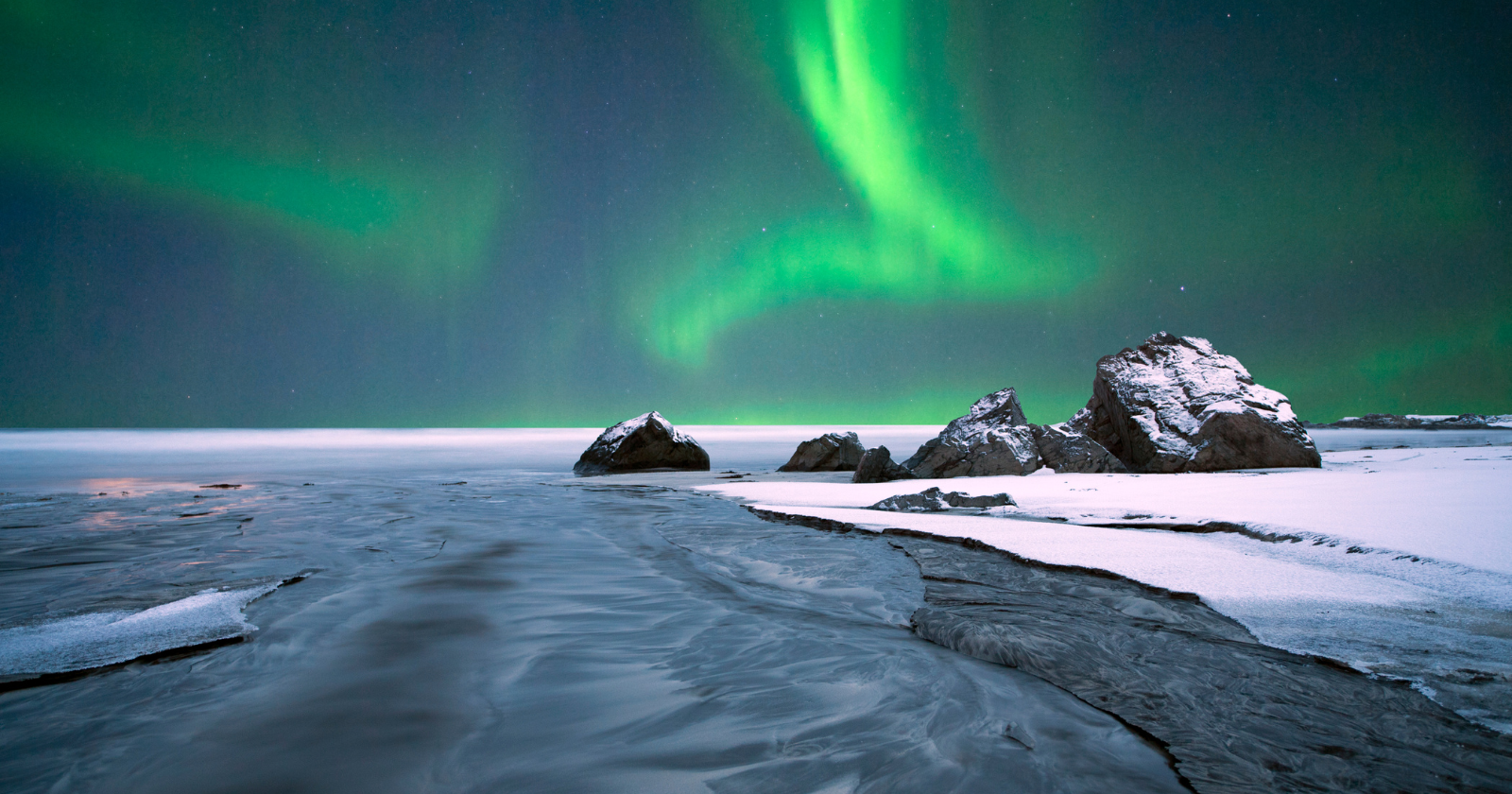
A psychologist arrived in Arctic Norway in 2014 with a suitcase of thermals and a hypothesis about human misery. The misery declined to show up.
Kari Leibowitz, then a doctoral student at Stanford, had arranged a Fulbright year in Tromsø, a university city of roughly 70,000 people perched at 69 degrees north. From late November to late January, the sun never clears the horizon. Residents do not check what time it rises.
They check what date.
Her plan was to document the damage two sunless months do to mental health. What she found instead, as she described in an interview with Stanford Report, derailed the whole project: her neighbours were looking forward to the polar night.
The numbers were already odd
Researchers in northern Norway had been circling this puzzle long before she got there. A 1998 survey of 3,736 adults living at 70 degrees north, published in Psychological Medicine by Vidje Hansen and colleagues at the University of Tromsø, found that just over a quarter of respondents reported some sort of trouble during the dark period. It turned up no significant link, though, between the month someone filled in the questionnaire and whether they reported depression or sleeping problems.
A much larger effort followed. May Trude Johnsen, Rolf Wynn and Trond Bratlid surveyed 8,951 people as part of the long-running Tromsø Study and reported in BMC Psychiatry that insomnia spiked in winter, exactly as folklore predicts, while mental distress showed no significant seasonal difference at all.
A scale for how people think about the dark
What if the missing variable was belief, not the light itself? That question sent Leibowitz, working with Joar Vittersø, her advisor in Tromsø, toward building a rough measuring stick she called the Wintertime Mindset Scale, described in her own account for The Conversation. Participants rated how strongly they agreed with statements such as “There are many things to enjoy about the winter”, alongside mirror-image items about finding the dark months bleak.
Their results, written up in the International Journal of Wellbeing in 2020, drew on 238 respondents from southern Norway, northern Norway and the Arctic island of Svalbard. A positive wintertime mindset tracked with higher life satisfaction and more frequent positive emotions. In the Stanford Report interview cited earlier, Leibowitz described the results as extending further, into psychological flourishing and personal growth, though that is her own gloss on the findings rather than a separate statistic the paper reports. Latitude tracked with mindset too, in the direction nobody would guess. People living further north, in more darkness and more cold, held sunnier views of the season than Norwegians in the comparatively mild south.
That is one survey of 238 people, self-reported, taken at a single point in time. Correlation, not proof of cause. A researcher who found the opposite pattern next year would not be contradicting settled science, because there is no settled science here yet, just an interesting crack in an assumption.
Cosiness as local technology
“I love the coziness of the winter months,” reads one item on the survey Leibowitz built. Norwegians have a word for exactly that: koselig, usually translated as cosy, though it covers a wider territory than the English word manages. Candles on café tables. Wool everywhere. Sheepskins draped over outdoor seating. Cinnamon buns treated as a seasonal event rather than a snack. A cabin trip in near-total darkness counted as a highlight of the year.
Tromsø also schedules things into the gap. Film festivals, choir concerts and northern lights tourism all cluster in the weeks when the sun is gone, which means the calendar itself insists the period is worth showing up for. Prams get parked outside for naps in sub-zero air. Toddlers are dressed in layers and sent out regardless, on a Norwegian saying Leibowitz quotes often: there is no such thing as bad weather, only bad clothing.
Winter can be cosy and even restorative, she told NPR after a decade of research trips through Scandinavia, northern Japan and other places with brutal cold, work that became a 2024 book. Whether a person believes that turns out to shape what the season actually feels like from inside.
What does not travel
Picture someone in a colder, greyer city doing everything right: candles lit, wool jumper on, the bad-weather line dutifully repeated. None of this cancels seasonal affective disorder, which is a real diagnosis with real treatments for the people it hits.
Reframing does not help someone who cannot get out of bed in February, and treating mindset as a cure-all would be a cruel misreading of a modest finding.
Nor does Tromsø’s attitude float free of its circumstances. Ski trails start at the edge of the suburbs. Snow reflects what little light there is and doubles it. Public healthcare, short commutes and dense social networks all cushion a hard season in ways that a positive outlook alone cannot replicate in a city where winter mostly means grey slush and a long drive.
Still, the awkward finding sits there. Sixty-nine degrees north, two months without a sunrise, and mood that refuses to collapse on schedule. The polar night has been treated for decades as a natural experiment in deprivation, and the people inside it keep answering the questionnaires like they have been let in on something.
The research suggests a season’s reputation is partly felt and partly inherited, and only one of those halves is fixed. Anyone facing a grey, drizzling January can test the cheap half for nothing. Candles, wool and a standing Tuesday appointment come in well under the price of a flight to the Arctic.