

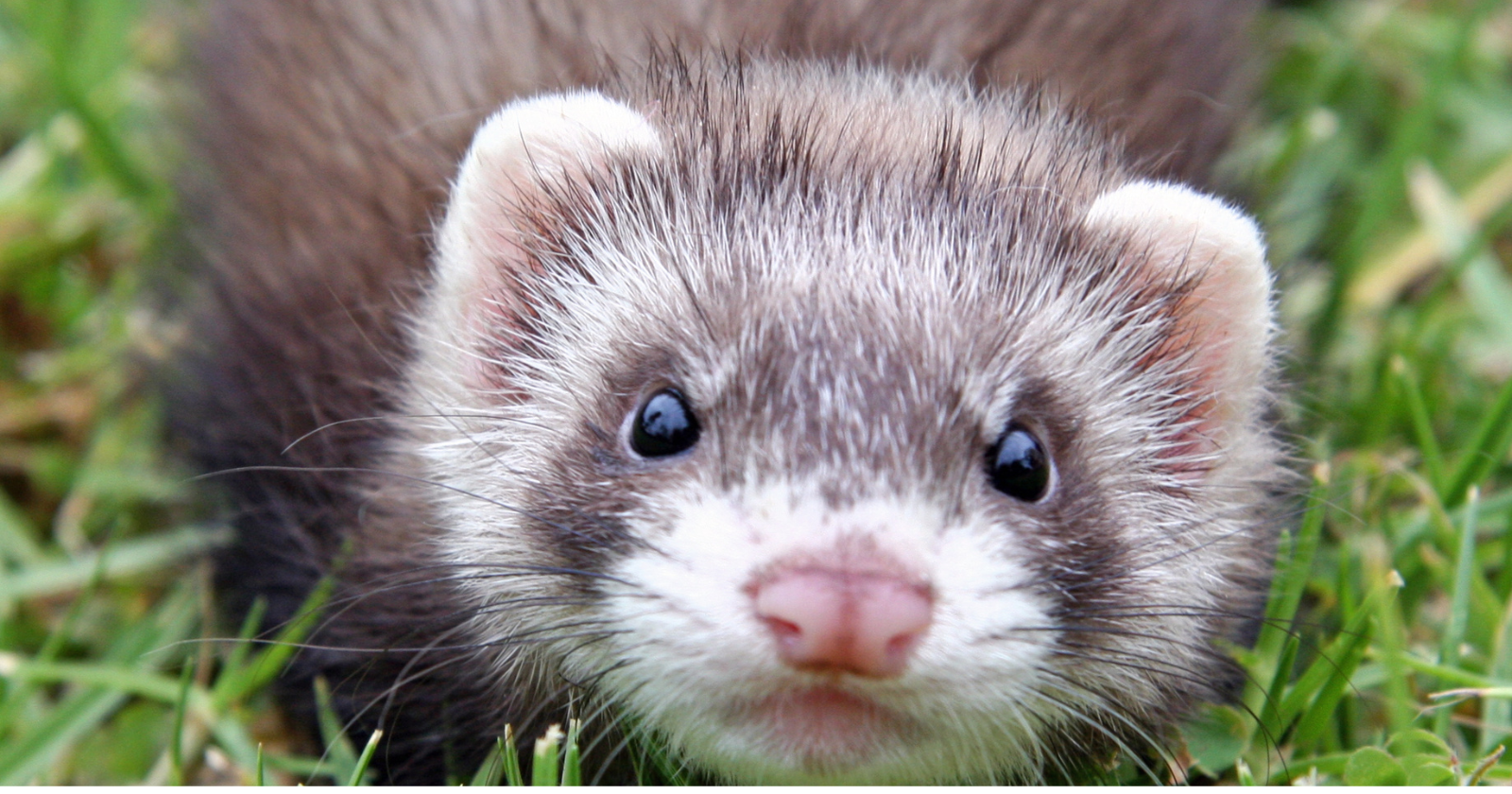
Shep started barking outside the bedroom window at three in the morning, and John and Lucille Hogg rolled over and went back to sleep. Porcupine, probably. Next day John found a carcass near the house: small, with a black mask, black feet and a black-tipped tail. Lucille thought it would make a nice mount, so they carried it to the taxidermist in Meeteetse, Wyoming, who took one look and told them to ring the government.
The animal was a black-footed ferret, a species that had officially stopped existing two years earlier.
Written off twice
North America’s only native ferret spent the twentieth century sliding towards nothing. Ranchers were poisoning prairie dogs across the plains, and the ferret both eats them and shelters in their burrows. As the Wyoming Game and Fish Department tells it, biologists presumed the species extinct by the 1950s, found a surviving pocket in South Dakota in 1964, and watched that one go as well. The last survivor of a failed captive breeding program died in 1979.
Surveys and radio telemetry around the Hogg ranch turned up roughly 120 ferrets living in the sagebrush.
What to do with them started an argument. Bob Oakleaf, then a nongame biologist with the department, remembers a camp that wanted every animal in captivity immediately. The other view won: watch the colony, prepare for captive breeding, and keep a contingency plan ready.
Two diseases and one very bad year
In the summer of 1985 the ferrets and the prairie dogs collapsed together. Sylvatic plague, a bacterial disease introduced to North America around a century ago, was tearing through the rodent colony. Canine distemper was working through the ferrets, undetected at the time. Nobody had yet worked out that black-footed ferrets, unlike most of their weasel relatives, have no resistance to plague either.
Six ferrets were taken into captivity that autumn. All six died of distemper.
Six more were caught, quarantined and survived. Eleven followed in 1986, and the last wild black-footed ferret on Earth was picked up on 28 February 1987.
A mature male called Scarface
The program nearly died there. Its 1986 season produced nothing, probably because the only males on hand were juveniles. In 1987 keepers paired the animals in late January and waited. Artificial insemination failed. Males seemed to be cycling out of breeding condition just as females cycled into it.
That last wild-caught ferret mattered. Named Scarface, he was a grown adult, and he and a female called Becky produced the first six kits born in captivity, lifting the world population by a third. The next season fourteen females produced thirteen litters.
Seven animals, thousands of descendants
Eighteen ferrets went into that program. Seven of them left descendants. As Smithsonian magazine noted when the cloning work went public, the recovery population had descended from those seven for decades, a gene pool the size of a dinner party, with the inbreeding problems that implies.
Thousands have since been released across a dozen states, Canada and Mexico, though only a few hundred live wild at a time. Dave Lucas, project leader at the Rocky Mountain Arsenal National Wildlife Refuge outside Denver, put the risk bluntly in a US Fish and Wildlife Service feature. The worry is less that plague kills ferrets and more that it empties a prairie dog town, leaving them nothing to hunt. A large trial across the western states, written up in EcoHealth, found that a plague vaccine delivered in oral bait improved prairie dog survival, though results varied by site and timing.
An eighth founder, 37 years late
Willa was one of the Meeteetse ferrets. She died in 1988 without producing a kit, and her genetics should have gone with her. Someone thought to send tissue to the Frozen Zoo at San Diego Zoo Wildlife Alliance, where it sat for three decades.
In December 2020 those cells produced Elizabeth Ann, the first clone of a US endangered species. Two more copies of Willa (Antonia and Noreen) arrived in 2023. Antonia bred the following year, the first cloned endangered animal anywhere to produce young for a recovery effort. Revive & Restore, which ran the cloning with federal and zoo partners, now counts fifteen animals in the breeding population carrying Willa’s genes, making her the eighth founder. The Fish and Wildlife Service reported another round of kits in mid-2025, all descended from the clones.
A ferret that died during the Reagan administration is now a working part of the breeding program, which is a strange sentence to be able to write.
The part nobody can clone
None of this fixes the real constraint. Andy Gygli, who leads the ferret program for Wyoming Game and Fish, describes two tests a release site has to pass: whether the habitat can support ferrets, and whether the landowners can live with prairie dogs.
Since the 1991 release at Shirley Basin, Wyoming has managed to establish exactly one more site. Genetics can be pulled out of a freezer. Grassland has to be asked for, politely, one ranch at a time.