

A ship off Sicily once dragged its anchor for 300 kilometres and sliced through six submarine cables on the way past.
Nobody onshore knew a boat was to blame. Traffic slowed, engineers swore, and a repair vessel eventually went out with a hook. The International Cable Protection Committee still cites that 2008 drag as one of the worst on record. Undersea breaks rarely involve villains. They involve a hull, a hook and bad luck.
What is actually down there
Satellites get the credit. Glass does the work.
Telecoms research firm TeleGeography puts more than 1.5 million kilometres of submarine cable in service globally as of early 2026, spread across roughly 600 active and planned systems. For most of its run across an ocean, a cable is about as wide as a garden hose. Inside it, the fibres carrying the light are no thicker than a human hair.
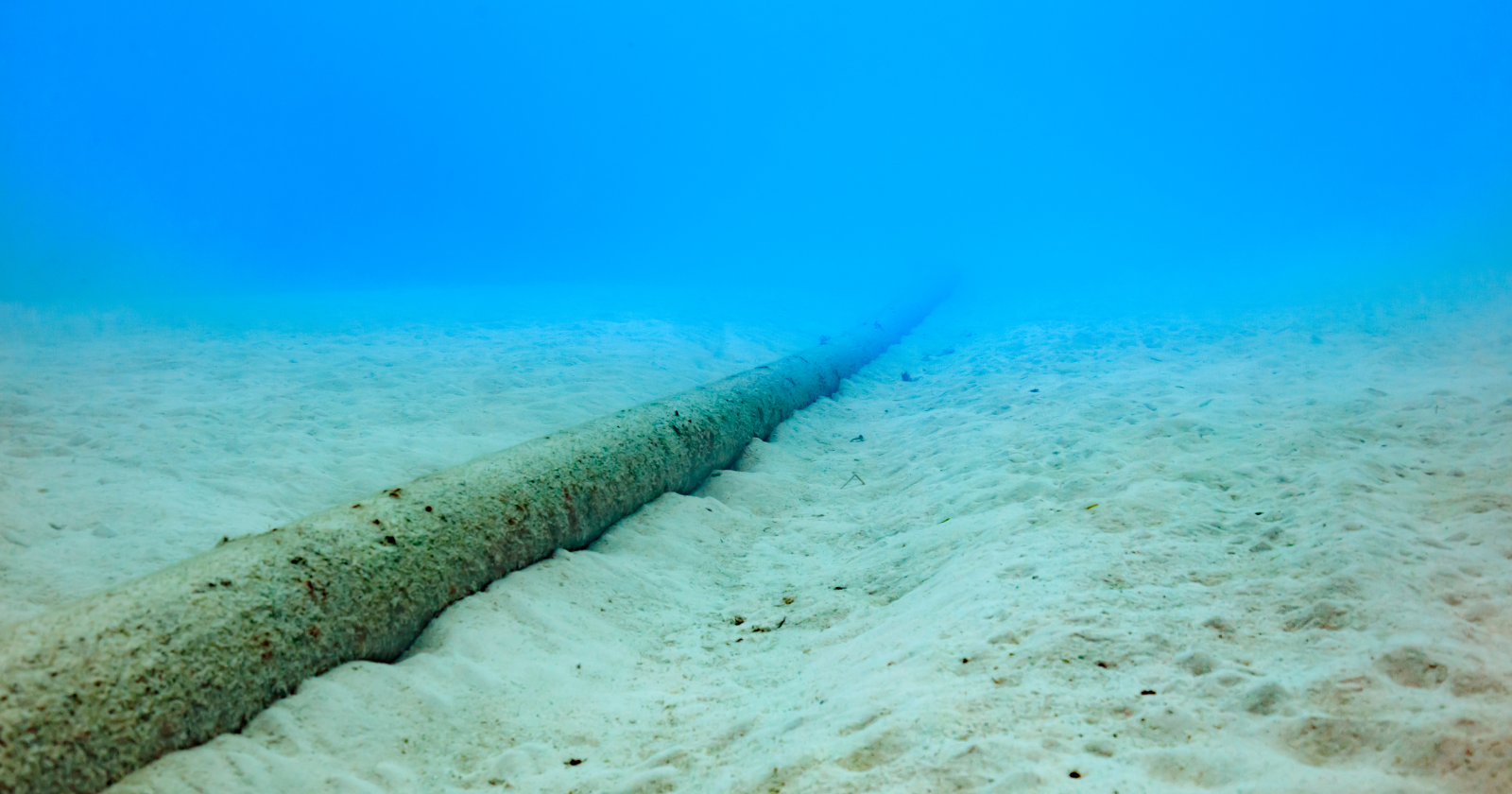
Close to shore, where trouble lives, cables get extra armouring and a plough buries them under the seabed. Out in deep water there is no burial and no armour worth mentioning. The line just lies on the mud, several kilometres down, carrying a good chunk of the world economy.
Anchors, trawlers and the breaks nobody hears about
Between 150 and 200 cable faults happen every year, and 70 to 80 per cent of them come down to accidental human activity, mostly fishing gear and ships’ anchors. That figure comes from the ICPC, which also notes that damage clusters in water shallower than about 300 metres, where seabed and shipping lanes overlap.
Sabotage draws the headlines. Far more damage is done by crews who never felt a thing.
Most of these breaks pass unnoticed because traffic reroutes through other cables within seconds, which is exactly what redundancy is for. The fault rate per kilometre has also been falling, thanks to better route surveys, deeper burial and heavier armour on the risky stretches.
Industry repair figures presented at the SubOptic conference and collated by Submarine Networks show faults holding steady at around 200 a year since 2013, even as new systems kept entering service. Same number of breaks, more cable every year.
None of which helps when a trawl door, a steel plate built to dig into the seabed and keep a net open, meets a fibre line it was never meant to find.
When it does get noticed
“Traffic traversing through the Middle East may experience increased latency.” That was Microsoft’s advisory to Azure customers on 6 September 2025, hours after cuts to the SMW4 and IMEWE systems near Jeddah pushed data onto longer paths. Monitoring groups logged degraded connectivity in India, Pakistan and the UAE, Network World reported at the time.
Rerouting only works while somewhere else to route exists. Squeeze enough cables through one narrow bit of sea, as the Red Sea corridor does, and a single bad day takes out several systems at once.
How you fix a cable three kilometres down
So how do you mend something lying under three kilometres of water? Almost exactly the way it was done in the 1860s, with better electronics.
The landing stations detect the fault and narrow it to a stretch of seabed. A cable ship loads spare cable, sails out, then tows a cutting grapnel across the route until it snags the line, as KIS-ORCA describes the procedure. The cable is cut, one end is winched up and buoyed off, the ship goes back for the other end, and technicians splice in a fresh section in a workshop on deck. Then the whole repaired length is tested and lowered back to the bottom.
Days of work, in whatever weather turns up. The ICPC puts a typical telecoms repair at somewhere between £500,000 and £1 million.
The fleet is the actual weak point
Sixty or so specialised vessels lay and maintain the world’s cables, and fewer than 20 of those are dedicated purely to repair, Scientific American reported in May 2026. Many are converted ships decades into their working lives, crewed by a trade that struggles to recruit anyone young.
Alan Mauldin of TeleGeography has costed the fix at roughly $3 billion, covering 15 replacement vessels and five extra hulls, simply to hold current service levels as the network keeps growing. Building new cables attracts investors easily enough. Maintaining old ones does not, because no one markets a boat that sits at anchor waiting for something to break.
Which is the strange part. Hundreds of billions of dollars of cloud services, trading, streaming and government business rest on a few dozen ageing ships and the people who can fuse two hairs of glass together on a pitching deck. Every stutter along that chain ends the same way: a ship on station, a grapnel in the mud, and a wait measured in weeks.