The line that made Katherine Johnson famous was spoken by somebody else, and it was not flattering.
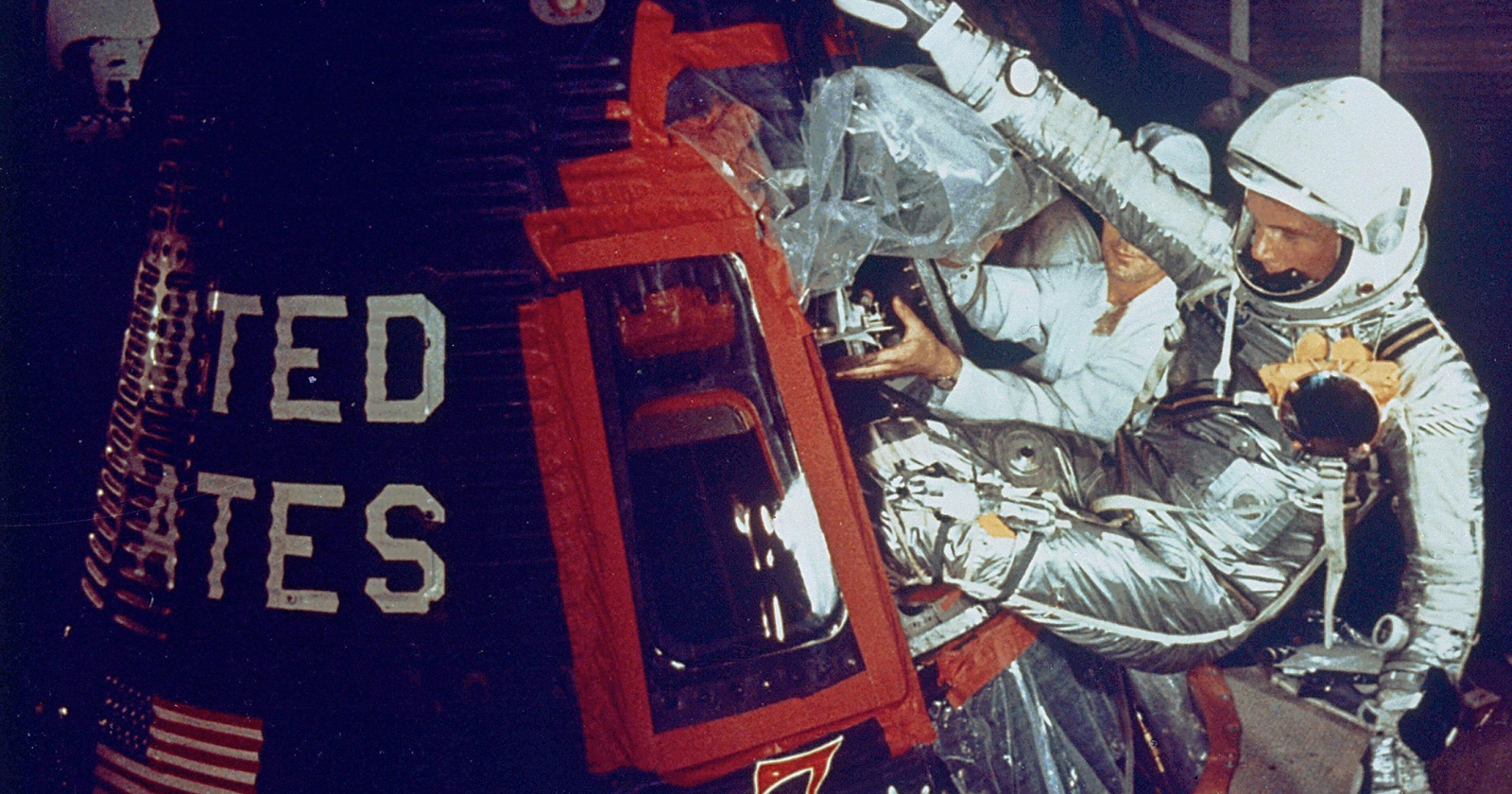
“Get the girl to check the numbers.” That was John Glenn, in the weeks before the flight that would make him the first American to orbit Earth. The girl was Johnson, a 43-year-old research mathematician at NASA’s Langley Research Center in Virginia. She was being asked to check a computer’s arithmetic.
She checked it, and the numbers held.
What she was actually checking
Glenn’s three-orbit trajectory had been worked out on IBM computers wired into a worldwide network of tracking stations, a system NASA built from scratch because nothing on that scale had been tried before. As Margot Lee Shetterly writes in NASA’s own biography of Johnson, the astronauts were wary of handing their lives to calculating machines that were prone to hiccups and blackouts. So Glenn wanted one specific person to run the same equations again, by hand, on a desktop mechanical calculator.
By Shetterly’s account, it took a day and a half.
Why she was the one asked
Johnson had not simply done this sort of sum before. She had helped write it down. In 1960 she and engineer Ted Skopinski co-authored a NASA technical note on determining azimuth angle at burnout, which in plain English is the problem of working out which way a spacecraft needs to be pointing when its engines cut off. Get that angle wrong and the capsule comes down in the wrong ocean. Langley’s Flight Research Division had not previously published a report with a woman credited as an author. She had also run the trajectory analysis for Freedom 7, Alan Shepard’s suborbital hop in May 1961 and the first American crewed spaceflight, so Glenn was asking a colleague whose arithmetic had already carried an astronaut.
Her career on that campus started elsewhere. She was hired in 1953 into the all-Black West Area Computing section, a pool of women who processed flight-test data by hand, and Dorothy Vaughan moved her across into the Flight Research Division inside a fortnight.
Nobody can pin down the date
So when exactly did Glenn make the request? No one is sure.
In an account documented by Robert Pearlman for Space.com, Shetterly said she combed through boxes of Project Mercury reports and computer printouts hunting for a paper trail, without success. Johnson, recalling the episode more than fifty years later, placed it weeks before launch, though her version drifted a little across interviews. Shetterly’s best conclusion was that it happened close to the flight, on a date she could never nail down.
Part of the confusion is the mission’s own doing. Glenn’s launch was pencilled in for the week of Christmas 1961, then 16 January, then 27 January, then 1 February, then twice more mid-month, each attempt scrubbed by weather or hardware. He spent one of them lying on his back inside the capsule for nearly six hours, waiting for a break in the clouds that never came.
What the film changed
Hidden Figures, the 2016 film, compresses all of this into a launch-pad emergency, with Johnson sprinting to Mission Control with a sheet of paper while Glenn waits on the rocket. Director Ted Melfi has been cheerfully upfront about the reason: days of arithmetic do not work as cinema, so on screen it takes 25 seconds. In life, Johnson was in Virginia on launch day and the flight controllers were in Florida.
Friendship 7 finally left the pad at 9:47am Eastern on 20 February 1962. Glenn circled the planet three times before splashing down in the Atlantic, roughly 800 miles southeast of Bermuda, just under five hours after liftoff.
The part she wanted remembered
Johnson stayed at Langley until 1986, retiring after 33 years with 26 research reports to her name. Barack Obama gave her the Presidential Medal of Freedom in 2015, when she was 97. IEEE followed with its President’s Award, and she died in February 2020, aged 101.
Her own pick for her biggest contribution to spaceflight was never Glenn. She talked about Apollo, and specifically the calculations that let the lunar module and the command module find each other again in orbit around the Moon, two vehicles meeting at speed with nothing underneath them.
Checking a computer’s arithmetic was thirty-six hours at a desk. Getting two spacecraft to rendezvous a quarter of a million miles from home was the job she was proud of. Posterity went with the one that had an astronaut in it.