

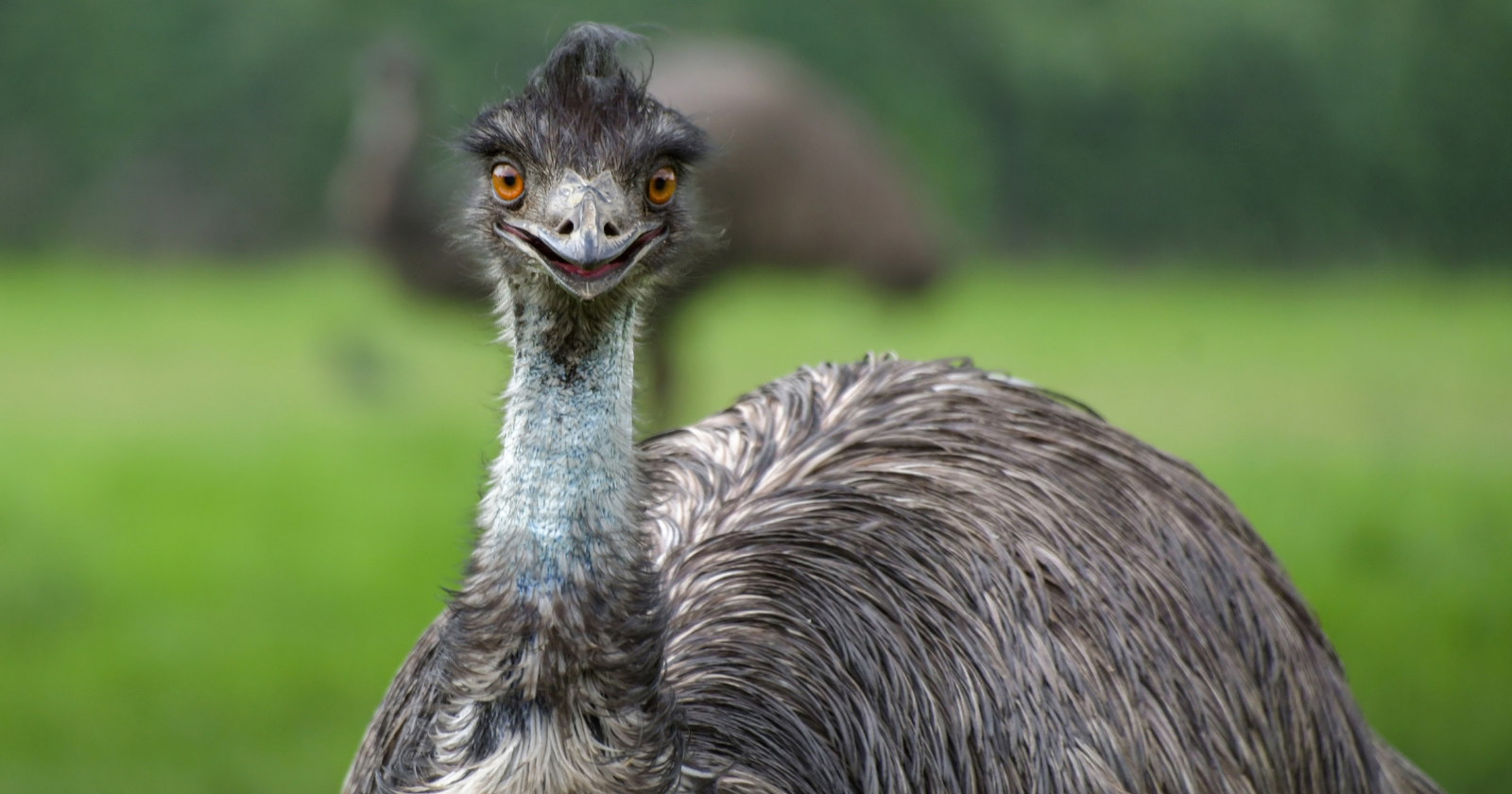
Three gunners stepped off the Perth train at Campion in November 1932 carrying two Lewis machine guns, ten thousand rounds of ammunition and the reasonable expectation of being home for Christmas.
Their opponent could not fly, and that was the only advantage anyone had going in.
Why twenty thousand birds turned up
Returned servicemen had been settled across the Western Australian Wheatbelt after the First World War, on marginal blocks with thin soil and rain that came when it felt like it. The Depression then knocked the floor out of wheat prices, and the advice from Canberra to men already going under was to grow more wheat. Murray Johnson, a historian at the University of Queensland, traced that settlement scheme and its unravelling in the Journal of Australian Studies, where the emus turn up late in a story that was going badly already.
Drought in the interior pushed roughly 20,000 of them down into the cropping country around Campion and Walgoolan. Ralph English, whose father farmed beside the battlefield in 1932, told ABC Midwest and Wheatbelt that the trampling did far more damage than the eating. The birds didn’t so much strip a crop as flatten it.
The first six days
Major Meredith opened fire on 2 November. Local papers described his party as bent on destroying thousands. The first day produced about twenty dead birds. Emus, it turned out, decline to behave like infantry: instead of massing in the open they broke into small groups and ran flat out, which is precisely the wrong target for a weapon built to sweep a fixed line.
Two days later the gunners tried an ambush at a waterhole. Around a thousand birds came in to drink, the Lewis gun jammed early, and twelve of them died, as Rebecca Toy reported for National Geographic. Meredith’s verdict on the enemy, quoted in the ABC’s account, has outlived every other detail: they “could face machine guns with the invulnerability of tanks”. His unit withdrew on 8 November having spent 2,500 rounds to kill somewhere between three and five hundred emus.
Who paid for the ammunition
“Who is responsible for this farce, and who is footing the bill?” Harold Thornby put that to the House of Representatives on 8 November, and it was the gentler end of the questioning. Richard Cook and Srđan Jovanović, in a paper published in the Romanian Journal of Historical Studies, followed the invoices. Settlers and wheat growers had agreed to cover the ammunition themselves, with the Agricultural Bank paying the army and taking a lien over their crops. One Walgoolan farmer, billed £24, wrote back to observe that the troops had done their campaigning in his motor car, which they had also broken.
Wendy Porter, who manages the library at Merredin and has gone through the local papers of the period, found two farmers who tried to pay their tax bill in dead emus. She reads politics into the deployment as well. It landed while the Western Australian secession movement was at full volume and the wheat growers were telling the federal government they could manage without it.
What actually worked
Did the second attempt go better? Somewhere along the way, someone bolted a machine gun to the back of a truck, hoping to keep pace with birds that outran it easily over broken ground; at least one truck ended up in a fence instead. Pressure from settlers and the state premier brought the guns back on 12 November, and Meredith claimed thousands of kills before a final withdrawal on 10 December.
Nobody has ever agreed on a total. Toy’s account puts the full 45-day campaign at around 2,500 emus, a rounding error against the 20,000 that had come south in the first place. The government’s next move was a bounty scheme for farmers, an odd sequel to a war it had supposedly just won.
The tool that eventually held was wire. An old rabbit-proof fence was renamed, upgraded and extended, and the state’s Department of Primary Industries and Regional Development still maintains it for the express purpose of keeping wild dogs and emus out of the agricultural zone.
The birds did fine. Rowan Mott, an ecologist with the Bush Heritage Foundation, told National Geographic he prefers to call them “dispersive” rather than migratory, since their movements are unpredictable and can run in any direction, which explains both the arrival in 1932 and why no plan of battle was ever going to survive contact. Emus have been protected under federal environmental law since 1999, and more than 600,000 of them are out there now.
Ninety years on, the state’s answer to the emu runs 1,350 kilometres from the cliffs north of Kalbarri to the south-east, patrolled, mended, and closed to anyone without written permission to drive the reserve. No ammunition invoice attached.