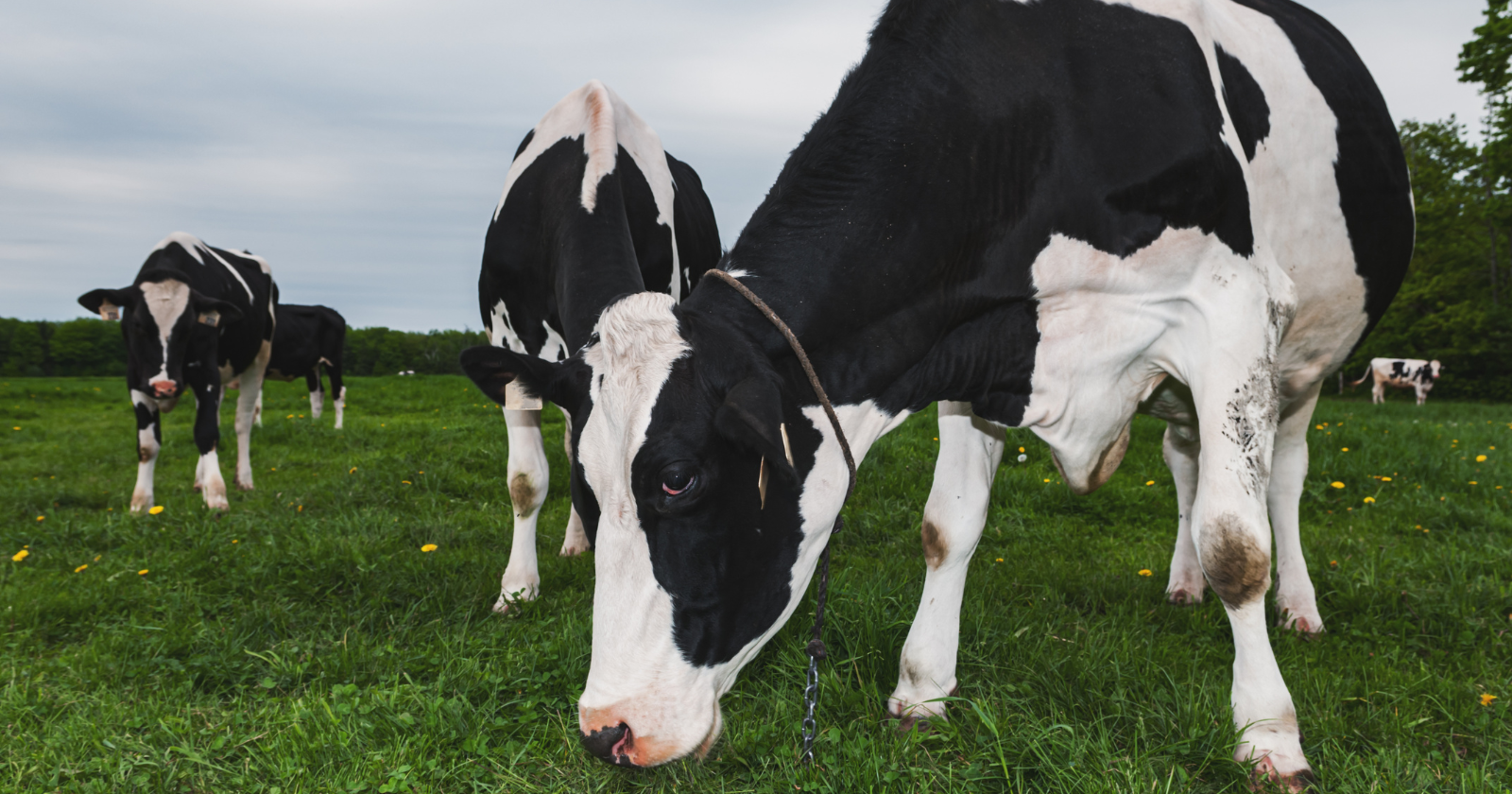
Magnus is the extrovert. Callum needs a minute. Both are Holstein steers weighing roughly as much as a small hatchback, and both spent 45-minute stretches letting complete strangers hug them, brush them, kiss them and lean their full weight against the steers’ flanks.
Eleven volunteers signed up for that, aged 13 to 79, at a micro-farm in upstate New York called Surrey Hills Sanctuary. What the steers made of them turned out to be the more interesting story.
What the researchers set out to measure
Katherine Compitus, a social work academic at New York University, and Sonya Bierbower of the US Military Academy at West Point wanted to know whether farm animals could do the job that dogs and cats already do in animal-assisted therapy. Their paper, published in the open-access journal Human-Animal Interactions, carries the frankly superb title “Cow Cuddling: Cognitive Considerations in Bovine-Assisted Therapy”.
Working out how a cow feels about being cuddled is harder than it sounds: a steer will not fill out a questionnaire. The study leaned on the Human-Animal Interaction Scale, a 24-item instrument that logs what a person does, how they feel, and how the animal responds in turn. As IFLScience noted, the second half of that scale really measures what the human believes the animal experienced, since interviewing a cow remains impossible.
Both halves came back positive. Magnus and Callum stayed close, took food from open palms, licked sleeves and settled into the grass alongside their visitors, before standing up and wandering off once they’d had enough. Compitus and Bierbower logged none of the usual signs of cattle distress: no loud calling, no rigid backs, no fast tail flicking.
The gender split nobody was looking for
Six participants were women and five were men. Per the announcement from New York University, the steers spent markedly more time beside the women, and the women in turn reported stronger attachment to the steers.
Compitus had not seen it coming. She told Interesting Engineering that the result surprised her, since men and women alike said they enjoyed the sessions, and the two steers had been hand-raised in equal measure by her and her husband.
Her own explanation starts with the humans, not the cattle. She suspects women, raised into the role of carer, were simply quicker to reach out while the men held back from showing much feeling. Magnus and Callum, she thinks, picked up on that difference the way horses read body language. The paper itself is more careful: whether the animals sought out the women or the women sought out the animals cannot be separated with a sample this size, and the researchers call for further testing.
Why cattle, and not another labrador
Size, mostly. Hugging is usually discouraged in animal-assisted therapy, since being folded into a stranger’s arms is stressful for a smaller animal with nowhere to retreat to. A steer has no such problem. He can be hugged by an adult and stay completely in charge of the encounter. Compitus also credits the animals’ curiosity and their sheer novelty: most people have never touched a cow, let alone hugged one.
That mismatch appears to be doing some of the therapeutic work. Compitus has described a participant who arrived nervous about the steers and left feeling she had beaten a literally enormous fear, with every intention of applying the lesson elsewhere in her life.
Cattle also carry a reputation that does them few favours. A 2017 review in Animal Behavior and Cognition by Lori Marino and Kristin Allen worked through more than 200 papers on cattle behaviour. It found the plodding-herd-animal image badly out of date: cows show individual personalities spanning boldness, shyness and sociability, with emotional and social lives more tangled than the food-industry framing allows. Licking is part of that picture. Cows groom each other by licking as a bonding ritual, so a steer licking a stranger’s sleeve is borrowing a gesture that already carries meaning among cattle.
Eleven people, two steers
This is a pilot study, and the authors say so themselves.
Eleven participants, two animals, no validated mood or anxiety inventory, and a measuring tool that depends on human self-report at both ends. In comments published by NYU’s Silver School of Social Work, Compitus put it plainly: a pilot cannot demonstrate efficacy, only point to a possible therapeutic benefit. One finding about gender drawn from six women and five men earns a bigger study, and that is the honest ceiling on it.
What a follow-up would need
Compitus has outlined plans for a larger version with more participants and a proper psychological assessment, along with an interest in extending the work to other farm species. She has also suggested the intervention may simply need reshaping for men: feeding, brushing, something with a task attached, or several sessions before anyone loosens up.
That last suggestion is the quietly awkward part of the exercise.
The animals needed no coaxing whatsoever. Five men, on the lead author’s own reading, may need a brush in their hand and a job to do before they can accept affection from something large, warm and entirely willing: a finding about people, not cattle.