

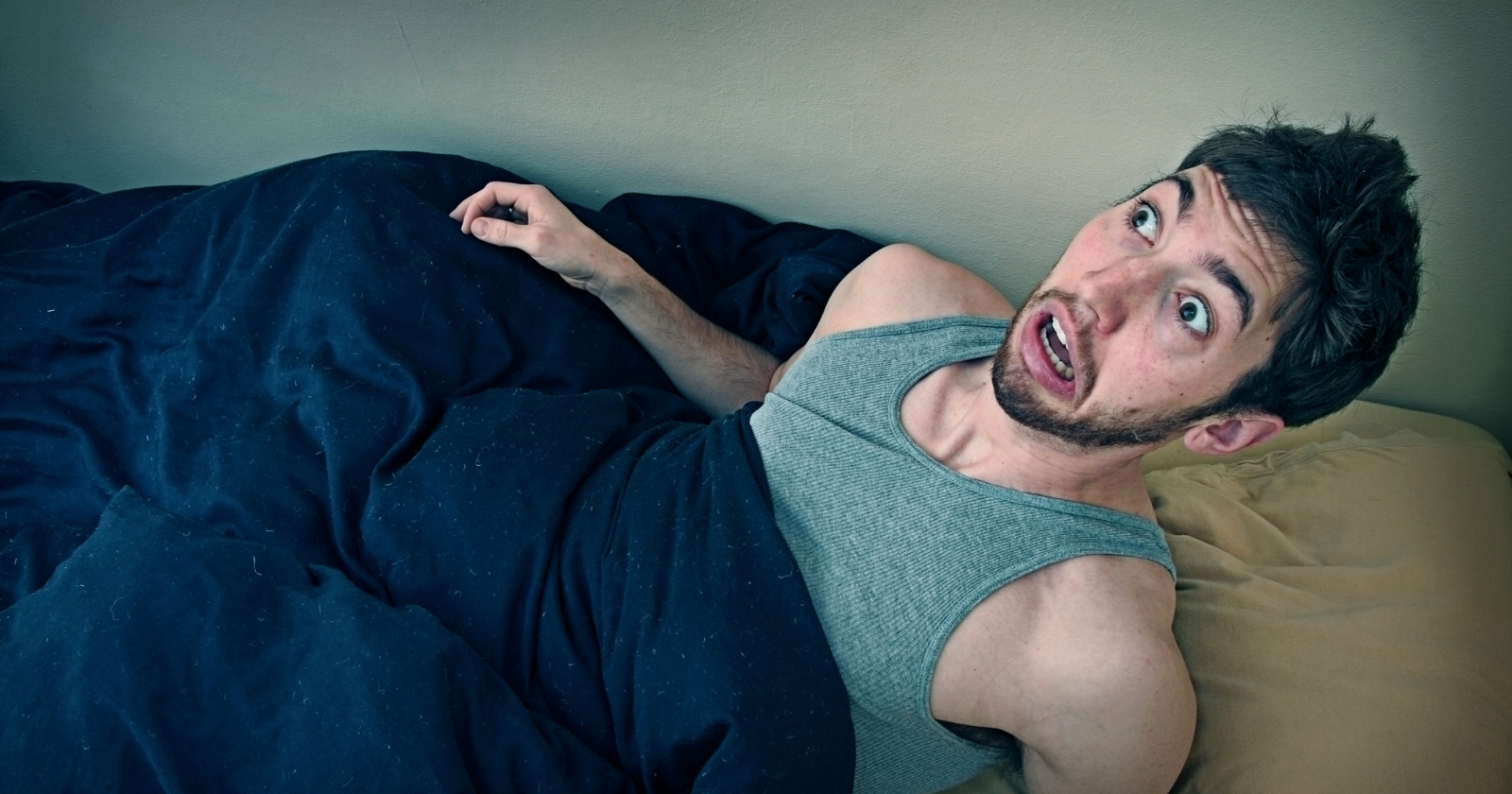
The pillow is cool, the day’s noise has finally gone quiet, and then the bed drops away like a lift with a snapped cable. A leg kicks, the heart thumps, and sleep, which was maybe thirty seconds off, is suddenly back at the starting line.
That jolt has a name.
Sleep scientists call it a hypnic jerk, from the Greek hypnos, meaning sleep, and it also answers to sleep start or hypnagogic jerk. It belongs to a family of brief, involuntary muscle twitches known as myoclonus, a group that includes the humble hiccup. For something so jarring, it is remarkably ordinary.
How common hypnic jerks are
Most people have had one.
A guide to sleep starts from the American Academy of Sleep Medicine (AASM) puts the figure at 60 to 70 per cent of people, adding that many go unrecalled, which is why the jolt can seem rarer than it is. A typical episode is one strong contraction, mostly in the arms and legs, occasionally with a sharp cry thrown in. Some people feel themselves falling at the same instant, or catch a sensory flash or a scrap of dream. Bed partners, who tend to clock the kick well before its owner does, can fill in the rest.
None of this is new to medicine. In 1959, Ian Oswald’s paper in the journal Brain tackled the subject under the gloriously literal title “Sudden bodily jerks on falling asleep”. These days the International Classification of Sleep Disorders, the field’s reference manual, files hypnic jerks under isolated symptoms and normal variants, as a 2018 review by neurologists at Toronto’s Hospital for Sick Children explains. That is clinical shorthand for a generally harmless quirk.
Why relaxing muscles might feel like falling
So what is the brain actually reacting to? One leading explanation starts with the mechanics of dozing off. As sleep takes hold, muscles lose tone and the body goes slack. Per the Sleep Foundation’s overview, researchers suspect a misfire between nerves in the reticular brainstem, part of the same machinery that drives the startle response. The brain, the theory goes, registers that sudden loss of tension, mistakes it for a genuine fall, and fires off a twitch to catch a body that isn’t going anywhere.
Think of it as a smoke alarm set a touch too sensitive, shrieking because someone opened the oven. It is a neat explanation, though an unconfirmed one. A second possibility, floated in the same overview, is that the jerk is a reaction to the dreamlike imagery that sometimes arrives with it, and the Toronto review concludes that the origin and physiology of hypnic jerks are still poorly understood.
An evolutionary idea involving tree branches
“An archaic reflex.” That is how psychologist Frederick Coolidge and anthropologist Thomas Wynn, both of the University of Colorado, Colorado Springs, described one common hypothesis in a 2006 paper published in Before Farming. Picture an early primate asleep on a branch or in a nest high in the canopy. Its muscles relax, its brain reads the slackness as the start of a plunge, and the jolt wakes it just long enough to shift back to safety. Coolidge and Wynn also suggest the reflex may have nudged sleepers to review their position before anything went wrong.
The stakes would have been real. The pair cite research putting great ape tree nests at an average of 10 to 20 metres off the ground, a long way to drop mid-snooze. Still, this is one paper, and the jerk is a passing point in a larger argument about how sleeping on the ground may have shaped human thinking. The authors present the falling-primate idea as a hypothesis, and it has stayed one.
What makes hypnic jerks more frequent
A late espresso, a deadline that won’t let go and a hard gym session after work stack the odds towards a jumpy night. The AASM lists heavy caffeine or stimulant use, earlier intense exercise or physical work, and emotional stress as things that make sleep starts more frequent and more forceful. Nicotine and plain old sleep deprivation make the foundation’s list too.
There is a nasty loop tucked inside all this. Frequent or intense jerks can leave some people dreading sleep itself, and the AASM notes that this anxiety can make nodding off harder and, over time, tip into chronic insomnia. Its threshold for seeing a sleep specialist is practical: when the jerks, or the fear of them, are costing you sleep. Daytime jerking is a different matter: persistent contractions that spread while awake could point to another kind of myoclonus, and the foundation suggests seeing a doctor.
For everyone else, the advice from the Sleep Foundation is about as unglamorous as advice gets: ease off caffeine and nicotine, shift hard workouts earlier, keep a regular bedtime and find some way to shed the day’s stress before lights out. It concedes that the jolts are unlikely to disappear entirely, even for the most disciplined sleeper.