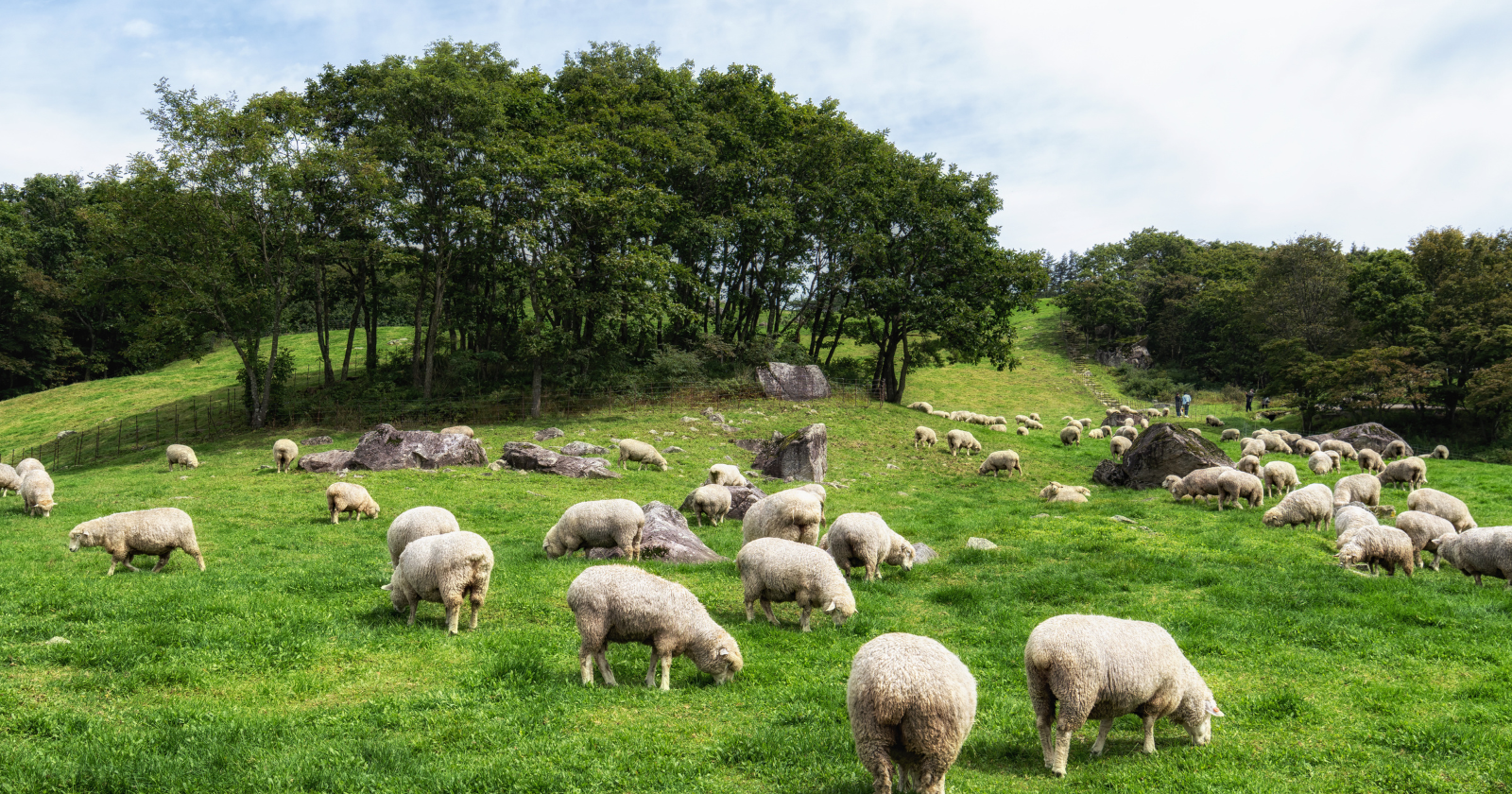
The stall on my corner in Bangkok sells grilled pork on a bamboo skewer, and in Thai it is moo. The animal it came from is also moo. There is no second word held in reserve for the moment the thing stops breathing, no Latinate curtain to draw across the transaction. You want pig, you ask for pig, and then you eat pig.
English is the odd one out here, and there is a tidy explanation for why, repeated often enough that it has hardened into fact.
Where the story comes from
Open Ivanhoe and you meet Gurth, a Saxon swineherd, and Wamba, a jester who has worked something out. Swine is good Saxon, Wamba explains, but the sow flayed and hung up by the heels becomes pork, which is good Norman-French. The beast keeps its Saxon name while somebody has to tend it, and turns Norman the moment it becomes a pleasure.
Walter Scott published that in 1819 and set it in 1194. It compresses conquest, class and appetite into a joke between two men in a wood, which is why it has been repeated for two centuries as though Scott had been reporting it.
He was not the first to spot the pattern. Writing in the Eger Journal of English Studies, the linguist Tibor Őrsi traces the observation back to the grammarian John Wallis, who catalogued the word pairs in 1653. Scott supplied the villains.
The dates do not line up
Beef turns up in written English around 1300. So does pork. So does mutton. The Online Etymology Dictionary confirms both beef and mutton landing around then, and Őrsi’s trawl through the Oxford English Dictionary and the Middle English Dictionary lands in the same window. Set against the 1194 of Scott’s plot, that is a gap of roughly a century, and well over two centuries after Hastings. Őrsi quotes the English-language historian Albert Baugh, whose verdict was that the episode simply happens about a hundred years too early.
That is not a rounding error.
The linguist Colin Gorrie argues that the whole image of a linguistic conquest is misdated. For the first hundred years after 1066, French words entered English at a rate of roughly one every eight years, and the ones that did arrive were the vocabulary of lords and priests: war in 1116, duke in 1129, nativity as early as 1105. Around 1250 the rate leapt some twentyfold, to nearly three a year. By then the descendants of William’s companions were speaking English at home. Very, which almost nobody clocks as an adaptation of French vrai, is first attested in 1384.
The flood arrived as French was losing its grip on England, not while it held it.
Beef used to mean cow
In The Merchant of Venice, Shylock weighs a pound of human flesh against “flesh of muttons, beefs, or goats”. He means the animals themselves, alive and walking about, and Shakespeare wrote the line in the 1590s, five centuries after the Conquest.
The Anglo-Norman Dictionary, the scholarly project at Aberystwyth University that maps the French of medieval England, puts the objection bluntly. Throughout and beyond the Middle Ages, beef and mutton named the beasts as well as the meat, so the clean division Scott assumed arose centuries too late to reflect any real medieval divide.
Őrsi’s tables bear that out with dates. Mutton meaning a live sheep is attested as late as 1839. Beef meaning an ox or a cow was still in use in 1884, and collectively for cattle in America as late as 1907. Pork for the live pig arrived later still: the sense does not surface until about 1425, and it had already faded from use by 1682. The original plural in that animal sense was beeves.
Őrsi credits the lexicographer Robert Burchfield with puncturing the myth first, back in 1985, on exactly that ground. His other objection was that the big wave of French cooking and gastronomic vocabulary, the one people picture when they imagine Norman chefs, barely predates the eighteenth century and consolidated in the nineteenth. That is a separate and much later import from the handful of words Wamba is joking about.
Those animal senses faded in the nineteenth century, which is to say they faded shortly after Scott had explained why they never existed. I find that funny in a way that may not survive being pointed at.
What the pattern actually tracks
So is there any class division in the vocabulary at all? There is, and it sits somewhere less tidy than a butcher’s counter.
Look at the verbs. Cooking is overwhelmingly French, per Őrsi’s survey: boil, fry, roast, stew and broil all arrive from Norman or Old French. Giving birth stays stubbornly English. Cows calve, sheep lamb, hogs farrow and chickens hatch, and every one of those verbs is Old English, because the people doing the work of animal husbandry were speaking English while they did it.
One birthing verb breaks ranks. Deer fawn, borrowed from Old French faoner, because hunting deer was the aristocratic sport.
Meals divide along the same seam. Dinner and supper are French imports; breakfast and lunch are homegrown. Chicken, hen and cock are all Germanic, while poultry comes through French, a collective abstraction of the sort favoured by people who never handle a live bird. Cattle is Norman French catel, meaning property, which tells you exactly what the animals were to the people counting them.
The theory assumes French words stuck only to what nobles ate, while English words stuck to what commoners handled. But French vocabulary moved through the trades that fed the table, not just the meat on it. Salmon, hauled out of English rivers by ordinary fishermen, came from Anglo-Norman. So did onion and mushroom, both market produce, and pear, grown in orchards no aristocrat tended by hand. The Aberystwyth lexicographers date venison in England to 1139, within living memory of the invasion and more than a century before beef or mutton turn up in writing at all. Those are kitchen and market words, used by everyone who grew, caught, sold, cooked or served the food, well beyond the dining hall.
Őrsi found the same shape outside the butchery aisle entirely. Plum is Old English and sits on the tree; prune arrived from French in 1345 and means the same fruit after somebody has dried it. Fresh thing gets the native word, processed thing gets the borrowed one, and no lord needs to be involved.
The class marking is real enough. It lives in the abstraction, the accounting and the kitchen technique, rather than in a neat switch that flips when the animal dies.
The word the goat industry invented
Modern English has one conspicuous gap in the pattern. Goat meat is called goat meat, flatly, with no French veil at all, and American producers have spent decades trying to correct that.
The word they reached for is chevon, built from chèvre with the ending of mutton bolted on. Őrsi records the reasoning: market research suggested chevon went down more easily with American consumers than goat meat did. Sources disagree on when it was coined, so I will leave the date alone.
It never caught on.
English came by its two vocabularies through drift, borrowing and several centuries of ordinary use, and no amount of deliberate engineering has managed to reproduce the effect to order. Wamba’s joke made better fiction than history, and fiction is what survives. The sheep were still being called muttons in 1839, long after everybody had agreed they never were.