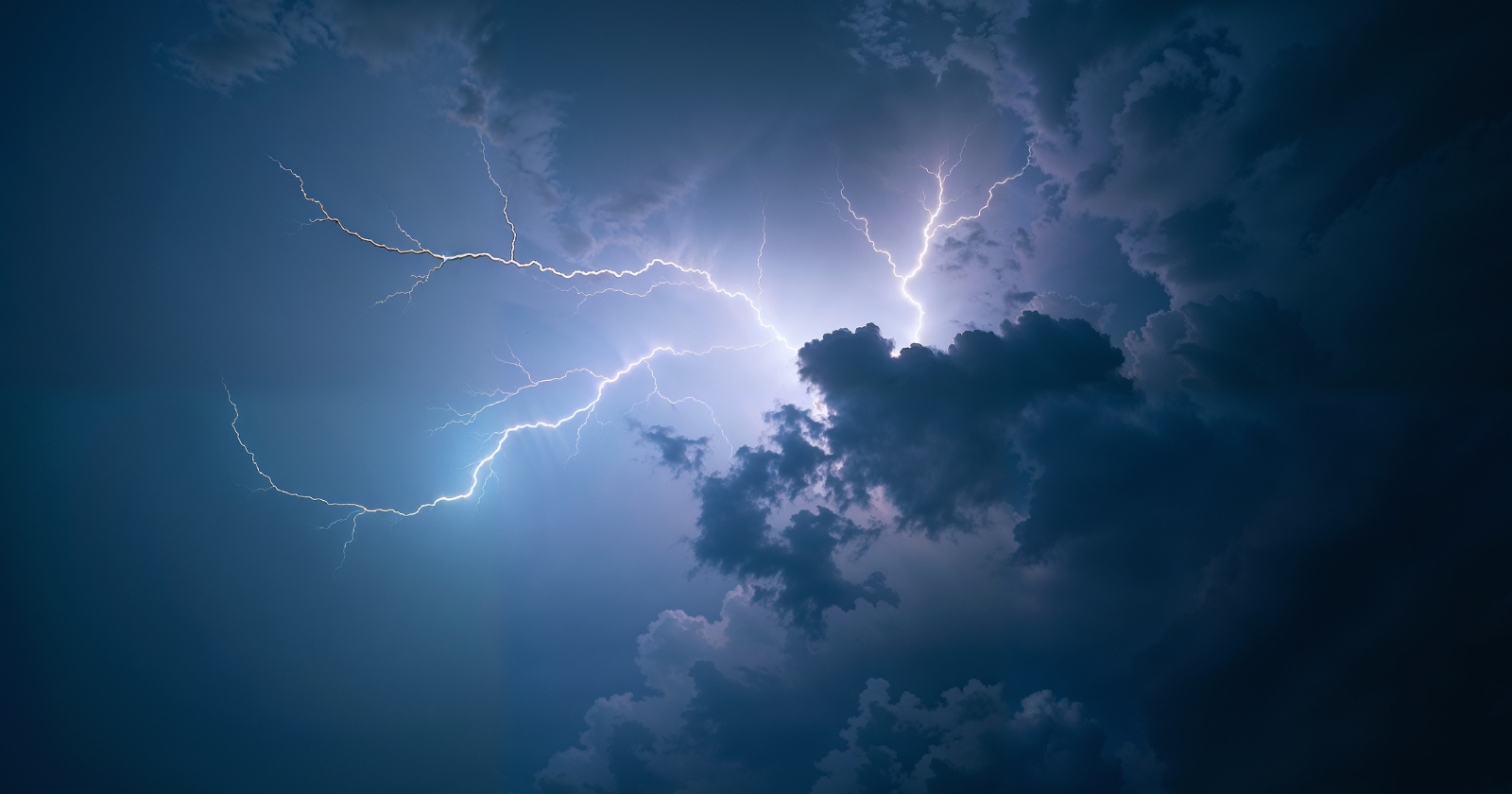
Sixteenth-century sailors crossing the southern Caribbean had a navigation trick that sounds invented. They steered by a thunderstorm.
It sat over the same patch of water year after year, flashing hard enough to sketch out the coastline for kilometres, and it was so dependable that Spanish navigators effectively gave it a job. El Faro de Maracaibo, the Maracaibo lighthouse. In the delta where the Catatumbo River empties into Lake Maracaibo in north-western Venezuela, the sky refused to go dark.
It still refuses.
What the satellites counted
For decades the title of most lightning on Earth belonged to the Congo Basin, largely because nobody had looked closely enough to argue. Then Rachel Albrecht, an atmospheric scientist at the University of São Paulo, reprocessed 16 years of readings from NASA’s Lightning Imaging Sensor at ten times the resolution anyone had used before. Her team’s results, published in the Bulletin of the American Meteorological Society, handed the crown to Venezuela.
Lake Maracaibo logs 232.52 lightning flashes per square kilometre per year, a clear margin over second-placed Kabare in the Democratic Republic of Congo on 205. Storms build over the lake on 297 nights a year on average, per the society’s press release on the study. For scale, the most lightning-battered spot in the United States is a stretch of the Everglades near Fort Myers, which manages 79 flashes and ranks 122nd in the world.
Albrecht said the oddest part of the finding was the setting. The planet’s lightning capital sits over water and fires at night. That runs against the usual habit of thunderstorms, which build over land in the afternoon heat.
At ground level the figures get more physical. NASA Earthdata’s account of the phenomenon puts the rate at about 28 flashes a minute shortly after dusk, sustained for up to nine hours, bright enough that observers on the shore can see everything around them.
Why this lake and nowhere else nearby
Geography does most of the work. Lake Maracaibo is the largest lake in South America, walled in by mountains on three sides. Its water sits between 28 and 31 degrees Celsius all year. The reference archive Geology.com notes that this makes the lake a permanent supply of heat and moisture.
After sunset, cool air slides down off the Perijá range and the Andean cordillera and shoves underneath the warm, wet air pooled above the lake. Warm air goes up, fast, and keeps going up for hours. That vertical energy has a name in meteorology, convective available potential energy, or CAPE. It measures how hard the atmosphere wants to punch upwards. High CAPE plus converging winds equals storms. The same ingredients arrive in the same place nearly every night. That regularity is the part that makes Catatumbo a freak, rather than just a wet place with weather.
The six weeks it went quiet
In January 2010 the lightning stopped.
Skies over the delta stayed dark for roughly six weeks into early March, as reported by Slate, whose writer travelled to Puerto Concha to investigate. A severe El Niño drought had drained the humidity the storms feed on, and locals began to wonder whether the beacon had burned out for good. Venezuelan press coverage spread fast, and international outlets picked it up, with ABC News reporting on both the disappearance and the eventual return once the rains came back.
Nothing had died. The engine had simply been starved of fuel, a useful fact to know about a phenomenon most people had assumed was permanent.
Forecasting a storm three months out
Ángel Muñoz was born in Maracaibo. In an interview with Atlas Obscura, he recalled his mother and grandmother warning him as a boy to stay away from the lake when the sky turned electric. He grew up to become the physicist who worked out why they were right to worry. Lightning is normally forecast hours ahead, occasionally days. Muñoz wanted seasons.
His team, working through the International Research Institute for Climate and Society at Columbia University, tested sea-surface temperatures, winds, moisture transport and CAPE against decades of satellite records. Two variables dominated, so they built the prediction index out of those: CAPE and wind. The result, published in Atmospheric Research in 2016, was the first seasonal lightning forecast produced anywhere. The state government of Zulia gave the team a civic award for it.
One paper is one paper, and the model was built for a single basin with unusually repetitive weather, so it does not transfer neatly to Sydney or Kansas. It does, however, matter enormously in Zulia. The institute notes that a person is roughly three times more likely to be struck by lightning in Catatumbo than in the continental United States. Strikes also kill cattle across one of Venezuela’s main dairy regions and interrupt oil operations in a country holding the world’s largest proven reserves.
Twenty thousand fishermen work the lake. Many live in palafitos, one-room stilt houses with tin roofs, out where the flash rate peaks. From a tour boat the eternal storm is the best free spectacle on the continent. From under a sheet of corrugated iron it is a scheduling problem, and for the first time the schedule is starting to arrive in advance.