

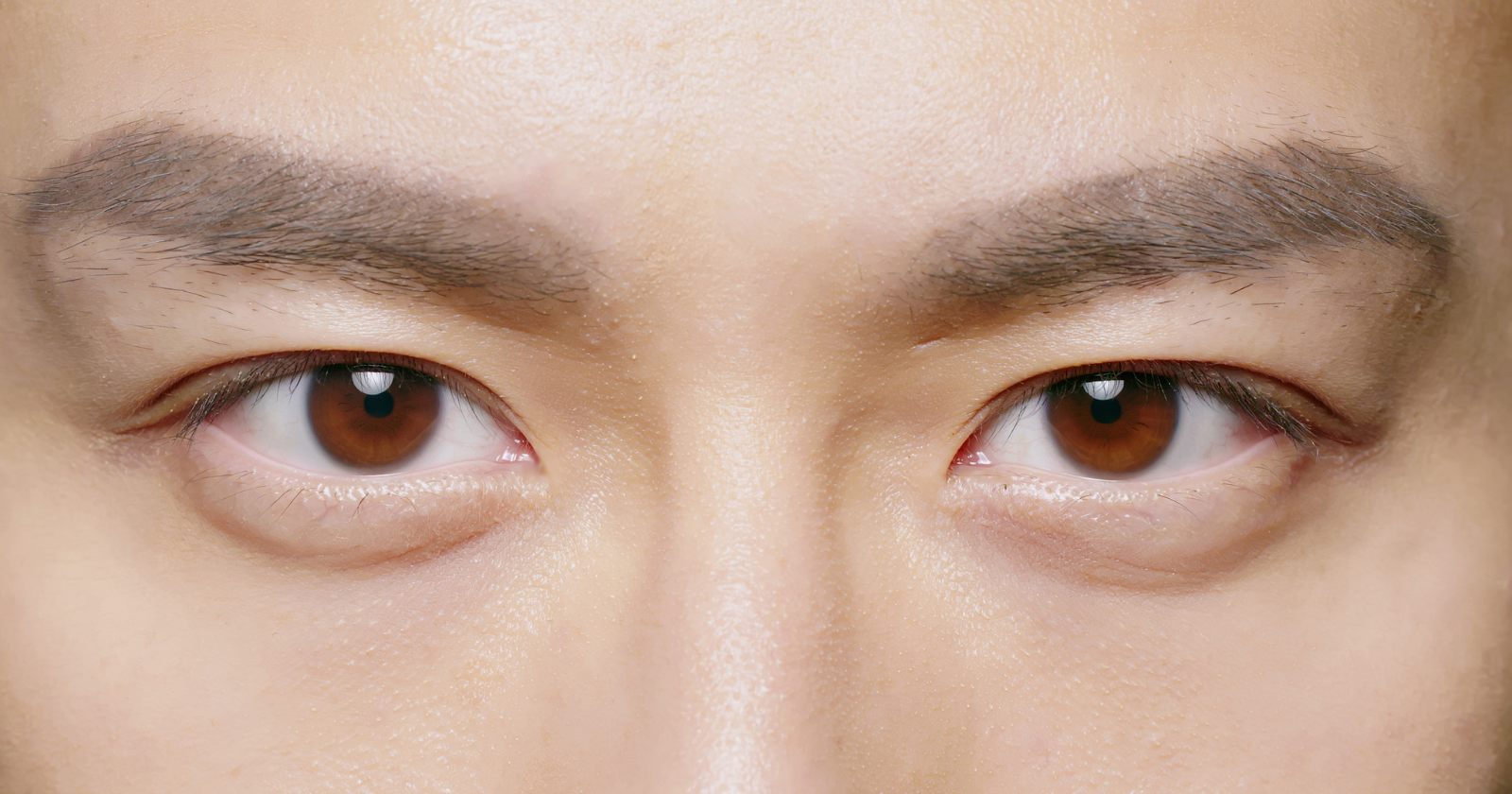
Ask almost anyone how to spot a liar and you will get a version of the same answer. Watch the eyes. A dishonest person cannot hold your gaze. The idea is so widely shared that it barely registers as an idea at all, closer to a fact about faces than a hunch. It is also, on the evidence, one of the least reliable things we believe about each other.
This is not a fringe superstition. It is the single most common belief about lying on the planet, and it survives despite decades of research showing that eyes do a poor job of telling truth from fabrication. What the research does show is more interesting than the folk rule it replaces, and a good deal less flattering to the confidence we place in a steady look.
What the belief is actually built on
In 2006 a large collaboration calling itself the Global Deception Research Team published a study, titled A World of Lies in the Journal of Cross-Cultural Psychology, drawing on responses from 75 countries and 43 languages. When people were asked how they could tell someone was lying, one answer dominated everywhere. Liars look away. Around two thirds named gaze aversion, far ahead of any other cue, and it was the belief people reached for first. The pattern held across languages, age groups and continents. It is about as close to a universal human intuition as social psychology gets.
Yet the intuition does not survive contact with the data. The most cited synthesis of the field is a meta-analysis by Bella DePaulo and colleagues, published in Psychological Bulletin in 2003, which pooled results across more than a hundred studies. For gaze aversion the measured association with deception was an effect size of 0.03, statistically indistinguishable from nothing. Looking away predicts lying about as well as a coin does.
Later work has not rescued the folk rule. A 2023 survey of deception researchers, published in Psychology, Crime & Law by Timothy Luke and colleagues, found the field disagreeing about almost everything. The one point on which more than eighty per cent of experts converged was that gaze aversion is not generally diagnostic of deception. That is a rare thing in a contested literature: near-consensus, and it points the opposite way to what most people take for granted.
The authors of the global survey offered a reason the belief might persist without being true. In their reading it works as a kind of social control, a norm handed down to discourage lying rather than a description of how liars behave. Children are told their lies will show in their faces. The prophecy does not have to be accurate to be useful to a parent, and a belief that useful is passed on regardless of the evidence.
Why a liar might hold your gaze
The belief does more than fail. It backfires.
If everyone assumes that honest people look you in the eye, then anyone trying to seem honest has a clear instruction. Hold the gaze. Samantha Mann, Aldert Vrij and colleagues tested exactly this in a 2012 study in the Journal of Nonverbal Behavior, with the pointed title Windows to the Soul? They found that the liars in the study gave more deliberate eye contact than the truth tellers, not less. A follow-up the next year in Psychiatry, Psychology and Law went further and asked liars why. The answers were candid. They looked at the interviewer to seem convincing, and to watch whether they were being believed.
This is worth sitting with. The stereotype is not merely wrong in the sense of missing the target. It arms the very people it is meant to catch, because they know the rule as well as everyone else and can perform against it. Sincerity, when it is being faked, tends to be faked in the direction people expect sincerity to look. Steady eye contact from a stranger, then, tells you they are comfortable meeting your eyes, and not much more.
The blink finding, and why it is not a detector
There is a narrower result that gets cited alongside all this, and it needs careful handling because it is easy to inflate into something it is not.
Sharon Leal and Aldert Vrij, in a 2008 experiment published in the same journal, recorded eye blinks while people lied and told the truth. Liars blinked less during the lie itself and then blinked more once it was over, a small dip followed by a rebound, on the reasoning that concentrating hard suppresses blinking and the pressure releases afterward. The pattern was clean enough to be striking.
It was also produced by thirteen liars and thirteen truth tellers. That is a very small sample for a claim about human behaviour, and the wider blink literature does not line up neatly behind it. Other studies have reported blink rates going up during deception rather than down, and DePaulo’s meta-analysis found blinking rose mainly when the lie carried real consequences. The honest position is that blinking sometimes shifts under the mental load of lying, in directions that depend on the person and the situation, and that no one has turned this into a reliable test.
So the blink result is not a home lie-detection kit. It is a laboratory finding about averages under specific conditions, interesting to researchers and close to worthless at a dinner table, where you have no baseline for how the person blinks when relaxed and no way to isolate lying from ordinary nerves.
Eye contact as a claim about rank
If gaze is a poor guide to honesty, it is a much better guide to something we rarely think we are reading: position. Who outranks whom.
John Dovidio and Steve Ellyson described this in the early 1980s with a measure they called the visual dominance ratio, set out in Social Psychology Quarterly. It compares how much a person looks at the other while speaking against how much they look while listening. People with higher status tend to keep their gaze steady when they hold the floor and let it drift when they yield it. People lower in the pecking order do the reverse, watching attentively while the other speaks and looking away when it is their turn. In later work published in the Journal of Personality and Social Psychology in 1988, the pattern tracked expertise and assigned power for both men and women.
The roots of this run deeper than any single culture. In many primate species a direct, sustained stare from another animal reads as a threat or an assertion of standing, and subordinates manage their looking accordingly. Humans carry a softened version of the same grammar. A held gaze can convey confidence, challenge, interest or command depending on the setting, and an observer often files all of these under the vaguer heading of trustworthiness because it is the reading most available to them.
This is where the honesty heuristic and the dominance signal quietly collide. The person who holds your eye without flinching may be sincere. They may also simply be someone accustomed to being the most powerful voice in the room, whose steadiness has nothing to do with the truth of what they are saying and everything to do with how rarely they have been contradicted.
What we are really reading
None of this means eye contact carries no information. It carries a great deal. It signals comfort, attention, social confidence, cultural habit, and the shape of the hierarchy in a conversation. What it does not do, on the available evidence, is separate the honest from the dishonest, which is the one job we have most confidently assigned it.
That belief persists anyway, and it is not hard to see why. It gives us a rule we can apply on the spot and a reason to feel we have judged well. A gaze we can meet feels like a person we can trust. The feeling is real. The inference is the part that keeps letting us down.
The next time a stranger looks you steadily in the eye, it is worth remembering how little that steadiness is obliged to mean.