A Suffolk County jury has found that Kristin Knouse, an assistant professor of biology at the Massachusetts Institute of Technology, defamed the biologist David Sabatini, and has awarded him $6 million plus interest, the Boston Globe reported.
The verdict was returned on 16 October 2026 at Suffolk County Superior Court in Boston. Judge Christopher K. Barry-Smith presided, according to a verdict summary from Sabatini’s lawyers. The jury also rejected Knouse’s counterclaims, the claims she brought against Sabatini within the same case, that he had harassed and retaliated against her, the New York Times reported.
Jurors found that Sabatini had proved Knouse defamed him and interfered with his ability to work, according to the Times. The Globe described the second finding as interference with his ability to make a living. The award was unanimous. According to Sabatini’s lawyers, the jury’s awards by claim were $500,000 for defamation, $3.2 million for tortious interference with contractual relations and $2.3 million for tortious interference with prospective advantageous relationships, the three sums that make up the $6 million.
“We are so happy that we got David Sabatini’s good name back,” Lisa Arrowood, Sabatini’s lawyer, told the Globe. “Now he can be regarded as the brilliant scientist he is.”
Ellen Zucker, Knouse’s lawyer, told the Globe that her client intends to appeal. Sabatini’s lawyers said they expect an appeal and post-trial motions, which are due 10 days after the verdict.
She told the Globe she regrets the verdict and does not regret the decision to pursue the case. She told the Times that Knouse “came into court and told the truth.”
Zucker told People the verdict was “disappointing” and said several women had testified about “very concerning experiences” in Sabatini’s lab. “It is disappointing that the jury’s verdict reflects none of this,” she said.
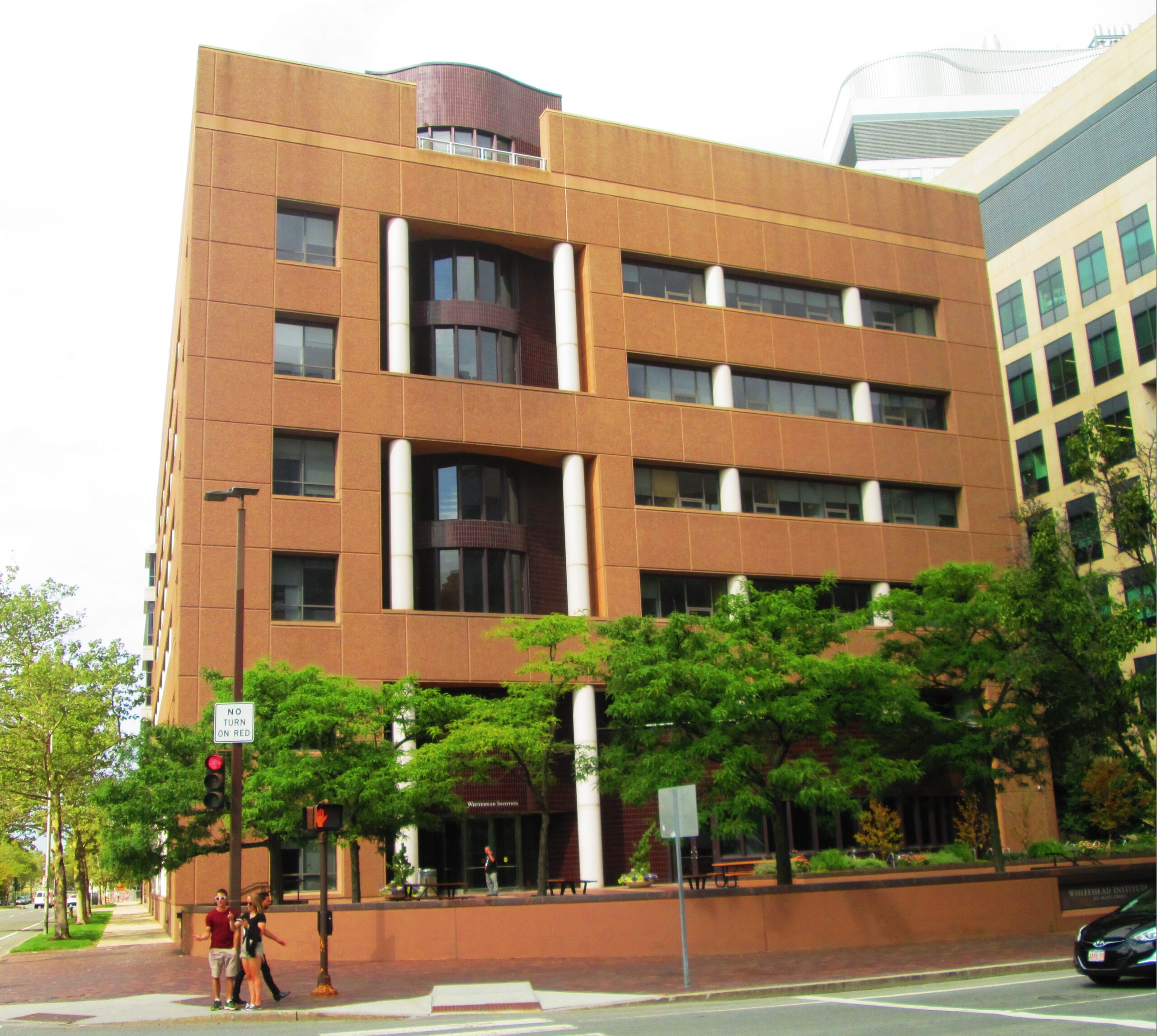
Sabatini ran a research lab at the Whitehead Institute in Cambridge for 24 years. The lab studied cell biology in order to better understand neurodegenerative diseases, cancer, diabetes and ageing.
He was forced out of the lab in 2021 after an internal Whitehead investigation. That investigation concluded he had a past sexual relationship with Knouse, a younger and less experienced colleague over whom he held a role that could influence her career, the Times reported.
The investigation also found that his lab had maintained a sexualised atmosphere, the Times reported. The Globe reported that the investigation found the relationship had violated a strict workplace relationship policy at Whitehead.
Knouse told investigators the relationship was coercive, that Sabatini was in a position of influence and that he had fostered a toxic and sexually charged work environment, the Globe reported. In her counterclaim, she asserted that he coerced her into a nonconsensual relationship and abused his position of power, the Globe reported on 18 October.
Sabatini said he and Knouse, then a Whitehead fellow, began a consensual sexual relationship in 2018 that ended when he began pursuing another woman, the Globe reported.
He denied that his lab had an improper atmosphere, the Times reported. He maintained that Knouse had schemed to get him fired and disgraced after he became interested in another woman.
The verdict came nearly five years to the day after he filed his defamation suit. The original lawsuit named Knouse, the Whitehead Institute and the institute’s director as defendants.
The institute and its director were dismissed from the case before trial. In a memorandum of decision dated 3 November 2025, the Superior Court allowed their motion for summary judgment, a ruling that ends a claim without a trial, on Sabatini’s gender discrimination claim, the only claim then remaining against them.
The same order allowed Sabatini’s claims against Knouse for defamation and tortious interference to proceed to trial. It dismissed his claims against her for intentional and negligent infliction of emotional distress, according to the order. The order also allowed Knouse’s motion for summary judgment on Sabatini’s claim alleging violation of G.L. c. 151B, described in the order as a hostile work environment claim, and on the portion of his defamation count concerning statements of personal opinion, which the order described as statements characterising his conduct in terms of Knouse’s subjective, non-provable opinion.
After the verdict, the Whitehead Institute said in a statement that all claims against it had already been dismissed. “Therefore, Whitehead was not a party to this case, and the decision and judgment only apply to Drs. Sabatini and Knouse, the parties in the case,” the institute said, People reported.
The trial lasted about three weeks. Some former members of Sabatini’s lab testified that he fuelled a toxic and sexually charged lab culture, and others praised his mentorship. The jury was made up of seven women and six men.
Sabatini told the Times he hopes the verdict is a step toward regaining his reputation. “I hope that I can get back to being judged by my science and my training,” he said.
Knouse is also on the faculty of the Koch Institute for Integrative Cancer Research, which is affiliated with MIT.
Sabatini was hired in 2023 by the Institute of Organic Chemistry and Biochemistry in Prague and later opened a Boston-area branch of that institute. He has been splitting his time between Massachusetts and the Czech Republic.