

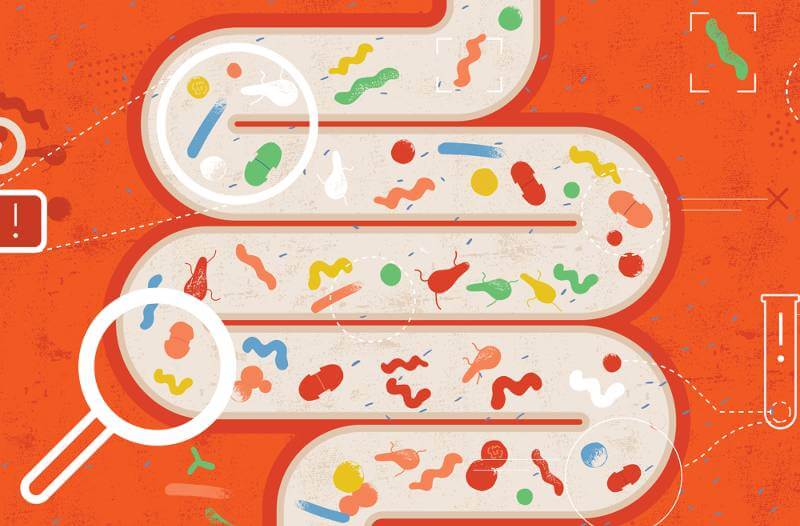
As we get older, our digestive systems lose their resilience. A meal we once enjoyed might become a source of discomfort. This isn’t merely a consequence of age; it’s often a sign that the intestinal epithelium, the single, crucial layer of cells lining the gut, is failing to repair itself. Normally, this lining completely regenerates every few days. When that vital process slows or stops, chronic inflammation sets in, leading to problems like leaky gut syndrome.
For years, researchers sought dietary or pharmacological fixes for this chronic issue. Now, a team of biologists at Cold Spring Harbor Laboratory has found an entirely new approach. They’ve repurposed the revolutionary cancer treatment known as CAR T-cell therapy to successfully rejuvenate the intestines of aged mice. Their landmark study, published in Nature Aging, suggests we can engineer the immune system to tackle age-related cellular damage and fundamentally restore youthful tissue function.
The core of the issue is cellular senescence. These cells have stopped dividing, yet they refuse to die. They linger in tissues like biological squatters, earning the nickname “zombie cells” because they constantly pump out inflammatory chemicals that poison their healthy neighbors. The CSHL scientists identified a protein marker, uPAR, that is heavily expressed on the surface of these senescent cells in the aging gut. By genetically programming CAR T cells to recognize and destroy anything displaying the uPAR signal, they created a highly targeted cellular cleanup crew.
The Immune System’s Vili Reboot
Picture the inside of your small intestine: it’s a field of millions of tiny, waving, finger-like projections called villi. They look like a dense, microscopic shag carpet, maximizing the area needed for nutrient absorption. In a healthy, young animal, this carpet is constantly replaced and refreshed. In an aging body, however, the landscape becomes threadbare and damaged, covered in bald patches. The zombie cells are the engine of this degradation.
When the researchers infused the anti-uPAR CAR T cells into the old mice, the transformation was extraordinary. The engineered cells efficiently swept through the tissue, selectively eliminating the senescent cells while sparing the healthy lining. After the treatment, the old mice’s intestinal barrier didn’t just look better; it started to function like a young one’s. The therapy had effectively rebooted the regenerative capacity of the gut stem cells responsible for maintaining the tissue.
The resulting health improvements were vast and immediate. The treated mice developed a stronger intestinal barrier, which meant fewer gut toxins leaked into the bloodstream. This improved permeability reduced overall systemic inflammation and led to better metabolic health. Additionally, the intervention successfully pushed the gut microbiome, the community of microbes living in the gut, back toward a profile typically seen in younger animals.
They’re able to absorb nutrients better. They have much less inflammation. When irritated or injured, their epithelial lining is able to regenerate and heal much faster.
The team demonstrated the therapy’s dual power. First, they used the CAR T cells to reverse damage in mice that were already old. Second, they administered the cells to younger mice, showing they could preemptively prevent age-related decline. Both strategies proved effective. The protection was remarkably durable, suggesting that a single injection of these long-lived, engineered immune cells could offer protection that lasts for at least a year.
Healing After Major Trauma
Beyond natural aging, the therapy showed powerful promise for acute injury. Patients receiving radiation therapy for cancer often suffer devastating gastrointestinal damage. To model this, the researchers exposed mice to radiation and then treated them with the anti-uPAR CAR T cells. The treated animals recovered with remarkable speed and completeness compared to the untreated group. This indicates that clearing senescent cells is a powerful way to create a favorable environment for rapid tissue repair, even after major trauma.
Of course, translating this to human medicine involves steep challenges. CAR T-cell therapy is notoriously complex, personalized, and expensive to manufacture. It also carries the serious risk of severe immune reactions, or cytokine storms. Using such a potent tool to fight aging, rather than a deadly cancer, changes the necessary calculation of risk versus benefit. The researchers stressed that safety will remain the absolute top concern moving forward.
Nevertheless, the study offers compelling evidence that systemic aging is not an irreversible fate. The team confirmed that the crucial uPAR marker exists on senescent cells in human intestinal tissue, suggesting this biological mechanism is indeed conserved across species. If this therapy can be made safe and scalable, it could open a new, powerful front in treating the chronic conditions that limit health in old age.
This is one good step toward a long journey in understanding how we can better heal the elderly.
This research reframes the discussion of aging. It suggests that by selectively clearing the broken, inflammatory cells that impair our natural ability to heal, scientists can tap into the body’s latent regenerative power, helping it maintain its peak function well into later life.