

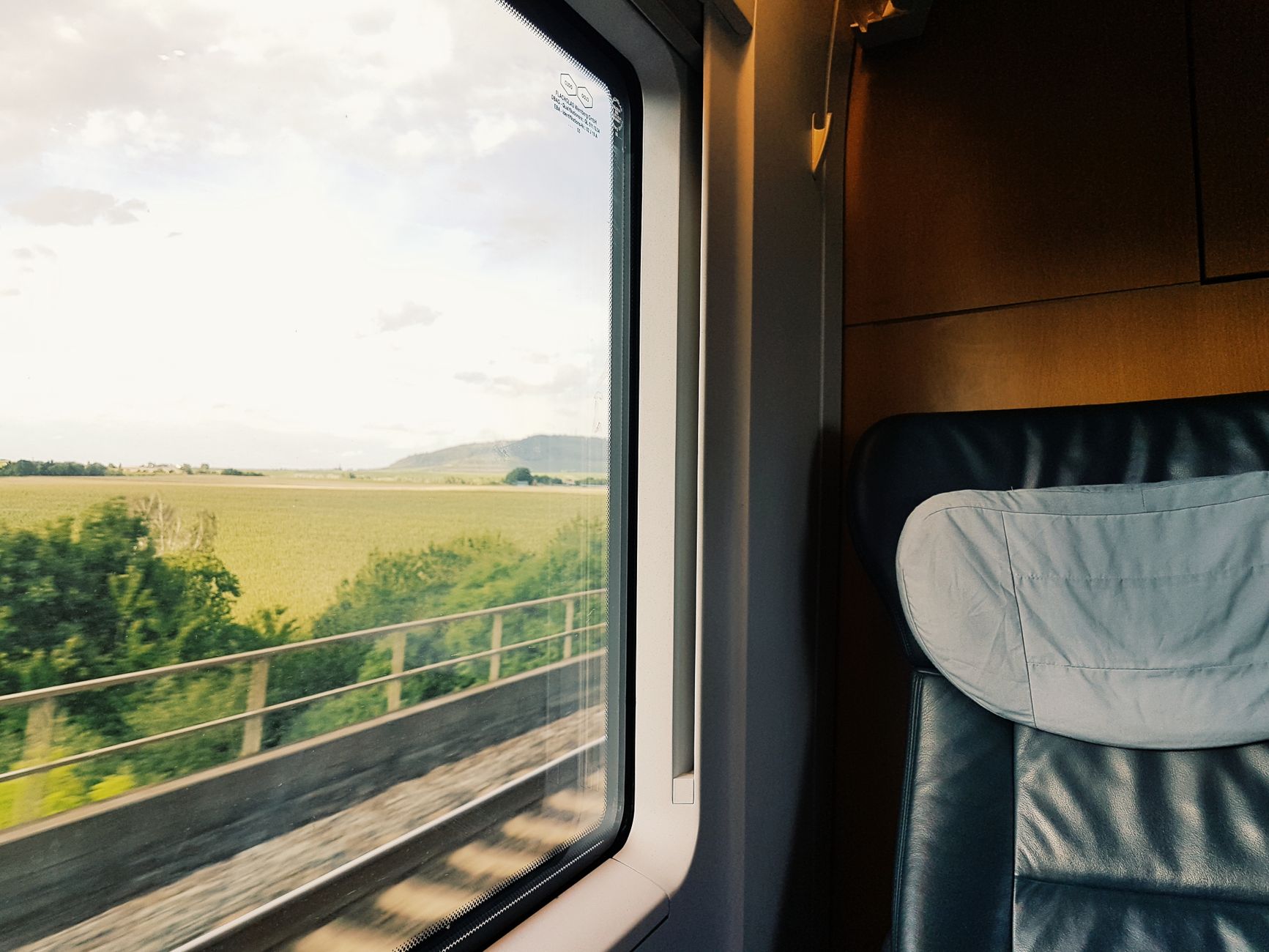
Slow travel, staying longer in fewer places, favoring trains and buses over flights, and trading the checklist of sights for a bit of depth, is usually sold as a lifestyle aesthetic. But two of its main advantages are measurable rather than romantic. It emits dramatically less carbon than the fast alternative, and it tends to make the travel itself happier. Here is what the evidence actually shows, and where it stops.
The carbon advantage is large, and it is concrete
Slow travel in practice usually means fewer flights and more time on the ground, and the difference in emissions there is not marginal. According to Our World in Data, a domestic flight emits roughly 246 grams of carbon dioxide per passenger-kilometer, while a national rail journey emits around 35 grams, about a seventh as much, and an electric service such as the Eurostar can be as low as 4 grams. Swapping a short-haul flight for a train, in other words, cuts the emissions of that leg by around 86 percent.
The important detail is that flights dominate the footprint of most trips. For the average traveler who flies at all, the flying is by far the largest single source of travel emissions, which means the biggest environmental lever is not recycling at the hotel or choosing an efficient rental car. It is flying less often and less far. This is also the honest limit of the carbon case: slow travel that still begins with a long-haul flight to reach the starting point keeps most of its footprint in that one leg. Moving slowly once you arrive helps, but the flight you did or did not take matters more.
It tends to make the trip happier
The second advantage is psychological, and it comes from a body of research on when, exactly, a holiday makes people happier. Studying more than 1,500 people, the tourism researcher Jeroen Nawijn and colleagues found that the happiness boost from a vacation is largest before the trip even begins, in the anticipation, and that after returning, only people who had a very relaxed trip stayed happier than those who had not traveled at all.
Both halves of that finding point toward slowing down. The anticipation stage rewards a longer, less frantic plan, the kind you look forward to for weeks rather than scramble to assemble. And the post-trip result is blunt: it was specifically the relaxed trips, not the packed ones, that left people better off afterward. A holiday spent racing between cities can deliver the opposite, the familiar need for a holiday to recover from the holiday. Slow travel protects both ends, stretching the anticipation and keeping the trip itself calm enough to leave an afterglow rather than exhaustion.
Why cramming tends to backfire
The intuition behind fast travel is that more places and more sights mean more value for the time and money. It runs into how experience and memory actually work. Savoring, the act of noticing an experience and staying with it rather than rushing to the next, is a large part of what converts events into lasting enjoyment, and it takes the kind of unhurried time a dense itinerary does not allow. A morning that is really seen tends to be remembered better than three that were merely visited.
There is also a simpler mechanism: depletion. The stressful parts of travel are concentrated in the transitions, the airports, the packing and repacking, the transfers, and the daily disorientation of waking up somewhere new and working out how it functions. Slow travel does each of those things less often. Fewer transitions and more time actually being somewhere is not only more pleasant in the moment, it removes much of what makes fast trips tiring.
The quieter practical benefits
Beyond carbon and happiness sits a cluster of ordinary advantages that rarely make the brochure. Staying put is often cheaper per day, since weekly apartment rates, local markets, and cooking a few of your own meals cost less than a new hotel and restaurant every night, and you stop paying for constant intercity tickets. Spending longer in one place also tends to put more money into the local economy in a direct way, through neighborhood businesses rather than the churn of a different city each evening.
And slow travel lowers the friction that quietly erodes a trip. When you are not optimizing a schedule, small delays stop being emergencies, a rainy day becomes a slow one rather than a ruined one, and there is room for the unplanned encounters that people often name, afterward, as the best part.
What the evidence does and does not say
A few honest limits belong here. Slow travel is partly a privilege of time. It asks for longer trips, and many people with limited leave cannot simply take them; for them the realistic version is fewer, longer trips rather than a constant string of weekends away. The carbon advantage, as noted, depends heavily on the mode and on whether a flight is involved at all, so slow does not automatically mean low-carbon. And a relaxed pace is not universally better. Some people genuinely enjoy seeing a great deal and would find a week in one town restless rather than restful.
What the research supports is narrower and firmer than the lifestyle framing suggests. Ground transport emits a small fraction of what flying does over the same distance, and relaxed, anticipated trips are the ones most likely to leave people happier afterward. Those two findings happen to point in the same direction: toward going less far, less often, and staying longer when you do. The advantages of slow travel are not mainly about virtue. They are about emitting less and, on the available evidence, enjoying it more.