

The flattering way to explain your own resilience is to credit yourself. You got through hard things because you are tough, or determined, or made of some sterner stuff than the people who did not. It is a satisfying story, and the research on how children actually become resilient tells a quieter and more humbling one, in which the credit is mostly owed to other people.
It also tends to deflate the idea that resilience is rare or special at all.
What a 40-year study on one island found
The foundational work here is the Kauai Longitudinal Study, led by the psychologist Emmy Werner. Starting in 1955, researchers followed all 698 children born that year on the Hawaiian island of Kauai, checking in repeatedly until the children were in their thirties. Many of them grew up with steep odds: poverty, prenatal complications, and homes marked by discord, alcoholism, or mental illness.
The headline finding, reported by Werner across decades of follow-up, was that a large share of these high-risk children did not develop the problems their circumstances predicted. Roughly a third of them grew into competent, caring, confident adults. And by their thirties, many of those who had struggled earlier had recovered, often after a “second chance” in the form of a supportive partner, further schooling, or a community that took them in.
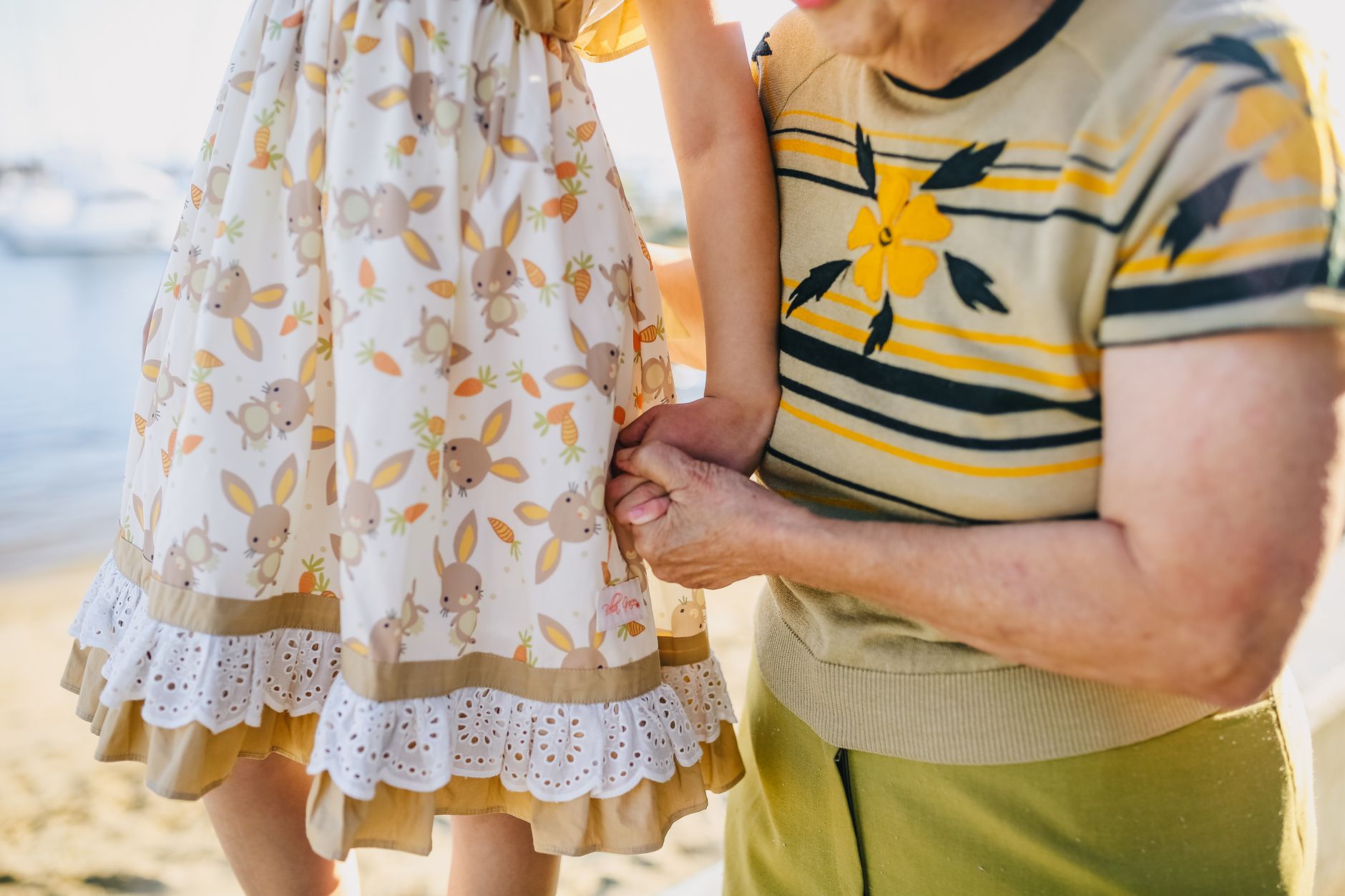
When Werner looked at what separated the resilient children from the rest, two clusters stood out. One was temperament: the children who did well tended to be more easygoing and sociable, and to develop decent problem-solving skills. The other, the one she returned to most often, was a relationship. Resilient children almost always had at least one steady, caring adult who was reliably in their corner, and it was frequently not a parent. It might be a grandmother, a teacher, an older sibling, a neighbor.
Resilience as ordinary magic
A generation of research after Werner, the developmental psychologist Ann Masten gave the pattern a name. In an influential 2001 paper, she called resilience ordinary magic.
Her argument, drawn from decades of studies, was that resilience is not the rare property of extraordinary individuals. It is common, and it arises from the everyday operation of ordinary human systems: a bond with a capable caregiver, the developing ability to manage your own attention and emotions, a sense that your actions matter, a community that offers something to belong to. When those systems are running, children tend to do surprisingly well even under pressure. The most serious harm, Masten noted, comes from adversity that damages the systems themselves.
This reframes the whole question. If you are resilient, the likeliest explanation is not that you were born unusually strong, but that the ordinary protective machinery was intact and someone was helping you run it.
Why this is deflating in a useful way
Put the two findings together and the personal story shifts. The childhood experience that most reliably predicts a resilient adult is not a hardship that forged you, and not an inner steel you happened to possess. It is something closer to luck: having, somewhere in the mix, at least one person who paid steady attention, plus enough stability for the ordinary systems to keep working.
That is a less heroic account of your own strength, and a more accurate one. It also points somewhere useful. If resilience is largely built by relationships rather than issued at birth, then it is something people can give to each other, and the presence or absence of one committed adult in a child’s life is not a minor detail.
The limits worth keeping in view
A few cautions matter here, because this is territory where tidy conclusions do real harm.
The research is observational and often retrospective. You cannot randomly assign children to good or bad childhoods, so the link between a caring adult and a resilient adult is a strong association, not a proven mechanism, and temperament, which is partly heritable, tangles the picture further. Resilience is also not a fixed trait or a grade. It shifts across time and situation, which is exactly why Werner found people recovering in their thirties, and someone can be sturdy in one part of life and fragile in another.
The most important caution is moral. Saying resilience is ordinary is not the same as saying adversity is harmless, and it is emphatically not a basis for treating people who did not bounce back as having failed. The same research that found protective systems to be common also found that piling on enough hardship overwhelms them. Bouncing back is not evidence of virtue, and struggling is not evidence of weakness.
What survives all of that is the quiet finding at the center of it. If you turned out resilient, the science suggests you probably had help, most likely from at least one person who stayed. The fitting response to that is less pride than a kind of debt, and the clearest way to pay it is to be that person for someone else.