

Search for exercise ideas after 60 and you get a grab bag: a little walking, some stretches, maybe a photo of a smiling couple on bikes. The ideas are fine, but the useful version is organized rather than random, because the evidence points to a specific shift in what matters as we age. After 60, the winning mix is not simply more of any one thing. It adds strength and, above all, balance as first-class goals alongside aerobic fitness, mainly to protect independence and to keep people upright. One note before the ideas: this is general information rather than personal medical advice, and anyone with a health condition or a long spell of inactivity should read the safety section at the end before starting.
What the guidelines actually recommend
The clearest starting point is the World Health Organization’s 2020 guidelines on physical activity, summarized by Fiona Bull and colleagues in the British Journal of Sports Medicine. For adults aged 65 and over, they recommend at least 150 to 300 minutes of moderate aerobic activity a week, muscle-strengthening work on two or more days, and, importantly, multicomponent activity that emphasizes balance and strength on three or more days to help prevent falls.
That third item is the part that distinguishes advice for older adults from general fitness advice. For younger adults, aerobic exercise and some strength work are the headline. After 65 the guidelines explicitly promote balance training to a named priority, because the goal has widened from cardiovascular health alone to preserving the functional ability to stand, walk, climb stairs, and recover from a stumble. The aerobic minutes still matter, but they are no longer the whole story.
Why balance and strength move up the list
The reason is falls, which are among the biggest threats to independence in later life. A large 2019 Cochrane review led by Catherine Sherrington pooled 108 randomized trials with more than 23,000 participants and found that exercise programs built around balance and functional movement reduced the rate of falls by about 24 percent, a finding the reviewers rated as high-certainty. Programs that combined balance work with resistance exercise did better still, and tai chi showed a smaller but real benefit.
Strength training earns its place for a related reason. Muscle mass declines steadily with age, a process called sarcopenia, and that loss is what quietly turns everyday tasks, rising from a low chair, carrying shopping, getting up off the floor, into struggles. Resistance exercise slows and partly reverses that decline, which is why the exercise ideas that matter most after 60 are often precisely the ones people are most likely to skip in favor of a pleasant walk.
Concrete ideas, by ingredient
For the aerobic share, the aim is 150 to 300 minutes a week of anything that gets you breathing a little harder, broken into whatever chunks suit you. Brisk walking is the obvious one, and water aerobics or swimming are excellent for anyone whose knees or hips object to impact, since the water carries the load. Cycling outdoors or on a stationary bike, dancing, and even vigorous gardening all count.
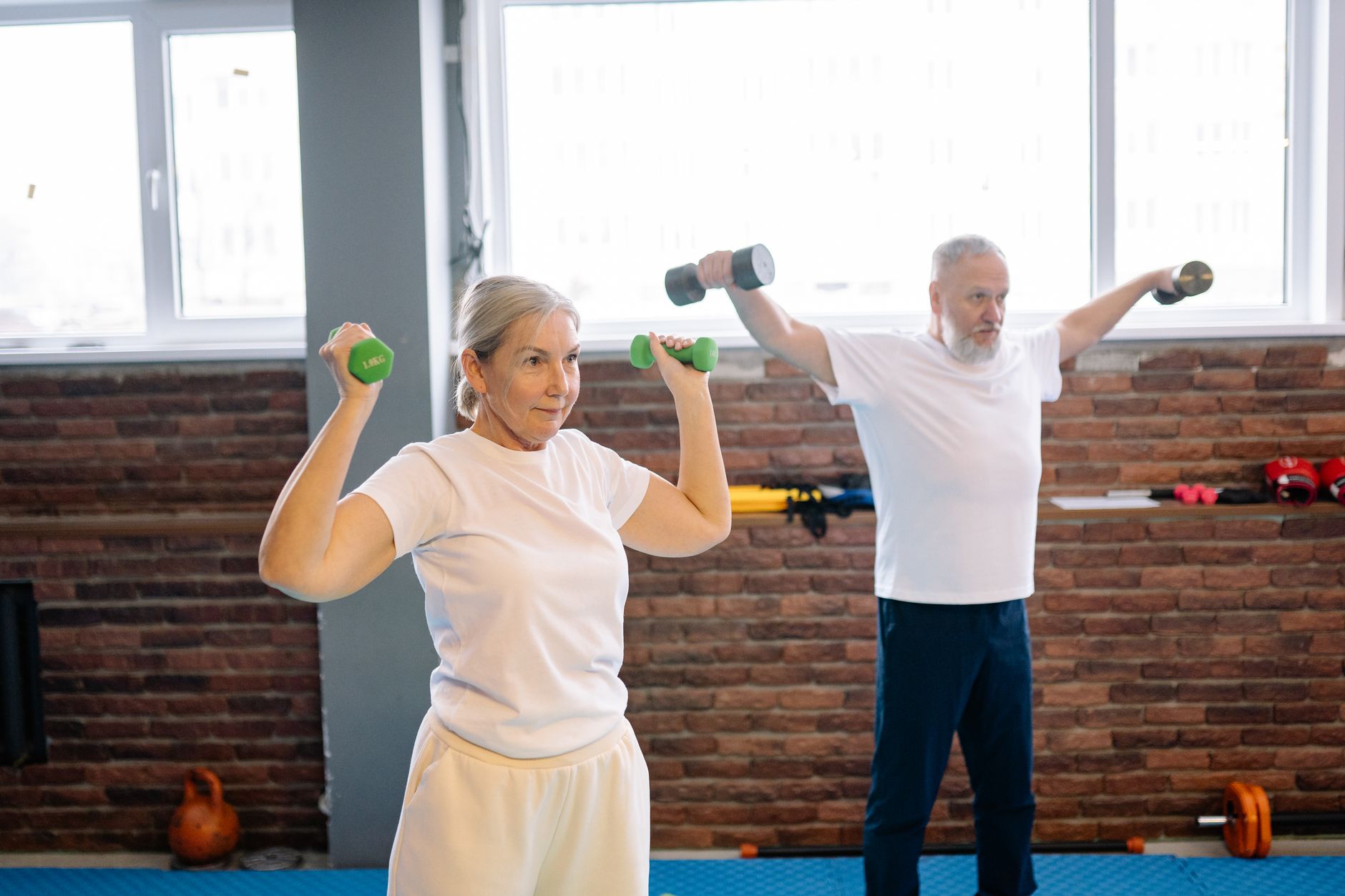
For strength, twice a week across the major muscle groups, you do not need a gym. Standing up from a chair without using your hands and sitting back down slowly, repeated, is a genuine strength exercise. Push-ups against a wall or kitchen counter, resistance bands, light dumbbells or even filled water bottles, and carrying groceries all build the same capacity.
For balance, the priority ingredient, aim for something on most days. Standing on one leg while holding a counter, walking heel-to-toe in a straight line, and gently reducing how much you hold on as you improve all train the systems that keep you steady. Tai chi and yoga are structured, well-studied ways to work balance and flexibility together. Whatever you choose, start where you actually are, build up gradually, and remember that something is considerably better than nothing, including simply sitting less.
Safety, and what the evidence does and does not settle
A few honest cautions belong here, and they matter more for exercise advice than for most topics. This article is general information, not a personalized program. Anyone with heart or lung disease, uncontrolled blood pressure, osteoporosis, a recent injury or surgery, frequent dizziness, or a long period of being inactive should speak with a doctor or a physiotherapist before starting, and a physiotherapist can design a safe, progressive balance and strength routine, which is especially worthwhile for anyone who has already had a fall. Stop and seek medical help for chest pain, severe breathlessness, or feeling faint. Begin balance work within reach of something solid to hold.
It is also worth being clear about the limits of the evidence. The guidelines and the falls review describe averages across large populations, and “over 60” covers an enormous range, from marathon runners to people who use a walker, so no single prescription fits everyone. What the research does settle is more encouraging than daunting: it is genuinely never too late to start. Trials have found that supervised strength and balance training improve function even in people in their eighties and nineties, and the benefits begin at modest doses. The best program after 60 blends aerobic movement, strength, and balance, and the single most effective exercise is the boring but reliable one you enjoy enough to keep doing.