

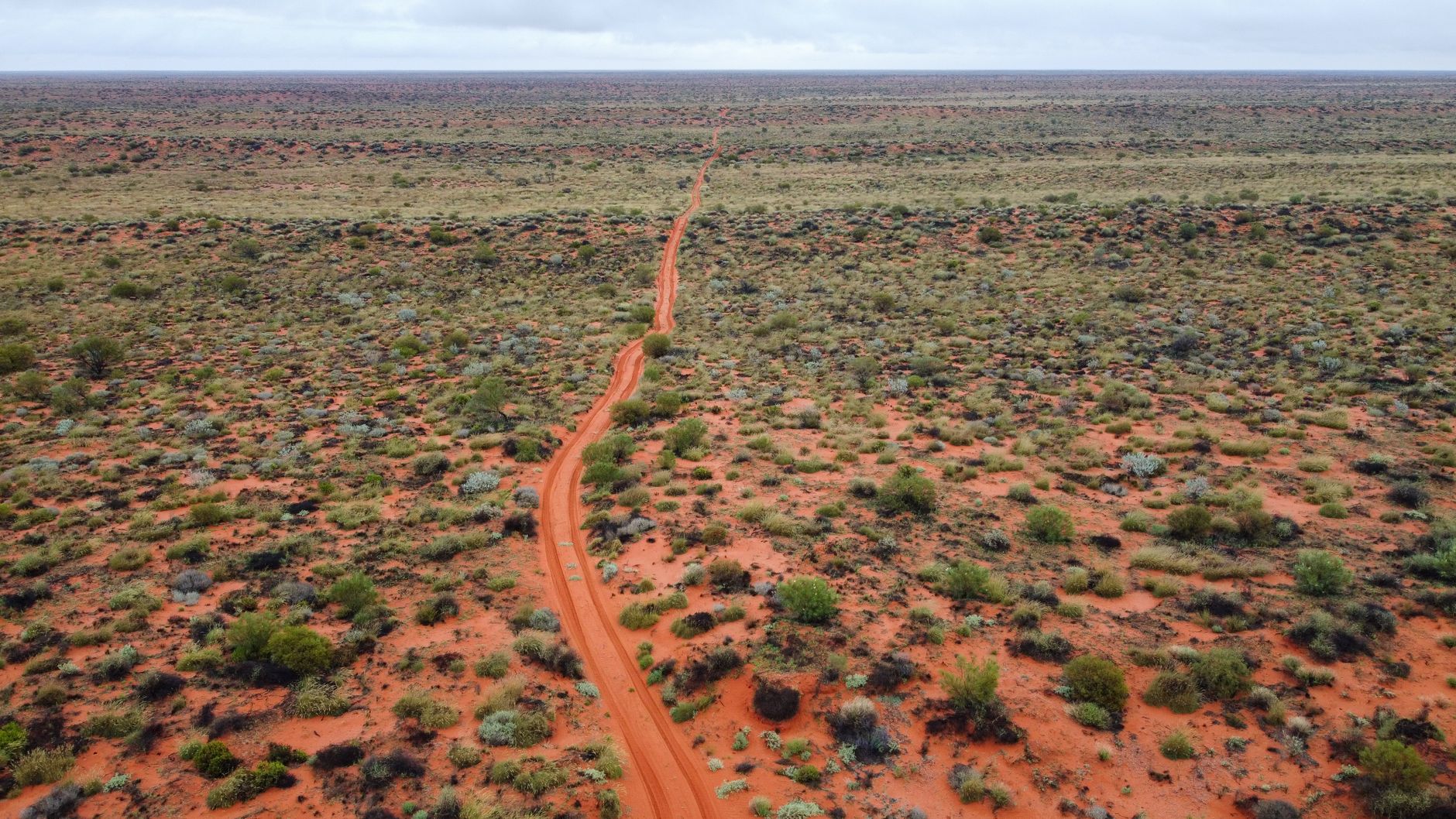
Scattered across parts of Western Australia are strange circular patches of bare ground, ringed by vegetation and empty in the middle, that locals and scientists alike have long called fairy circles. They are odd enough to invite folklore. But a growing line of research suggests something more practical may be going on beneath at least some of them: hydrogen gas, seeping up from deep in the crust. If that link holds up, these humble circles could become inexpensive signposts in the search for a low-carbon fuel. The idea is genuinely promising, and it is also early, so it is worth separating what has been measured from what is still hoped.
What was actually found
The concrete finding is narrower and more careful than the headlines about buried treasure suggest. A team at Australia’s national science agency, the CSIRO, went into the field and measured the gases in the soil in and around some of these circles. Led by Dr Ema Frery, the researchers demonstrated the existence of natural hydrogen seeps in Australia through the exploration of some of these fairy circles, taking soil-gas measurements and monitoring surface evidence of hydrogen escaping from the ground. In plain terms, they put instruments in the dirt and detected hydrogen coming up, with the raised concentrations tending to show up around the rims of the circles rather than dead center.
That is a real result, and it matters because it is the first solid confirmation that these Australian features are venting hydrogen at all. It moves the fairy circles from curiosity to candidate: not proof of a giant reservoir, but evidence that gas is moving from somewhere below to the surface here, which is exactly the kind of clue geologists use to decide where to look harder.
Why hydrogen, and why here
The reason this particular region is interesting comes down to its rocks. Natural hydrogen, sometimes marketed as gold hydrogen, is not the manufactured hydrogen made in industrial plants; it is generated underground by chemical reactions between water and certain iron-rich and ultramafic rocks, a process that can quietly produce the gas over long spans of geological time. The Western Australian sites sit near a major crustal boundary, the Darling Fault, where the right kinds of rock meet and where deep reactions capable of generating hydrogen are plausible. That geological setting is what makes researchers think the seeps at the surface could be connected to meaningful sources at depth rather than trace amounts with no future.
The appeal is easy to understand. Hydrogen burns without producing carbon dioxide, and a naturally occurring, continuously generated supply would sidestep the energy and expense of manufacturing it. That is why a scramble of interest has followed these findings. But wanting a resource to be large and cheap does not make it so, and the distance between a detectable seep and a producible field is considerable.
The signpost idea, and its appeal
The most exciting suggestion is that the circles themselves could serve as a cheap exploration tool. Drilling is expensive, and much of the cost of any resource hunt lies in figuring out where to drill. If a visible surface feature reliably marked hydrogen below, it could dramatically narrow the search. Some researchers have gone further and reported that larger circles tend to be associated with deeper, higher-pressure sources, which would make the surface pattern not just a yes-or-no flag but a rough guide to what lies beneath. Read from satellite images, such features could point exploration toward the most promising spots without blanketing the landscape in test wells.
It is a compelling picture, and it is fair to call it a reasonable working hypothesis. It is not yet an established method. The correlation between circle and hydrogen has been shown in specific places, not proven as a general rule, and turning a promising pattern into a dependable prospecting technique is the sort of thing that takes many more sites, careful controls, and a good deal of drilling to confirm or refute.
The honest caveats
A few cautions keep this in proportion. First, the fairy circle name is doing double duty, and it is worth not conflating two different things. In Namibia and elsewhere, fairy circles are a famous ecological puzzle about patterns in vegetation, with debates about termites and plant competition that have nothing to do with gas. The Australian hydrogen story uses the same evocative label for what is really a set of gas-venting depressions, and the visual resemblance does not mean the two phenomena share a cause.
Second, detecting a seep is not the same as proving a reserve. Knowing that hydrogen reaches the surface at a spot tells you gas is being generated and is migrating, but it does not tell you how much is down there, whether it is trapped in a way that allows extraction, or whether a well would flow at a rate worth the cost. Those are separate questions that only drilling and time can answer, and plenty of promising energy leads have thinned out at exactly this stage.
Third, the economics and engineering of natural hydrogen as an industry are still largely unproven at scale anywhere in the world. The science of where the gas comes from is advancing quickly, which is the genuinely exciting part, but a real supply chain is a much longer road.
None of this diminishes what has been done. Confirming that Australian fairy circles vent natural hydrogen, and tying that to the region’s deep geology, is a solid and interesting step, and the notion of using surface features to guide the hunt is clever and testable. The sober way to hold it is as a strong early lead rather than a discovery of riches: a reason to keep measuring, mapping and, eventually, drilling, while treating the more dramatic promises as questions the next several years of work will settle.