

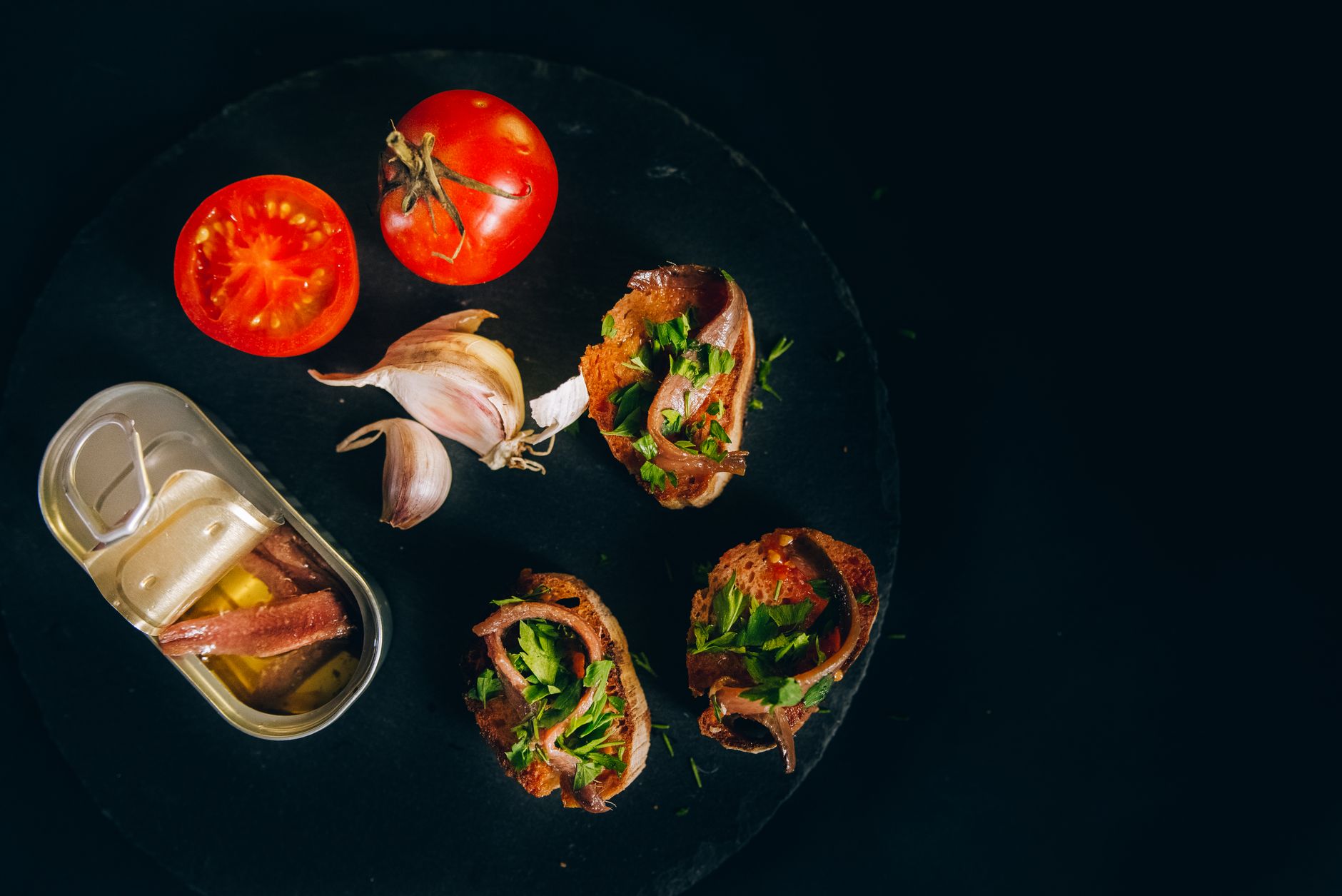
Liver and onions. Tinned sardines on toast. Cottage cheese with a ring of canned pineapple. Prunes with just about anything. There is a whole category of food that a grandparent can eat with real pleasure while a twenty-something looks on with polite alarm. It is tempting to file this under older people having strange taste, but that misses what is actually going on. Two separate forces are at work, one of them biological and one of them historical, and neither has much to do with anyone being wrong about food.
Start with the biology, because it is the more surprising half.
Most of flavor is smell, and smell fades
What we casually call taste is mostly smell. The tongue handles only a few basic qualities, sweet, salty, sour, bitter, and savory, while the nose supplies almost everything else, all the aroma that makes coffee taste like coffee rather than warm bitter water. And the sense of smell declines steeply with age.
In a 1984 study in the journal Science, Richard Doty and colleagues tested smell identification in 1,955 people between the ages of 5 and 99. The ability peaked in the thirties and forties and then fell off sharply after about 65. More than half of people aged 65 to 80 had a major impairment, and among those over 80 it was more than three-quarters. This is not a rare affliction. It is close to a normal feature of getting older.
Taste follows a gentler version of the same curve. As the Duke psychologist Susan Schiffman documented in a review in the Journal of the American Medical Association, older adults tend to perceive flavors as less intense and to have a harder time telling concentrations apart. In her work, older people taking common medications sometimes needed several times more salt, in some cases many times more, before they could detect it at all.
Why that points toward the strong stuff
Put those two declines together and a food preference starts to make sense that looked like mere eccentricity.
A dish that lands on a young palate as aggressively salty, pungent, or sweet can arrive on an older one as merely well-seasoned, or even a little mild. The oily intensity of a sardine, the metallic depth of liver, the sharp funk of a strong cheese, the sweetness of canned fruit: these are not flavors older people enjoy in spite of their strength. In many cases the strength is what allows the food to register at all. The same plate is, quite literally, a different sensory experience for the two people eating it.
The other half is a different childhood
Biology is only part of the story, though, and it would be a mistake to reduce the whole thing to failing senses. The foods people love are heavily shaped by what they ate growing up, and today’s older adults grew up in a different kitchen.
Their formative food years fell in an era of thrift and, in many places, rationing, followed by the mid-century enthusiasm for canned goods, jellied salads, and the nose-to-tail economy that made liver, tongue, and canned fish everyday fare rather than curiosities. Sweet-and-savory pairings like ham with pineapple, or cottage cheese with fruit, were not eccentric then; they were modern and even aspirational. Those dishes became comfort food, wired to a particular time and household. A younger person never formed that association, so the same combination reads as strange rather than as home.
This is why the puzzle is so often about combinations specifically. Strong, salty, sweet-and-savory pairings are exactly the ones a less sensitive palate rewards, and they also happen to be exactly the ones the mid-century table specialized in. The biology and the history point in the same direction.
A few honest qualifications
It is worth resisting the urge to turn any of this into a tidy generational law. Differences between age groups are routinely overstated, and this is a matter of averages laid over enormous individual and cultural variation; plenty of older people dislike liver, and plenty of younger ones love sardines. The point is a set of tendencies, not a rule about anyone in particular.
Two smaller notes belong here too. A sudden loss of smell, as opposed to the slow age-related fade, can signal something worth checking with a doctor, so it is not purely a dinner-table curiosity. And none of this is a judgment about whose taste is better, because taste is not the sort of thing that has a correct answer.
Mostly the lesson is a humbling one for the young. The gap at the family table is real, but it is not evidence that one generation has strange taste and the other has good sense. It is a nose that has quietly turned down its own volume, and a childhood spent in a different kitchen. Both of those, given enough time, are coming for everyone, and today’s twenty-somethings will one day bewilder their own grandchildren with whatever it was they grew up eating.