

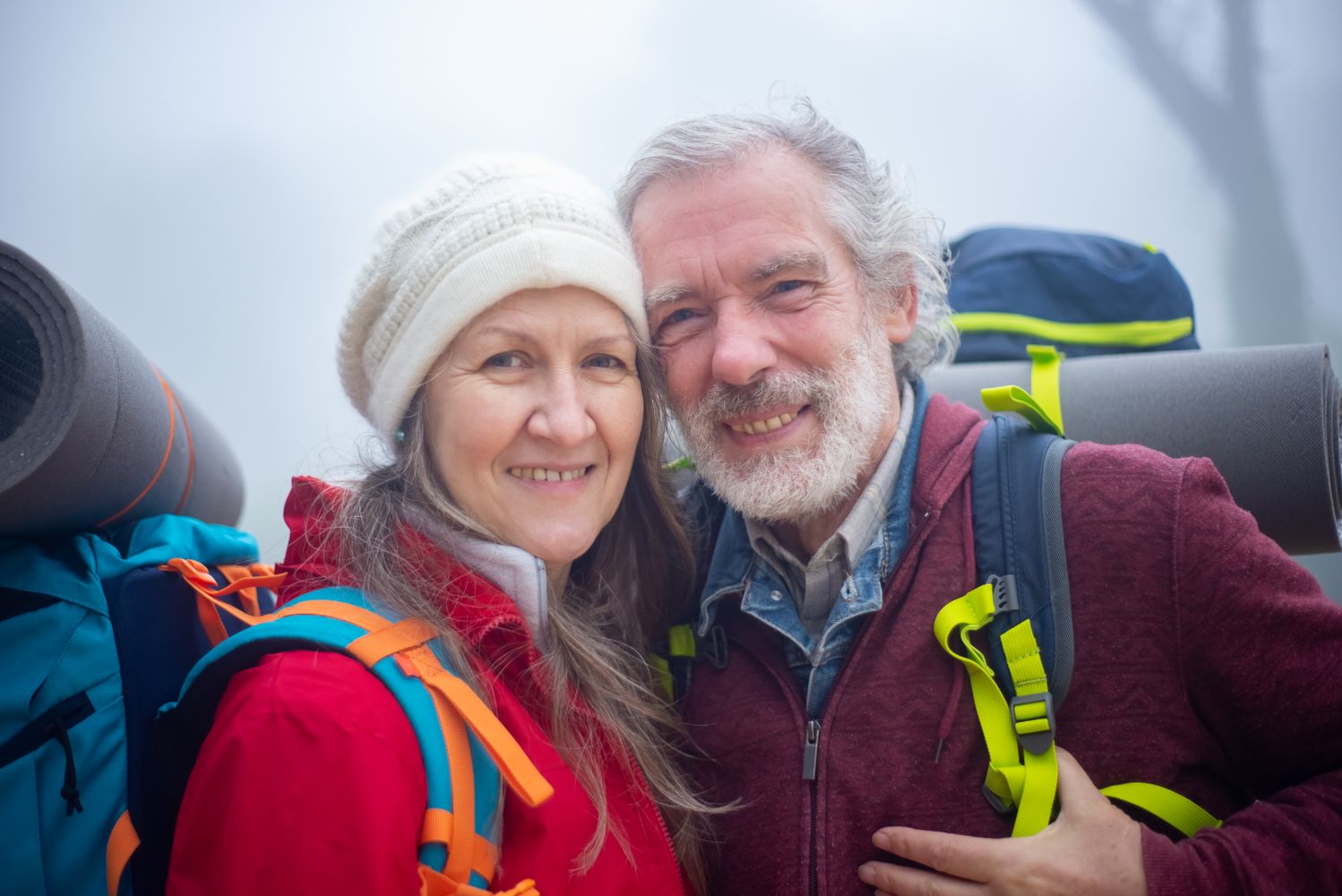
People who feel younger than their actual age tend to stay that way longer when they keep up an active hobby, according to a body of research on what psychologists call subjective age: how old a person feels, independent of the number on their birth certificate. A 2019 paper in the European Journal of Ageing, by Yannick Stephan, Angelina Sutin, and Antonio Terracciano, pooled data from more than 10,000 adults aged 20 to 90 across four separate American studies and found that people who reported more physical activity at one point in time were 30 to 50 percent more likely to feel younger than their actual age when surveyed again 8 to 20 years later.
We are writers, not clinicians. What follows is a reading of the research on hobbies, activity, and subjective age, not medical advice about what any individual retiree should do.
This is a correlational finding, not a controlled experiment: the studies tracked people’s own activity levels and their own sense of how old they felt, rather than assigning some retirees a hobby and others none. The researchers cannot rule out that people who already felt younger were simply more inclined to stay active in the first place, rather than the activity causing the younger feeling. Subjective age itself matters beyond how someone feels day to day. Other research using the Health and Retirement Study has linked feeling notably older than one’s chronological age to higher rates of cardiovascular disease, dementia, and earlier mortality, which is part of why researchers have taken an interest in what predicts it.
What the four-sample study actually measured
Stephan, Sutin, and Terracciano drew on the Wisconsin Longitudinal Study, the Health and Retirement Study, and the Midlife in the United States Survey, three long-running American panels that check in with the same participants over many years. Physical activity was self-reported, not measured with accelerometers or lab tests, and subjective age was also self-reported, typically by asking participants how old they feel compared with their actual age. Both measurements rely on people accurately recalling and reporting their own behavior and feelings, which is a known source of noise in this kind of research.
The 30 to 50 percent figure is a relative likelihood, drawn from statistical models that adjusted for factors like baseline health and demographics. The paper does not report, and we could not independently confirm, the absolute share of physically active participants who went on to feel younger versus the absolute share of inactive participants who did, which matters for judging how large this effect looks outside of a regression coefficient. This is one line of research across four related samples, not a randomized trial, and it should not be read as proof that taking up a specific hobby will make any individual feel younger.
A separate strand of research: activity and a measurable biological marker
A different kind of evidence comes from telomere length, a biological marker some researchers use as a rough proxy for cellular aging. Telomeres are the protective caps at the ends of chromosomes that shorten somewhat as cells divide over a lifetime, though telomere length is an imperfect and contested measure of aging in its own right.
In a 2017 paper in Preventive Medicine, the researcher Larry Tucker analyzed data from 5,823 adults in the National Health and Nutrition Examination Survey, using self-reported frequency, intensity, and duration of leisure activity to sort participants into activity categories. After adjusting for other factors, adults in the “high activity” group, roughly equivalent to jogging 30 to 40 minutes a day, five days a week, had telomeres consistent with about nine years less biological aging than sedentary adults.
The threshold matters more than the headline number
The nine-year figure is the part of this study that tends to circulate on its own, but the detail that matters for anyone thinking about retirement hobbies is this: Tucker’s analysis found no statistically significant difference in telomere length between the sedentary group and the low or moderate activity groups. The biological aging advantage only showed up at the high activity threshold.
That is a meaningfully different claim than “staying active keeps you young at the cellular level.” It suggests that in this dataset, a casual walk around the block or an occasional gardening session did not measurably separate from doing nothing at all, at least by this particular biological marker. None of this means moderate activity is worthless. Exercise carries well-documented cardiovascular, metabolic, and mental health benefits well below the intensity Tucker’s high-activity group represents, and this study is not an argument against exercising at whatever level a person can sustain.
What a retiree choosing a hobby might reasonably take from this
Neither study names a specific hobby, and neither identifies gardening, painting, pickleball, or any other retirement pastime as uniquely effective. What the subjective-age research points to is a broader association between staying behaviorally active, physically and otherwise, and continuing to feel younger than one’s years over long stretches of time. What the telomere research points to is a much narrower finding: a specific, fairly demanding level of sustained aerobic activity was associated with a measurable difference in one biological marker, while lower levels of activity were not, in this particular sample.
A hobby that happens to involve sustained physical exertion, brisk walking groups, cycling, dancing, tennis, may plausibly track closer to the activity threshold in Tucker’s data than a sedentary hobby would. But the subjective-age research suggests that feeling younger is tied to activity more broadly, not necessarily to hitting a specific exercise intensity. Reading the two bodies of research together, the more defensible takeaway is narrower than “hobbies make you young”: staying engaged and active in retirement is associated with feeling younger for longer, and a smaller, more specific line of evidence suggests that higher-intensity physical activity in particular is associated with one measurable marker of slower biological aging, though the mechanism connecting the two remains unsettled.
What would settle the question
Both bodies of research are observational, built from self-reported activity and self-reported or lab-measured outcomes rather than from trials that randomly assigned some retirees to new hobbies and others to their existing routines. A randomized study following retirees who took up a new sustained activity, compared against a similar group who did not, tracking both subjective age and telomere length over years, would go a long way toward separating cause from correlation. Until then, this is a pattern worth taking seriously, not a settled account of what any specific hobby will do for any specific person. Anyone with health conditions that affect how much physical activity is safe should talk with a doctor before changing an exercise routine significantly.