

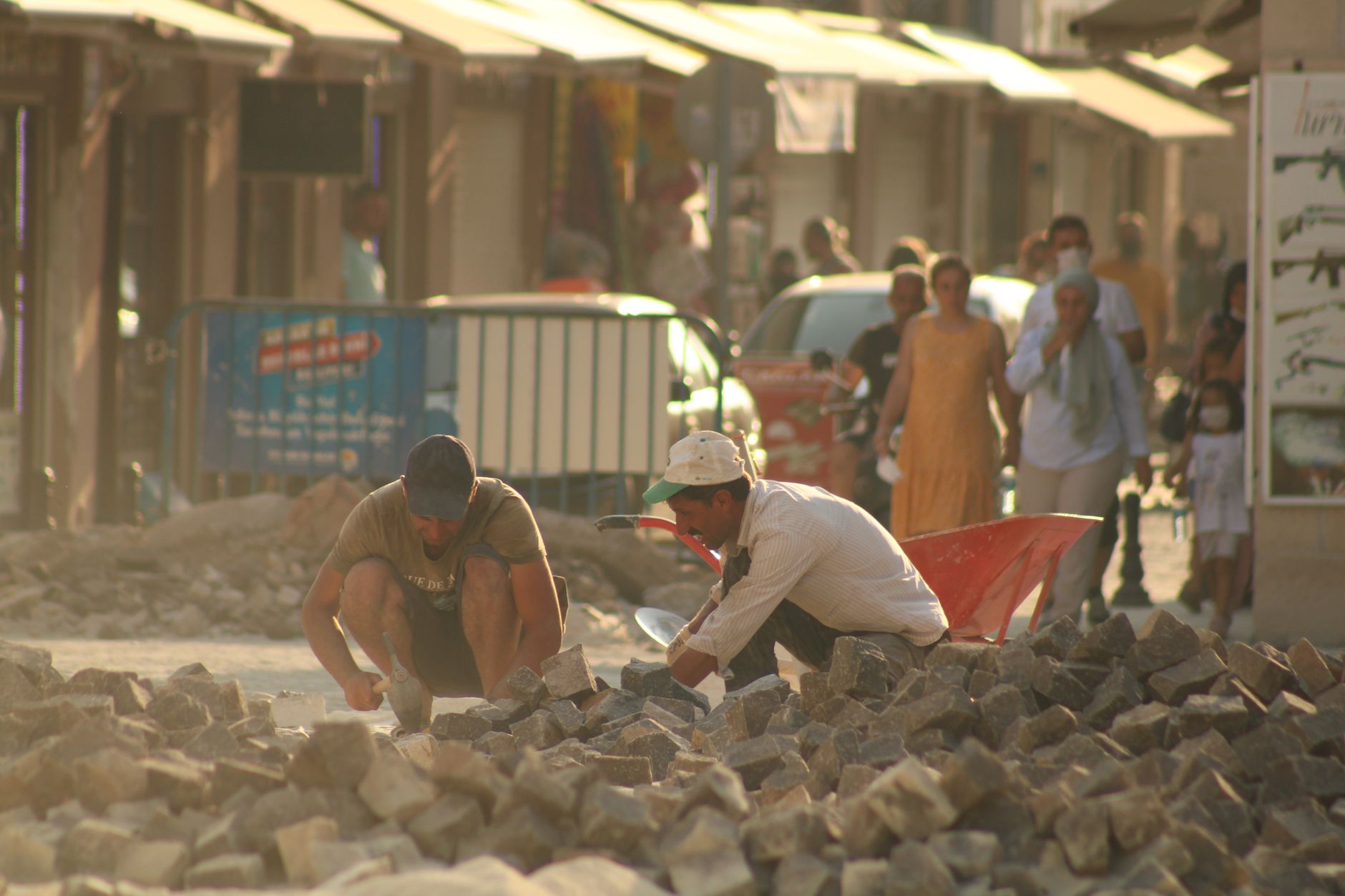
Learning to be strong comes from picking up the pieces of bad situations and building something entirely new. It is a stirring sentence, and it contains a real claim that can be checked rather than merely admired. Folded inside it are three assertions: that hardship builds strength, that the strength comes from the rebuilding, and that what you build must be entirely new. The research treats each of these differently. One is true with a large and important caveat, one is essentially correct and worth understanding precisely, and one is an overstatement that can quietly mislead. Pulling them apart makes the idea more useful and less likely to disappoint.
Hardship can build strength, but only in moderation
Start with the first claim, because the popular version, whatever does not kill us makes us stronger, is both partly true and widely overstated. A large longitudinal study by Mark Seery and colleagues tested it directly by tracking a national sample and comparing people across their lifetime history of adversity. They found a U-shaped pattern: people who had experienced some adversity showed better mental health and life satisfaction over time than people who had experienced a great deal, but also better than people who had experienced none at all, and those with some prior adversity were the least rattled by new difficulties.
Two things in that finding correct the slogan. Some adversity does appear to help, which is why the middle of the curve does best, and this is genuine support for the idea that bad situations can contribute to strength. But the curve turns downward at the high end, which means more hardship is not more strengthening; beyond a point, adversity accumulates into damage rather than resilience. The relationship is not a straight line rewarding suffering without limit. It is a hump, and the people who fare best are not those who endured the most but those who met a moderate amount and came through. Hardship is a possible teacher, not a reliable one, and never in unlimited doses.
The strength is built in the rebuilding, not the breaking
The second claim is the most important and the most often misread. It is tempting to credit the bad situation itself with making a person strong, as though the damage did the work. The evidence points elsewhere: what builds the durable sense that you can cope is not the collapse but the experience of successfully putting things back together. The clearest account of this comes from Albert Bandura’s research on self-efficacy, the belief in one’s own ability to handle a challenge. Bandura identified mastery experiences, meaning personally succeeding at difficult tasks through one’s own effort, as by far the strongest source of that belief, more powerful than encouragement from others or any pep talk.
Read carefully, this relocates where strength comes from. The bad situation supplies the rubble, but the strength is manufactured afterward, in the act of doing something about it and seeing that it works. Each small success at rebuilding, attributed to your own effort rather than to luck, deposits evidence that you are capable, and that accumulated evidence is what people experience as strength. It also explains why the same misfortune can leave one person stronger and another crushed: the difference lies less in the blow than in whether the person went on to accumulate mastery experiences in its aftermath. This is encouraging, because rebuilding is something a person can deliberately do, whereas the original bad situation usually was not.
Entirely new is an overstatement
The third claim, that you must build something entirely new, is where the inspiring version overreaches. The mastery that builds efficacy does not come from razing everything and starting from nothing; Bandura’s work stresses that mastery is best built through challenges that are manageable and graded, hard enough to mean something but not so overwhelming that they end in failure, which teaches the opposite lesson. A total teardown followed by a from-scratch rebuild is often the least efficient and most discouraging route, precisely because it stacks the odds toward early failure.
In practice, recovery usually involves keeping a great deal and adapting it, restoring what still works and changing only what must change. Much of the resilience literature describes people regaining continuity with their former lives rather than inventing wholly new ones. So the demand to build something entirely new is not just unnecessary; it can be counterproductive, setting a standard of dramatic reinvention that most genuine recovery does not meet and does not need to meet. Rebuilding with familiar materials is not a lesser outcome. It is frequently the wiser one.
The claim, corrected
Put the three together and the sentence survives in a more accurate and more helpful form. Bad situations can contribute to strength, but only in moderation, since too much adversity harms rather than tempers. The strength itself is not delivered by the hardship but built afterward, through the accumulation of small, self-directed successes at putting things back together, which is why what you do in the aftermath matters far more than the severity of the blow. And you do not need to build something entirely new; you need to rebuild in manageable steps, keeping what works, because that is how a sense of capability actually forms.
None of this romanticizes hardship, and it should not be read as a reason to seek it out or to tell a suffering person that their pain is a gift. Adversity is not required for strength, and more of it is not better. The honest lesson is quieter and more within reach: when a bad situation does arrive, the strength that can follow is not in surviving it but in the patient, ordinary work of rebuilding afterward, one manageable success at a time.