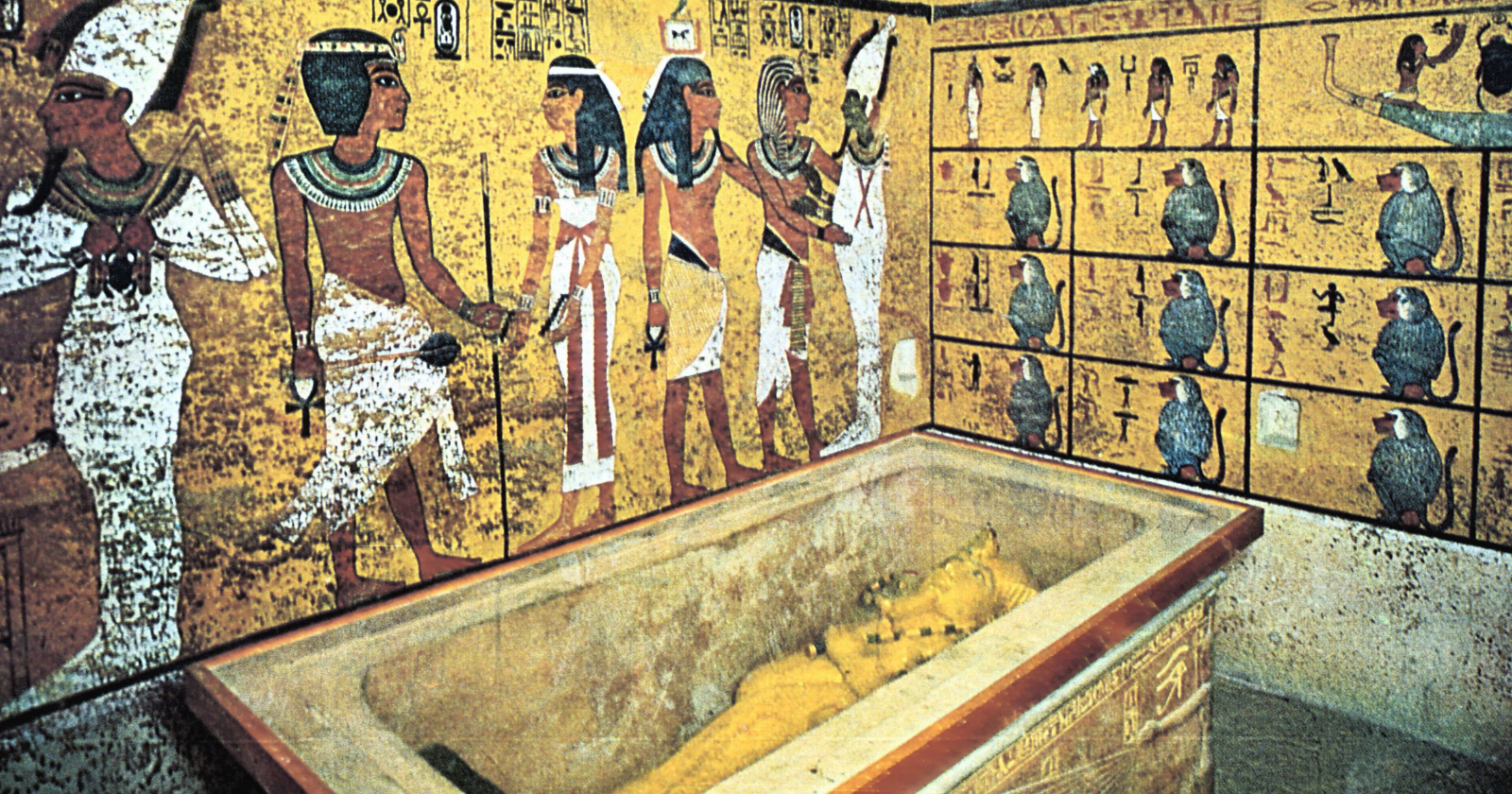
This is one of the most widely repeated claims on the internet, and it welds together two things of very different quality. One is the chemistry of why honey resists spoilage, which is real, well-studied, and genuinely remarkable. The other is the specific story — archaeologists opened a sealed jar in a pharaoh’s tomb, tasted 3,000-year-old honey, and found it perfect — which is largely folklore. It is worth taking the two apart, because the honest version is more interesting than the myth, and because the myth gets one important thing wrong even about the chemistry.
What actually keeps honey from spoiling
Start with the part that holds up. Honey is one of the most microbially hostile everyday substances in a kitchen, and three properties do most of that work.
The first is water. Ripe honey is roughly 80 percent sugar and only about 17 percent water, and the measure that matters to a microbe is not how much water is present but how much of it is available — its water activity, which in honey sits around 0.5 to 0.6. Bacteria and fungi need free water to live. Honey binds almost all of it up with sugar, so a microbial cell that lands in honey is drawn dry by osmosis rather than fed. The second is that same sugar acting as sheer osmotic pressure, which pulls water out of any cell that tries to grow. The third is acidity: honey has a pH of roughly 3.4 to 4.5, mostly from gluconic acid, low enough to discourage most spoilage organisms on its own.
None of this is folklore. It is the standard account in the peer-reviewed literature on honey’s antibacterial activity, and it is why an unopened jar on a shelf can sit for years without going off.
The peroxide is real, but it does less than the headline says
The claim also invokes “bee-made peroxide chemistry,” and here the popular telling overstates its case. Honeybees do add an enzyme, glucose oxidase, to nectar as they process it. That enzyme can oxidize glucose into gluconic acid and hydrogen peroxide, and hydrogen peroxide is a real disinfectant. So far so good.
The catch is when the reaction runs. Glucose oxidase works best at a pH near 6 and needs available water, and its activity falls to near zero by pH 4. Full-strength ripe honey is more acidic than that and has almost no free water, so in a sealed jar the enzyme is largely switched off and the hydrogen peroxide content is negligible. The peroxide only builds up appreciably when honey is diluted — which is exactly the situation in honey’s documented use on wounds, where fluid activates the enzyme. In an intact, sealed pot, the peroxide is doing very little. The low water activity and the acidity are doing the preserving.
So the chemistry in the claim is real, but its own explanation is slightly mis-weighted: the ingredient it names last matters least for a sealed jar, and the one it treats as almost incidental — the water — matters most.
“Microbes can’t grow” is not the same as “still edible”
This is the distinction the myth quietly skips. Honey being inhospitable to microbes means it does not rot in the way meat or bread rots. It does not mean honey is chemically frozen in time.
Left for long enough, honey changes on its own, without any microbe involved. It darkens and crystallizes. Its aromatic compounds drift off, so it loses flavor. Its enzymes degrade. And it slowly accumulates a compound called hydroxymethylfurfural through ordinary, non-microbial browning of its sugars. Run that forward across three thousand years and you do not get a pot of golden honey ready to spread on toast. You get a dark, hardened, largely flavorless residue. When honey recovered from ancient contexts has actually been examined in a laboratory, that is roughly what has been reported — a degraded, tar-like substance, identifiable as honey by its sugars and pollen, but not something anyone would call food.
There is also a caveat worth stating plainly, because it undercuts the “nothing survives in honey” framing. Honey can carry dormant spores of Clostridium botulinum. The same conditions that stop bacteria from actively growing do not destroy those spores — they simply keep them dormant. In the gut of an infant under a year old they can germinate, which is why major health authorities advise against giving honey to babies. Honey is extraordinarily good at preventing growth. It is not sterile.
The tomb anecdote, followed back to its source
Now the archaeology. The popular story usually attaches to Tutankhamun’s tomb and Howard Carter. The Griffith Institute archive includes Alfred Lucas’s examination notes on materials from the tomb. The records support the presence of food offerings and possible honey residues, not a documented tasting of edible ancient honey.
What has no primary source is the vivid claim that a jar was opened, tasted and found edible. Beekeeper Ron Miksha traced the story through repeated secondary retellings and found no documented tasting. The episode shows how a claim can become common knowledge without acquiring primary evidence.
The oldest honey we can actually document
The genuinely oldest known honey is older than the Egyptian claim by about two thousand years, and far less famous. In 2003, during construction of the Baku–Tbilisi–Ceyhan pipeline in Georgia, in the Caucasus, archaeologists excavating a burial mound near the village of Sakire, in the Borjomi region, found ceramic vessels in the tomb of a woman. Analysis at the palynological laboratory of the Georgian National Museum identified honey on the inner walls of the vessels — by its pollen, which pointed to linden, meadow-flower, and mixed floral sources — and dated the context to roughly 5,500 years ago.
Note what that find actually is: honey residue on vessel walls, identified chemically and by pollen, not a full pot of edible honey. That is the honest shape of “ancient honey” in the archaeological record. What survives the millennia is a chemical fingerprint that unmistakably was honey, not a preserved dessert.
The version worth keeping
Strip out the folklore and the real story is still striking. A jar of honey is so hostile to microbial life — through the water it withholds, the osmotic pressure of its sugar, and its acidity — that it does not spoil in any ordinary sense, and traces of it can be identified thousands of years later. That is a genuine and useful fact about food chemistry. It is simply not the same claim as a brave archaeologist eating a spoonful of a pharaoh’s honey and pronouncing it good. The honey did not stay a snack. It stayed a signature.
Editor’s note: This article was updated on September 14, 2026, to align its headline and wording more closely with the evidence and sources.