

The story begins with a small container of seeds, not a laboratory instrument.
On January 31, 1971, Apollo 14 launched toward the Moon with Alan Shepard, Edgar Mitchell and Stuart Roosa aboard. Shepard and Mitchell would later walk on the lunar surface at Fra Mauro. Roosa, the command module pilot, stayed in lunar orbit inside Kitty Hawk. In his Personal Preference Kit, according to NASA’s history accounts, he carried hundreds of tree seeds for a joint NASA and U.S. Forest Service project.
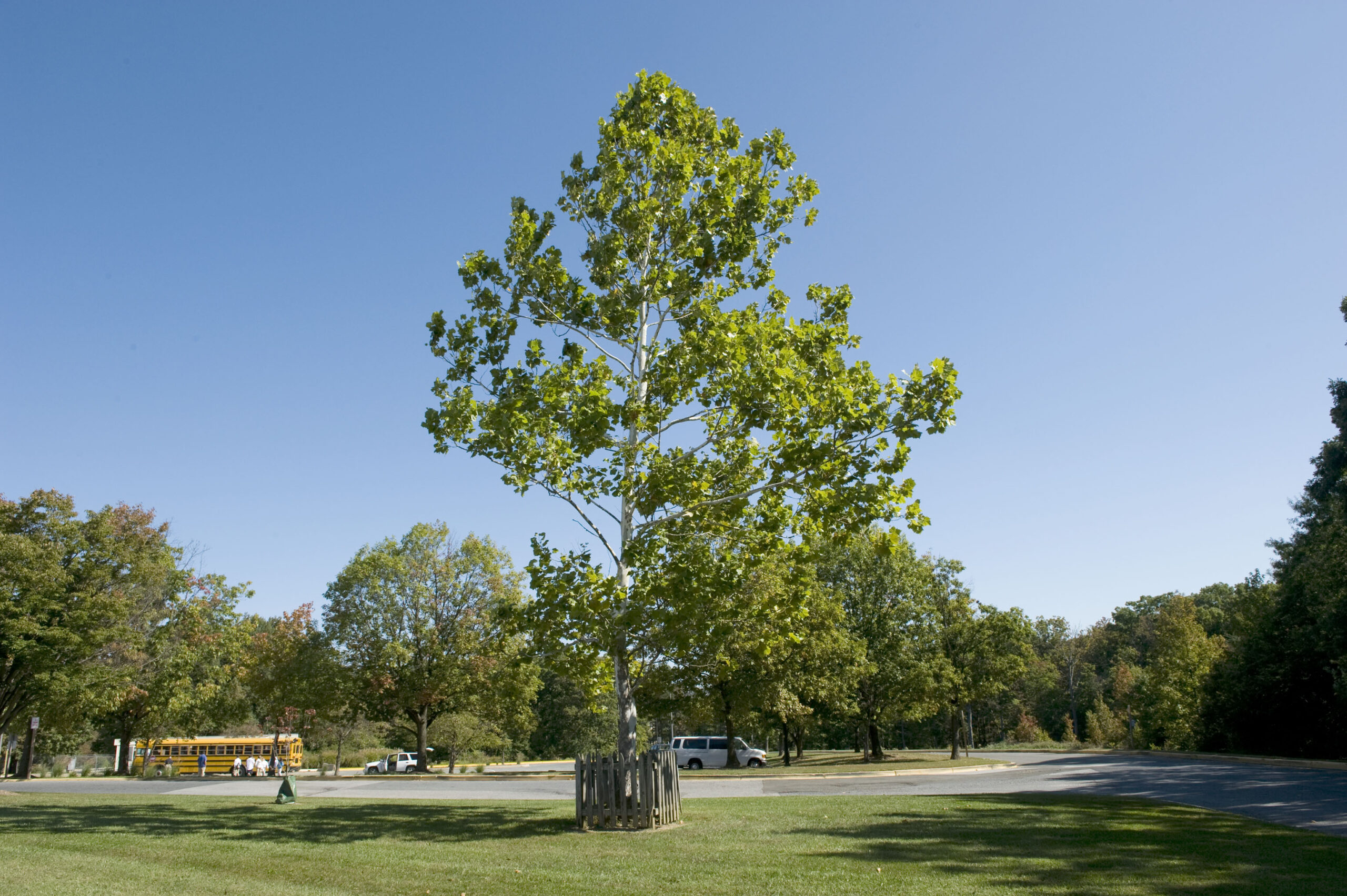
The seedlings that came back from that trip became known as Moon Trees. Many were planted years later outside public buildings, schools, universities, NASA centers and parks, where their flight history could be missed unless a visitor happened to stop at the plaque.
A forestry experiment carried by an astronaut
Roosa was not an arbitrary choice for the project. Before he became a test pilot and astronaut, he had worked as a smokejumper for the U.S. Forest Service, parachuting into wildfire areas in the 1950s. That earlier life made him a natural link between Apollo and forestry.
NASA’s Moon Trees history page says the idea came after Roosa was assigned to Apollo 14. Edward P. Cliff, then chief of the Forest Service, contacted him about taking seeds into space. Forest Service geneticist Stanley L. Krugman managed the seed work.
The seeds were not a formal plant biology experiment in the modern sense. NASA’s 2021 Arbor Day history article describes the project as an effort to see what a nine-day trip to the Moon and back might do to seed germination and growth. Ground seeds were kept in similar containers for comparison.
The seed species were chosen from familiar American trees: loblolly pine, sycamore, sweetgum, redwood and Douglas fir. NASA’s later account gives the number as between 400 and 500 seeds in a cylindrical container about 6 inches by 3 inches. NASA’s newer Moon Trees history page says Roosa may have carried 2,000 or more seeds, packed in smaller bags inside the canister.
That difference in reported number is a reminder that the Moon Trees were not tracked with the kind of clean inventory that would follow a tightly controlled research payload. They were part experiment, part commemoration, and part personal connection between an astronaut and his old agency.
The seeds nearly did not become trees
The seeds went around the Moon while Roosa orbited above Shepard and Mitchell. NASA’s Artemis I Moon Tree release says Roosa completed 34 lunar orbits with the first generation of Moon Tree seeds aboard the command capsule.
Then the project almost ended in quarantine.
After Apollo 14 returned to Earth, the seed container was handled inside the Lunar Receiving Laboratory at what is now NASA’s Johnson Space Center. During decontamination, NASA says the container split open. The seeds became mixed together and were exposed to vacuum. Krugman worried they might no longer germinate.
They did. The Forest Service divided the seeds between research stations in Gulfport, Mississippi, and Placerville, California. NASA’s history account says the flown seeds germinated as well as the ground controls and produced more than 400 saplings.
There was no obvious lunar signature in the trees. NASA’s Moon Trees page says that after more than 40 years there was no discernible difference between the Moon Trees and their Earth-bound counterparts. Their unusual part was not how they grew. It was where the seeds had been.
Why the trees became public monuments
The timing mattered. By 1975 and 1976, the seedlings were ready just as the United States was marking its Bicentennial. Many were distributed through state forestry organizations and planted as living commemorations of Apollo.
NASA lists Moon Trees or later second-generation trees at NASA centers, universities, parks, public grounds and international sites. The better-known examples include a sycamore planted at NASA’s Goddard Space Flight Center in Maryland in 1977, a Bicentennial sycamore planted in Philadelphia’s Washington Square Park in 1975, and trees connected with Kennedy, Johnson, Marshall and Stennis space centers. Some early trees did not survive. Others lived quietly for decades.
That quietness is part of what makes the story easy to miss. A Moon Tree does not glow, lean toward the sky or carry visible evidence of spaceflight. Without a plaque or a local memory, it is just a sycamore, pine, sweetgum, redwood or fir. NASA notes that no systematic list was kept of all the plantings, which meant the locations of many trees became uncertain over time.
In 1996, NASA says a third-grade teacher, Joan Goble, contacted David R. Williams, then at NASA’s National Space Science Data Center, after her class encountered a Moon Tree plaque in Indiana. Williams did not know the story at first. He began reconstructing it from NASA and Forest Service records, public reports and tips from people who knew of local trees.
That later search changed the Moon Trees from a nearly forgotten commemorative program into a recoverable public history. The trees had not disappeared in a dramatic way. They had been planted into ordinary civic life, then partly lost through ordinary record-keeping gaps.
What the plaques were really marking
The plaques mattered because they carried the part the trees could not show.
A courthouse tree could have been a local landscaping choice. A schoolyard tree could have been one more plant in a grounds project. A park tree could have been folded into the background of benches, footpaths and lawn. The small marker was what turned the tree back into a trace of Apollo 14.
That makes the Moon Trees different from most space artifacts. A flown checklist or a piece of hardware can be stored in a museum because its value lies in preservation. A Moon Tree had to keep growing outside, exposed to weather, disease, redevelopment, storms and neglect. Its meaning depended on both biology and memory.
The scientific result was modest. Seeds carried around the Moon could still germinate, and the trees did not appear obviously different from controls. The historical result was stranger and more durable: hundreds of living things, rooted in everyday places, carrying a spaceflight record most passersby would never suspect.
A second generation
NASA and the Forest Service revived the idea for Artemis I. In a 2022 NASA and USDA Forest Service announcement, the agencies said 1,000 tree seeds would fly around the Moon aboard Orion. A 2023 NASA release later said nearly 2,000 seeds had flown, and that schools, libraries, museums, universities and public organizations could apply to receive Artemis Moon Tree seedlings.
The Artemis version is more deliberate than the Apollo one. It is structured around education, stewardship and public distribution from the start. The Apollo trees became an archive after the fact. The Artemis trees were designed with the archive already in mind.
But the older trees still hold the better lesson. Apollo 14’s Moon Trees were not unusual as trees. They were ordinary-looking seedlings whose biographies were extraordinary only if someone kept the story attached.
That is why the small plaques mattered. They were not decorative labels. They were the thin line between a tree that had once circled the Moon and a tree that merely looked like every other tree beside it.