

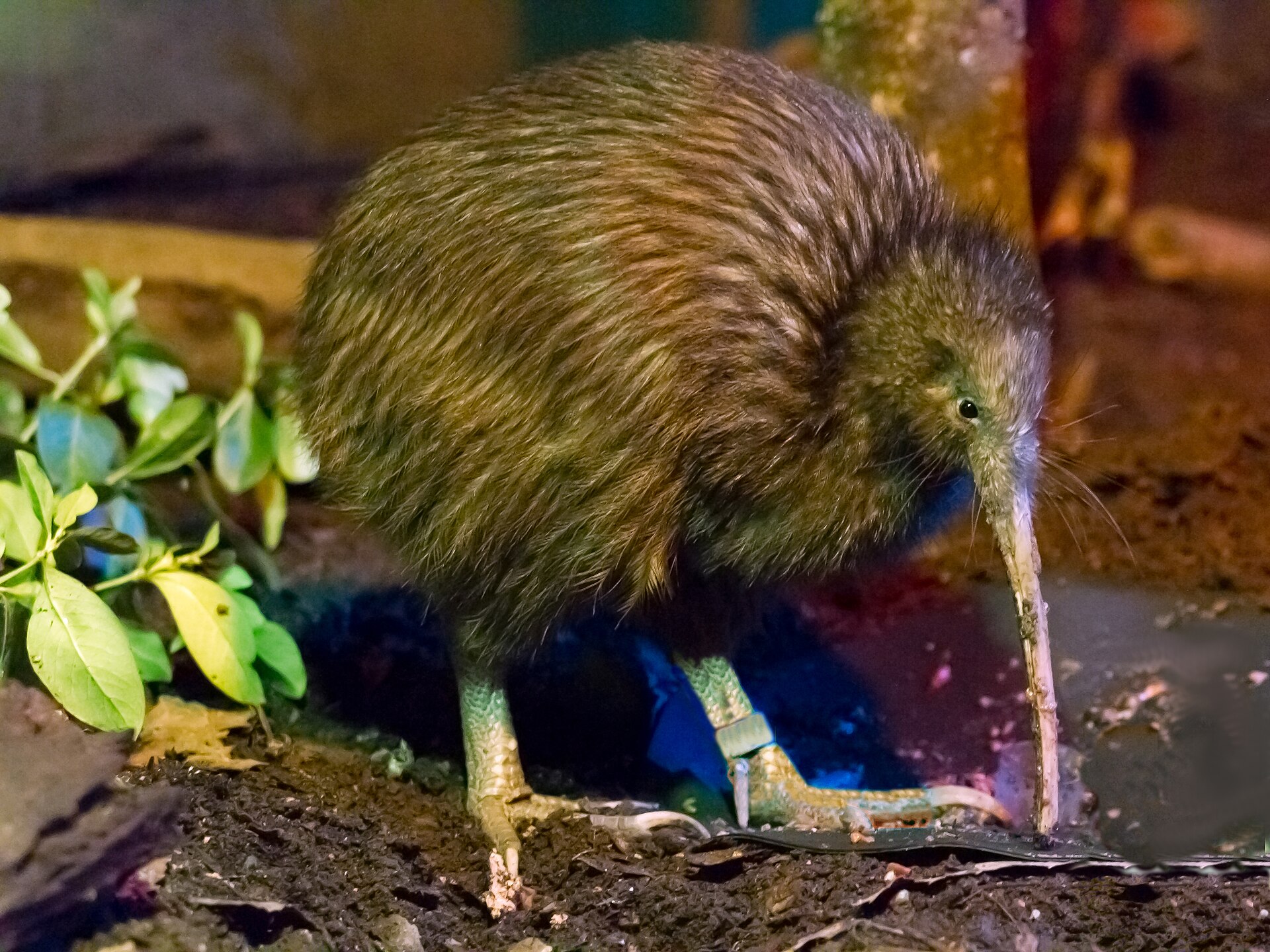
In early September 2026, a field crew in the hills west of Wellington caught a North Island brown kiwi, unclipped a small plastic transmitter from its leg, and let the bird walk back into the scrub. That bird was the last of 250. With it, the entire cohort released under the Capital Kiwi Project’s Department of Conservation translocation permit is now moving across farms, wind farms, regenerating gullies and mountain bike trails without a single radio tag among them. The project told The Spinoff that the moment closed out roughly a decade of work, and the number underneath it is the one worth sitting with: of the chicks the project monitored, more than 90 percent reached stoat-proof weight. The permit target set by DOC was 30 percent.
That gap between 30 and 90-plus is not a rounding artifact. It is the difference between a reintroduction that limps and one that compounds, and it was earned by a trap line laid down years before the first kiwi arrived.
Five thousand three hundred traps, and no fence anywhere
Capital Kiwi began installing traps across Wellington’s western hills in 2018, four years before a kiwi set foot in them. The network now runs to about 5,300 traps, stretching from Pariwhero / Red Rocks on the south coast up to Porirua, covering a landscape that looks nothing like the fenced sanctuaries New Zealanders tend to picture when they think about kiwi recovery. There is no predator fence. There is no gate. Most of the land is privately owned, working country: sheep and beef paddocks, pine and regenerating manuka, wind turbines turning on the ridgelines, and a busy network of mountain bike parks where riders now share the hills with a nocturnal bird that can weigh as much as a housecat.
The project ran that trap network for three years before releasing anything, building up metrics on how many stoats were being caught and where, so that the kiwi would arrive into a landscape already knocked down rather than one still being learned. The first birds went out in November 2022. DOC’s translocation permit allowed 250, and those 250 were released in tranches across the following years with the support of Ngāti Toa and Taranaki Whānui, the mana whenua whose rohe covers the ground the birds now occupy.
The absence of a fence is the point. Fenced sanctuaries are extraordinary insurance policies, but they are finite, and the land available to be fenced is finite too. What Capital Kiwi has been testing is whether a large, unfenced, privately owned, multi-use working landscape can be held at low enough predator density for kiwi to breed in it. The transmitter removal is the project’s own statement that, for this cohort, it can.
A chick has to reach a kilogram
Adult kiwi are formidable animals. They have heavy legs, they kick, and they are not easy prey for a stoat. Their eggs are among the largest relative to body size of any bird, and a stoat has real trouble with one. The vulnerability sits in a narrow and specific window: between hatching and roughly one kilogram of body weight, when a chick is small enough to be killed and not yet strong enough to fight. Project founder Paul Ward, speaking to The Spinoff, described the threshold as the weight at which a chick can defend itself, and put the unmanaged failure rate bluntly. Without pest control, 95 to 100 percent of kiwi chicks never get there.
That is the baseline DOC’s 30 percent permit target was written against. Thirty percent survival to stoat-proof weight is considered enough for a kiwi population to hold its own and slowly grow.
What the monitoring found was different in kind. Across more than 5,000 hectares and three years of tracking, several dozen monitored chicks were followed, and more than 90 percent of them made it to fight weight. The NZ Herald and The Listener put it as nine in ten chicks living to become stoat-proof. The important qualifier, and the project has been careful about it, is that this figure describes monitored chicks, the ones whose fathers wore transmitters and whose nests could be found and revisited. It is not a census of every chick hatched in the western hills, and it should not be read as one. What it does say is that in the part of the population researchers could watch closely, stoat pressure had been pushed down far enough that dying young became the exception rather than the rule.
Taking the tags off is not taking the pressure off
Transmitters are how you learn things. They are also a cost to the bird and to the volunteers who have to catch it twice a year to change batteries and check leg condition. Removing them is a decision that the population no longer needs individual-level surveillance to be managed, not a decision that management is finished.
What replaces the tags is a layered watch. Tracking tunnels and trail cameras keep eyes on stoats, with DNA work used to distinguish a resident animal from a new arrival pushing in from outside the trapped area. Acoustic recorders left in the hills capture kiwi calls through the night, with AI sorting the recordings, backed by community call surveys where people sit out in the dark and count what they hear. And the 5,300 traps keep being cleared and rebaited by the community groups, landowners and volunteers who have been doing it since 2018. Stoats are not gone from Wellington’s western hills. They are being held down, continuously, by people.
Ward has described the final transmitter removal as bittersweet, likening it to a child leaving home. The measurable version is simpler: as of September 2026, all 250 permit birds are transmitter-free, and among the chicks the project monitored, more than nine in ten reached the weight at which a stoat is no longer the thing most likely to kill them.