

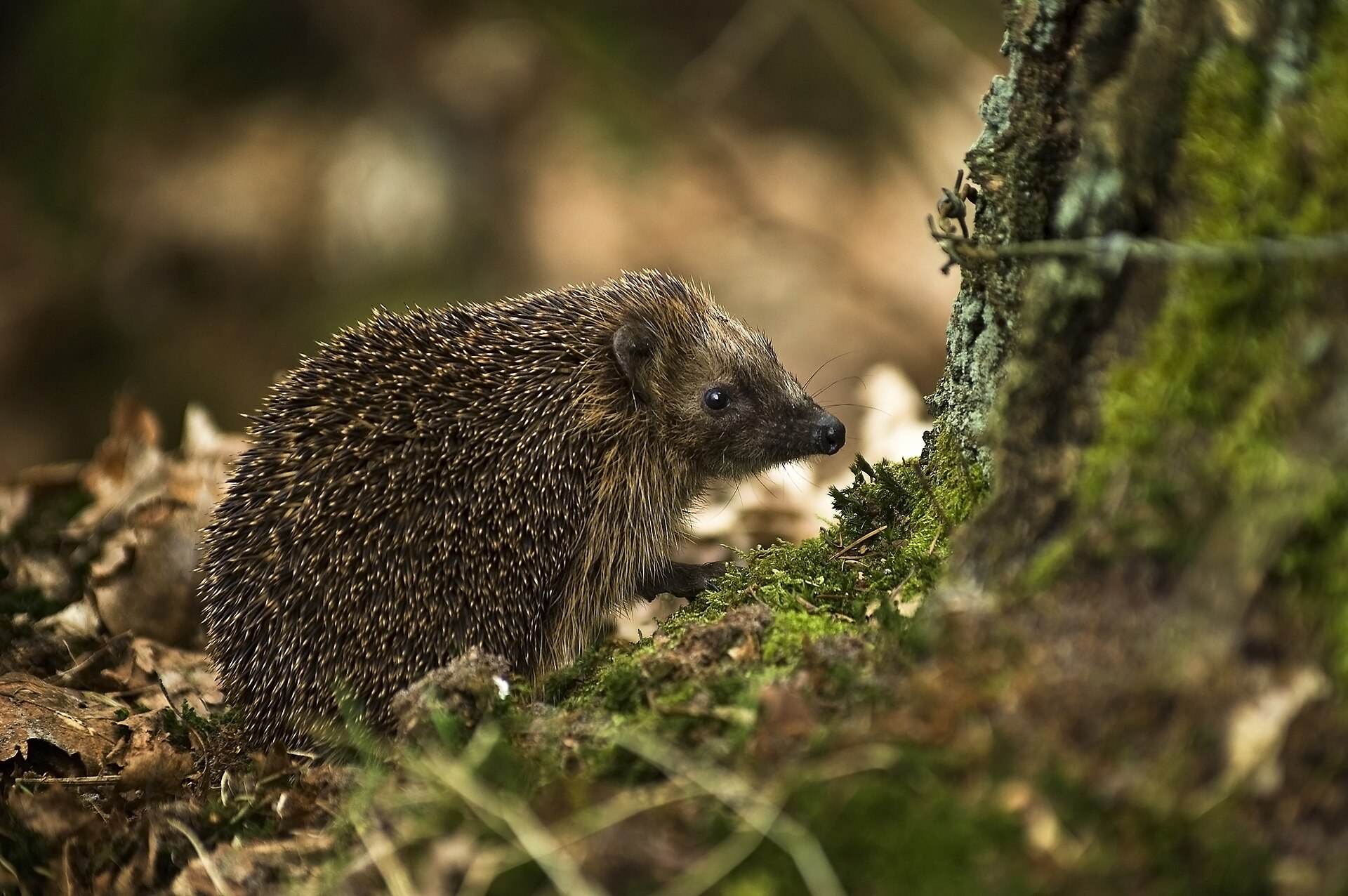
A hedgehog came into rescuers’ hands looking less like a hedgehog than a taut, spine-studded balloon — legs held away from a body that had puffed out past its normal outline. In The Dodo’s footage, the rescuers establish what is producing the extraordinary shape before the animal is brought back down toward something recognizably hedgehog-sized. The swelling has a physical explanation: gas trapped beneath the skin.
The video is short, and it does what rescue footage does particularly well: it shows the before, the intervention and a body returning toward its normal shape. What it does not provide is a complete veterinary case history, so the safest reading is the narrow one visible in the clip. The animal was dramatically inflated, trapped gas beneath the skin was identified as the reason, and the pressure was relieved.
What “swollen like a balloon” is physically
The veterinary term for this presentation is subcutaneous emphysema, while hedgehog rescuers commonly call it balloon syndrome. British Veterinary Nursing Association guidance describes hedgehogs becoming inflated by subcutaneous emphysema and notes that the trapped air can be removed by aspiration with a needle.
The effect can be unusually dramatic in a hedgehog because gas spreads through the loose tissue beneath the skin. As that space fills, the skin stretches outward, the spines spread with it and, in severe cases, the animal can become so distended that normal movement becomes difficult.
The crackling sensation sometimes felt beneath the skin, known as crepitus, is another clue that gas rather than ordinary body tissue is responsible for the swelling. Veterinary examination and, where appropriate, imaging can then help determine whether other injuries are present and what caused the gas to accumulate.
Why establishing the cause matters
Deflating the hedgehog is only one part of managing balloon syndrome. Gas beneath the skin can have more than one source, so it matters whether rescuers are dealing with an airway or chest injury, an external wound or another process that is allowing gas to accumulate.
A 2024 Hedgehog Helpline veterinary guide published by the RSPCA says balloon syndrome can be caused by an injury to the airways and, occasionally, by a subcutaneous bacterial infection. Other veterinary guidance also describes chest-wall damage or a small external wound acting like a valve as possible causes.
That distinction matters because relieving the pressure does not necessarily resolve whatever allowed the gas to collect in the first place. Depending on the case, veterinary management can include aspiration with needles, small drainage openings, treatment of wounds or infection, and repeated deflation if the animal begins to inflate again.
For the hedgehog shown in The Dodo’s footage, the clip establishes the visible phenomenon and the identification of trapped gas, but it does not provide enough clinical detail to assign a particular wound, respiratory injury or infection. Adding one would go beyond what the footage establishes.
What a rescue clip proves, and what it doesn’t
A short rescue video can be strong evidence of appearance and immediate treatment while remaining a poor substitute for a veterinary case report. The animal really was dramatically distended, and the reduction in that distension is visible. What the clip does not supply is a complete physical examination, imaging record, detailed account of how the gas entered the tissue or long-term follow-up.
That narrower account is still striking. Balloon syndrome is a real veterinary presentation rather than simply a colorful description for an overweight or generally swollen hedgehog. Gas can accumulate beneath the skin until the animal’s entire profile changes, sometimes severely enough to interfere with normal movement.
The most useful part of the footage is therefore not simply the visual transformation. It is the reminder that an extraordinary-looking symptom can have a specific physical mechanism behind it, and that treating the visible swelling is only part of understanding what happened to the animal in the first place.