

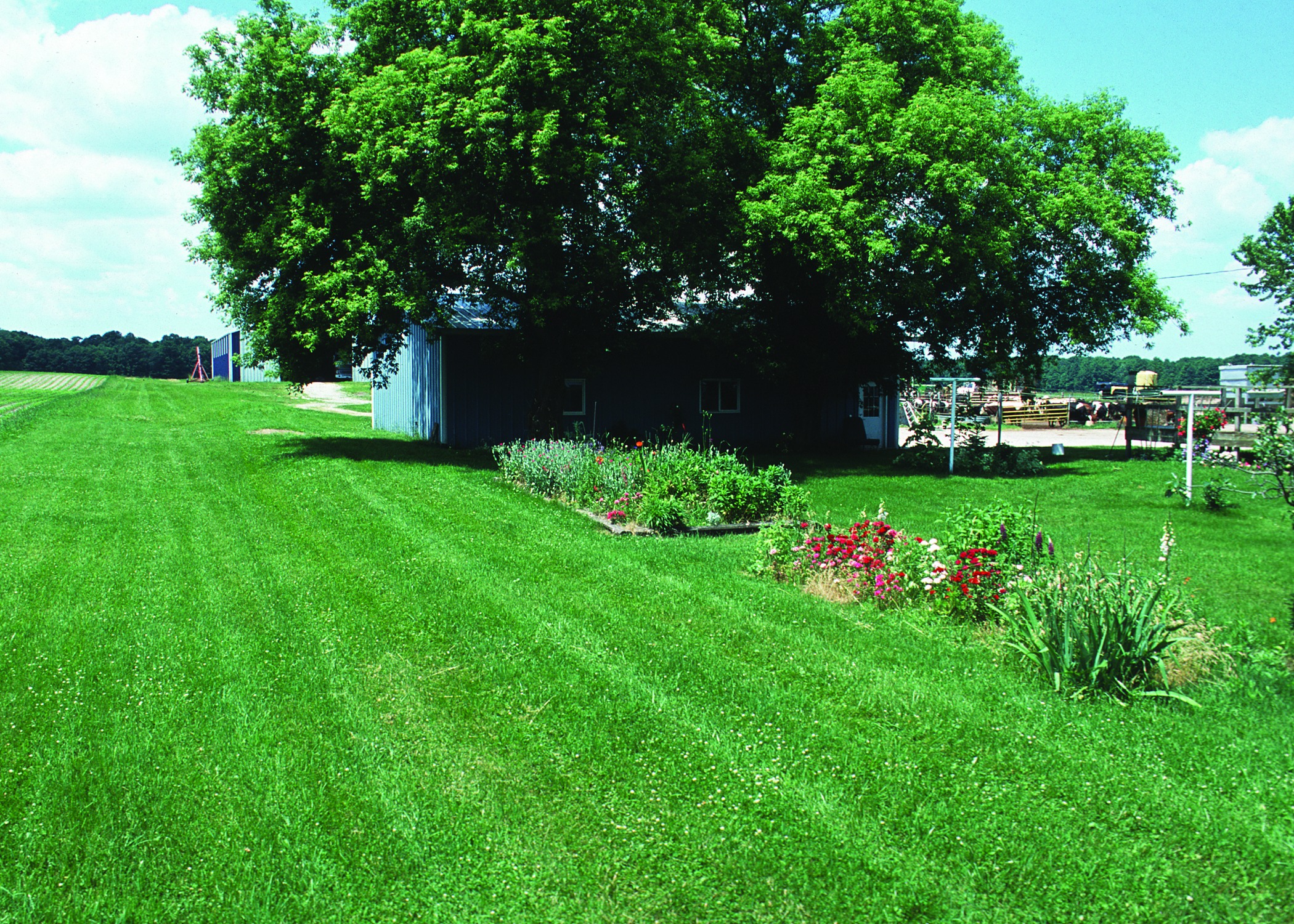
In 2026, a stretch of northern Michigan ground stopped being able to become anything else. John Boyer signed 131 acres near East Jordan — the corn, oats and wheat ground he grew up on — into a conservation easement held by the Little Traverse Conservancy, and in doing so sold off something most landowners never think of as a separate object: the right to build. Not the land. Just the permission. The dirt stays his. The subdivision that could have stood on it does not exist, and now never will.
The chronology is the part worth sitting with. Boyer's family farmed those acres, then lost hold of them; over the decades the farm passed through owners outside the family more than once, the way small farms tend to drift once the generation that broke the ground is gone. In 2018 he bought it back and put it back into crops. Eight years later he made sure nobody could undo that. As Vivian La reported for Interlochen Public Radio in partnership with Grist, Boyer felt an obligation once the deed was his again — an obligation to farm it, so that development wouldn't creep into the middle of a farming community and start rearranging the neighbours.
A right you can sell without selling the farm
The mechanism here is stranger than it sounds, and it is the reason a story about one man and one field is really a story about property law doing something unusual.
Ownership of land is not a single thing. It is a bundle — the right to farm it, to hunt it, to log it, to sell it, to leave it to your children, and, crucially, the right to develop it. Those strands can be separated. A conservation easement pulls the development strand out of the bundle and hands it to a land trust, which holds it in perpetuity and never uses it. Boyer still owns the farm. He still works it. He can sell it tomorrow or leave it to his kids, and the easement rides along on the deed regardless of whose name is on the title. Whoever ends up standing in that field a century from now will find that the option to pave it simply is not among the things they own.
Joe Graham, chief financial and operating officer at the Little Traverse Conservancy, framed the appeal in plainly financial terms in the same reporting: an easement lets a farmer pull equity out of the land without selling the land itself. That is an odd sentence to read if you think of farmland as an all-or-nothing asset. For a lot of aging farmers, the value locked in the acreage is the retirement account, and the only obvious way to reach it is to hand the whole thing to whoever bids highest. The easement is a way of cashing part of the bundle and keeping the rest.
The conservancy is not doing this one field at a time as a novelty. It holds roughly 30,000 acres under easement across five counties and a portion of the Upper Peninsula, about 6,000 of which are farmland. Boyer's 131 acres are now part of that permanent inventory.
What the map is doing while nobody watches
The pressure Boyer was pushing back against is measurable, and it is not subtle. Michigan had about 9.5 million acres of farmland in 2022, down from roughly 9.8 million five years earlier, according to federal farm census figures cited in the IPR and Grist coverage. Three hundred thousand acres, gone from the agricultural column in half a decade. Over the same 2017-to-2022 stretch, only about 22,000 additional Michigan acres went into conservation easements — a rounding error against the loss, though every one of those acres is protected in a way that does not expire.
Meanwhile the price signal points the other way. Michigan farmland ran roughly $6,800 an acre in 2025, up 7.8 percent, per USDA figures reported in the same coverage. That number is the whole tension in a single line. The more valuable the ground becomes, the harder it is to keep it doing the low-margin thing it has always done. Jon LaPorte of Michigan State University Extension has described the squeeze bluntly: farmers face real pressure, and the money is real too. A developer's offer is not a villain's offer. It is often simply the largest number a farm family will ever be shown.
Which is what makes the northern-Michigan case peculiar. Dave Skornia, who farms in Boyne City, told La that as the climate changes this part of the state could become more and more important for food production and food security — that the ground now sitting under orchards and grain in the north may matter more as growing conditions shift. Land is being converted at precisely the moment its future usefulness is climbing.
Everything’s personal
Boyer's reasoning was never abstract. He watched the possibility of the land being carved into lots — someone subdividing it "to make a quick buck," as he put it — and understood exactly what that transaction would foreclose. Houses do not come back out of a field. Basements, septic systems, roads, driveways: once they go in, the soil profile that took ten thousand years to assemble is simply no longer available for anything but lawns.
"For any farmer, everything's personal," Boyer said. He bought back his family's ground in 2018 because it was his family's ground. He gave up the right to sell it for houses in 2026 for a colder reason, the one that survives sentiment and outlives him: build on farmland, and it's gone forever.