

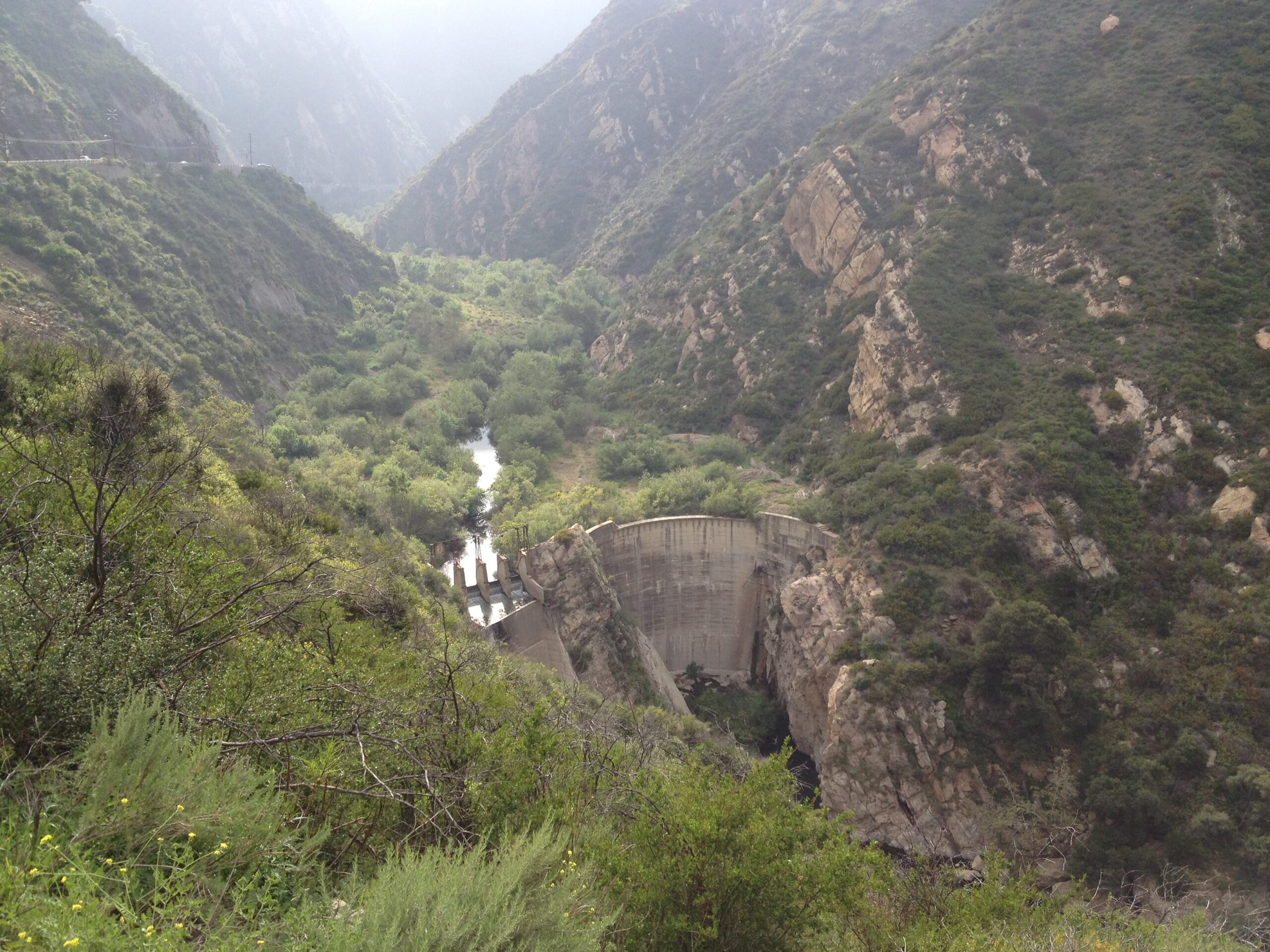
In November 1993, a private canyon compound a few miles inland from Pacific Coast Highway changed hands without a sale: Barbra Streisand deeded her roughly 24-acre Ramirez Canyon estate in Malibu, with five houses on it and an appraisal from state appraisers of about $15 million, to the Santa Monica Mountains Conservancy, a California state agency, which said it would take possession on December 1 and turn the property into the Streisand Center for Conservancy Studies. The gift was reported by the Los Angeles Times on November 18, 1993, in a story by Frank Clifford, and by UPI a day earlier, on November 17, which described it plainly as a $15 million, 24-acre estate handed to an environmental agency.
The physical facts are the story. Not a check, not a naming rights plaque on someone else’s building, but land: two dozen acres of a Malibu side canyon, and the structures standing on it, transferred to a public conservancy formed in 1981 whose ordinary business is buying parkland parcel by parcel with bond money and grant cycles.
Twenty-four acres, five houses, seventeen thousand square feet
The Times put the interior space of the five existing homes at roughly 17,000 square feet. That is the number that separates this donation from a typical open-space gift. Conservancies are used to receiving hillsides, ridgelines, easements, and slivers of chaparral that connect one trail to another. They are much less used to receiving a working residential compound with kitchens, roofs, pumps, driveways, and decades of finish work inside.
Streisand had owned the canyon property since the mid-1960s, according to Conservancy executive director Joseph T. Edmiston as quoted in the Times. It had been listed for sale from 1987 until the summer of 1993, with the asking price reportedly moving from around $18 million down to $11.5 million over that stretch, before the estate went to the state instead of a buyer.
Edmiston’s framing in the Times was direct: he called it the most valuable land ever donated to the Santa Monica Mountains National Recreation Area. He reached back for a comparison and landed on the Will Rogers ranch, given in 1944, and also cited Leo Carrillo’s oceanfront gift. Those are the reference points in the region’s conservation history for a celebrity handing over property rather than money, and both of them became places the public knows by name today.
Two dozen acres is not large by park standards. The Santa Monica Mountains recreation area spans tens of thousands of acres across two counties. What made the parcel unusual was appraised value per acre in one of the most expensive residential markets in the country, plus buildings that could, in theory, house people doing work.
What the Conservancy said the center would be
The plan announced in 1993 was specific. The Times reported the property would become an environmental research and conference complex, with scholars in residence, and that a portion of the site would be opened for public use, including a link to the trail system. A first conference was planned for February on greenways, Edmiston told the Times. Those were the stated intentions at the moment of the announcement, not a record of what later occurred.
The center concept, per Edmiston in the Times, was Streisand’s own idea. She would not take a formal role in running it, he said, but was vitally interested in it. That is a narrow and useful distinction to hold onto: the donor supplied the land and the concept and then stepped back from governance, leaving a state agency to figure out how a canyon full of houses becomes an institution.
The takeover date was December 1, 1993, weeks after the announcement. On paper, the Conservancy went from an agency that assembles trail corridors to an agency that owned 17,000 square feet of Malibu residential improvements and the obligation to maintain them.
The arc after the deed
That obligation is where the story gets complicated, and it should be described carefully rather than confidently. Later coverage in the mid-1990s, including Times reporting in 1995 on the Conservancy’s cash problems, described high maintenance costs at the property measured against the revenue it generated. Malibu’s permitting environment, including Coastal Commission review and later local permit and litigation history around uses at the site, has also been part of the property’s public record. None of that adds up to a claim that the research center opened and operated as the world-class institute described in 1993, and this account does not make that claim.
Even the acreage figure drifted. Later public and agency materials have at various points described the site as roughly 22, 22.5, or 21.8 acres, differences that likely reflect surveys, boundary adjustments, and how parcels get counted rather than any change to the 1993 gift itself. The contemporaneous 1993 reporting from the Times and UPI both put it at about 24 acres, and that is the figure attached to the donation as announced.
The site came to be known publicly as Ramirez Canyon Park, with limited administrative and special-program use over the years rather than the scholars-in-residence campus sketched at the announcement. That is the soft later status, offered as such.
What is fixed is the deed. In November 1993, a private Malibu estate valued by state appraisers at about $15 million, five houses spread across a canyon a few miles from the coast highway, owned by one person since the mid-1960s and unsold through six years on the market, was handed to a state conservancy that said it intended to build a research center there and open part of the land to hikers. The Conservancy took possession on December 1. What the ambition met after that, in budgets and permits and the slow arithmetic of maintaining someone else’s houses, is the part the 1993 clippings could not yet report.