

I was glad to see Valter Longo’s Fasting-Mimicking diet in the news again this week. I have been enthusiastic about Longo’s work ever since he documented altruistic suicide of yeast cells for his PhD thesis in the 1990s. Programmed death in one-celled protists was considered an affront to evolutionary theory at the time, and he had a devil of a time getting his findings into print.
Longo discovered in 2002-2005 that fasting had a powerful benefit for cancer patients, and that in conjunction with either radiation or chemo, it greatly magnified the benefits while mitigating the side effects. Intermittent fasting had benefits, too, for the general population, independent of cancer. It seems to be a way to get the health benefits of caloric restriction and it is easier to stick to for many people than a consistently low calorie diet.
But Longo couldn’t get either doctors or patients interested in the fasting program. Part of the problem was the toxic mix of capitalism with medicine: the US relies on testing and promotion by profit-making companies to push medical technology forward, and fasting isn’t a product that anyone can make money on. There was also an emotional truth: cancer patients feel scared, beleaguered, emotionally drained. So much is dragging them way outside their comfort zone that it takes extraordinary strength not to fall back on food as one of life’s most reliable comforts.
So many medical researchers see their job as finding treatments, and leave the problem of adoption and compliance to someone else. But Longo set himself single-mindedly to the task of bringing the benefits of fasting to a wider swath of the population. The question that led to the Fasting-Mimicking Diet (FMD): What dietary regimen can provide the greater part of the benefits of a water fast while inducing less hunger and minimal disruption to concentration, vitality and the pace of life?
I have done about 9 cycles of the FMD over the past 1½ years, including this week. In my personal experience, 5 days of the FMD is eminently tolerable once I begin, though I still face resistance when I think in advance about disrupting my comforting food routines. (Yoga, swimming and meditation have the same barriers for me–difficult in the anticipation, enjoyable once I begin.) For me, FMD is not a weight loss program. I gain back all the weight I’ve lost within a week after the 5-day program is finished. Others may have different experiences. People have used the 3-meal version of FMD (3 meals at 360 calories) as a medium-term weight-loss program, but the protein content is probably too low for those concerned about maintaining lean mass long term.
In his new study, 100 participants were randomized into two groups. The first group did three rounds of 5 days on FMD over three months. The second group did nothing special for three months, but were given an opportunity to try the same three rounds during the following three months. The average weight loss was 6 pounds for those who completed all three cycles; lean body mass was lost, in the same proportion as fat. Blood pressure, blood sugar, triglycerides all improved on average, and C-reactive protein (an inflammatory marker) went down as well.
The study included a range of healthy people as well as people who carried more weight and had higher risk factors. It was those with the higher inflammation and blood sugar who realized big benefits from the program, and the already-healthy were averaged in. There is a lot of evidence to indicate that intermittent fasting works, and that the FMD delivers similar benefits. But if you’re already lean and healthy with low blood sugar, then it’s less clear whether there are substantial additional benefits from intermittent fasting.
Notable was a reduction in the hormone IGF-1, which I don’t necessarily regard as a good thing. On the one hand, lower IGF-1 is characteristic of all caloric restriction models, in animals and humans, in which life span is increased. So it is an indication that the FMD was effective. But low IGF-1 has consistently been found to increase risk for all-cause mortality, and heart disease in particular [ref, ref, ref]. Benefits of higher IGF-1 include maintenance of muscle mass and growth of nerves that diminishes with age.
An additional benefit documented in the past is a . The white cell population is pruned during fasting, and the most-needed naive T-cells regrow after eating resumes.
Antidote to Obesity
It’s the (large and increasing) population of unhealthy people that Longo is targeting. There is every reason to expect substantial benefits, but the big issue remainss: how many people can be motivated to take up the practice and stick to it? The question was touched on only peripherally in the current study, without discussion; of 48 subjects selected for the first round, 39 stuck it out for three FMD cycles over three months (81% compliance). That’s encouraging, but what we really want to know is: how many people will actually modify their eating rhythms for years at a time? Will they feel the benefits and will that motivate them to stick with it month after month, five days each month?
And will this translate into long-term weight loss? Sustaining weight loss is notoriously difficult for about 95% of the population. People can stick to a diet for a time, but the Siren song of food is with us everywhere, and sooner or later we succumb. Fortunately, there’s good reason to hope that the FMD discipline offers benefits even if weight loss is not sustained.
How to do it

Longo’s own company, L-Nutra offers a packaged diet, called ProLon, availble through health care professionals. It’s pricey and may be covered by insurance. LifeBox offers a non-prescription alternative that is not as much cheaper as it might be. For my own experimentation, I have preferred to use fresh, whole foods approximating the same macronutrient proportions as the ProLon package. It requires some time and attention in food prep, but it costs less than you’re currently spending on the same meals, and you can fill yourself with satisfying portions of fresh vegetables for the same 360 calories. Here is my page of instructions and advice, with recipes designed by Enid Kassner.
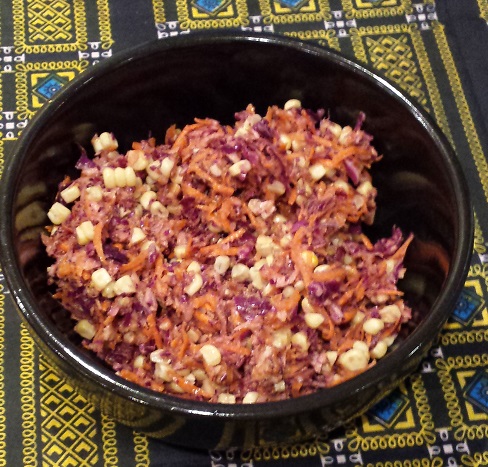
For many of us, our relationship to food is central to our psychology. Shaking up food habits disrupts everything else as well. It’s the main reason that food habits are so hard to change, but for me, it’s also a good thing. I enjoy the challenge and the self-awareness that come from a new frame of reference; fasting changes my perspective, my emotional baseline, and my mental state. For me, the first day is unfocused, low energy, but often a time of creative new ideas; the second day is distracted, obsessive, sometimes headache-y or otherwise uncomfortable, and beginning with the third day there is returning energy, along with a freedom that I didn’t know I missed.
Why is life expectancy in America lagging?
Part of the answer is certainly cultural. Advertising, parties, lunch and dinner meetings often reinforce consumption of food that is designed to be addictive for the sake of corporate profits. In America, we are surrounded by overweight people, but France and Italy have much lower obesity rates, and you can walk all day around the cities of Japan or China without encountering anyone who is seriously overweight. Even in America, the problem has grown way out of proportion only in the last 40 years. This and income disparity are the main reasons that life expectancy in America is at the bottom of the developed world. Our unaffordable, dysfunctional healthcare system provides many additional reasons. Meanwhile, life expectancy in Asia is climbing at an exemplary pace.
Longo’s FMD is designed to address this most accessible factor in the diseases of late life for a large swath of people who find they cannot lose weight. His research is based not just on effectiveness but equally important on tolerability. How many people will adopt it and reap the benefits? This will be an important question for public health going forward. But you are a unique individual, not a statistical median. I encourage you to experiment with FMD, see what you learn about yourself, and decide if it can be a valuable part of your health program in the long term.
Discussion
77 reader comments
Imported threads are marked Archive. New comments are welcome and moderated for spam.
You point about our disfunctional health system is a key reason we have all to rely on either anecdotal comments with no scientific basis or unqualified people with blogs making things up out of whole cloth. Regarding a paleo diet, our ancestors relied a good deal on gathered items from plants. Meat was also consumed but not to the exclusion of high fiber plant foods. We really have no idea what their diet consisted of. However, this much is certain: they were MUCH more physically active.
With a health system whose purpose is to improve our well-being and increase our longevity, we would be doing research aimed at gathering information on a much larger scale than we do today. The food and drug industries, big ag and big pharma, along with the medical industrial complex, wants us to be subpar in order to sell us stuff whether or not it works and whether or not it is harmful, nevermind beneficial. We are just hamburgers served at the plutocrat barbecue. If people reading your blog would vote in their own self interest, we could change things quickly. But we are a flawed species and vote our religion and our racial biases and so we will remain in the dark.
I have a serious autoimmune disease that did not respond to the prescribed medication. I read Longo's study wherein he noted the killing off of autoimmune T cells and regeneration of T cells and stem cells, when rodents were put on the FMD for 5 consecutive days.
I thus started a 5 days water fast - and pain and symptoms decreased significantly. Two weeks later I did another 5 days water fast - symptoms decreased even further. But it became mentally taxing. Fasting for 5 days on top of a disease that is influencing my mood, made me really quite depressed. Certainly since I felt I 'had' to do these water fasts, or face serious health consequences as my symptoms indicated. It felt stressful and depressing.
I decided to buy the FMD. But it's very expensive for me, given all the healthcare costs I'm running into. My results were a bit less evident than on a 5 days water fast, but I certainly noticed a decrease in symptoms nonetheless. (I do reach a much deeper state of ketosis on a water fast). (In addition I eat the diet Longo recommends in his book in between my FMD's). However, 3-4 weeks after the FMD my disease symptoms are again very much present, and very disconcerting again. This makes me think doing the FMD twice per month for now, would be more helpful for me, to push back autoimmune symptoms.
I read your FMD-recipes and it sounds like a fantastic idea. Thanks for posting them. I hope I can ask though: do you really think this is quite similar to the FMD? I assume these recipes were based on the patent. ProLon states their diet is made in such ways that it prevents cell growth. And it seems they indicate this is not only since the diet contains a certain ratio of carbs/fats/proteins but also because of specific nutrients and vitamins that were added to the diet. Glycerol is also a part of the FMD.
I would gladly try a homemade FMD, since the Prolon-diet has some ingredients I prefer not to take (a little bit of cane sugar amongst it, 'natural flavors', honey, and most ingredients don't seem to be organic). And it is very expensive. But I would want to be sure I could achieve the same thing as with the Prolon-diet on a homemade FMD - certainly given the severity of my disease (symptoms). As such I have been a bit cautious thus far to try a homemade FMD instead. Albeit from a cost/ingredient perspective I would certainly prefer to.
Many thanks for any input.
I did 3 session of FMD over 4 months and I found it easy once you start. I do running to keep fit and I notice about about 3 weeks later quite an increase in lung capacity and also feeling quite stronger. I formulated my own diet from Cronometer because the L Nutra cost is ridiculously high if you are someone of moderate means. The third time I felt so great that I done it for one week instead of five days. I think it is important not to do it to often because it may leave one malnourished and cause problems undocumented.
I also have just done the FMD and ended today. The set of 3 I finished 4 months ago. Personally I believe that intermittent 8/16 fasting is the easiest and it does not upset one's life rhythm. An other alternative occasionally diet restricting for a couple of days every few weeks which is easy if you find it easy to control the habit of eating
I'm curiousHello,
I'm curious whether there are good reasons for the ratio of carbs in the CR plan. In other words, will the results be similar if the overall calorie counts (and micronutrients) for the five days remain the same as the FMD protocol, but with a more keto-friendly balance?
I have done my own FMD three times and each time I notice real benefit. During my first FMD, I pushed my Fibromyalgia into remission (I had FM for 7 years). The second FMD my eczema vanished. I lost 4-5 lbs during each FMD and it seems to trigger my body to continue to loose weight. It is great for my skin, too..makes it so soft. I will be comparing my blood work soon with pre-FMD levels. I am trying to lower glucose, cholesterol and liver enzymes.
Maureen, how are you eating between FMD cycles? I'm on day 4 of the ProLon FMD and trying to decide whether to go back into plant-based keto or try to follow Dr. Longo's recommendation of a low-protein plant-based Mediterranean diet. Either way, I'm planning to keep my protein down based on Dr. Longo's research, plus I'm mostly vegan so it's easier that way. Also, are you doing a homemade FMD or some other version? Do you mind sharing some details of your FMD? Thanks!
Maureen:
Interesting report.
Hi Josh,
Thanks for the great work. My interest began when I learned of Dr. Longo's work with mice with EAE (M.S). Most notable to me was complete reversal of symptoms in 20+% of the animals that did the FMD, and improvements in essentially all the animals. These results are better than the clinical outcomes of all major M.S. drugs,
and I have tried them all, and with the possible exemption of one course of Tysabri, I am experiencing better results, typically gradually during "refeeding", which is 5 days after the 5 day FMD. I was diagnosed with MS 28 years ago and have very limited mobility. I have tried a "Prolon mimicking diet"(thats a joke but the manufacturer, Lifebox, is essentially providing just that. My 4th and 5th F.M.D. I have eaten 10% protein, 65% fat and 25% carbs (roughly 50 grams) using my own food choices as it is pretty clear low protein is the key variable in the "macros" of the FMD( if you are interested in making your own food choices, you might use Fmdlog.com, which I find helpful in planning my diet, which is predominately macadamia nuts or peanut butter as the bulk of my calories and fat, and vegetables the same for carbs. I eat less fruit than Longo would allow as I try to keep carbs to 50g/day to deepen the state of ketosis.
I am on day 4 of my 5th FMD today. I have done these in a little over a year, though I discontinued my 2nd and 3 FMD, primarily due to exhaustion. What is most exciting to me is some clear improvement in my mobility after "refeeding" after the 1st and 4th
FMD's, not to mention enhanced mood and 4-5lb weight loss (per completed fast), which is a nice "side effect". A few things I wanted to share in my experience-1-my hunger dissipates dramatically by the end of day 2-today, day 4, it was all but non-existent)
2-I believe, though I've never tried a long water fast, the FMD diet is substantially easier for me than a "water only fast" would be,as the ability to eat modestly makes a large difference, as well as likely healthier.
3-I think for people with weakened autoimmune systems, trying the FMD is a "no brainer", though for those with "normal" immune systems It is likely of less benefit. Dr. Longo has done some very promising work that shows a marked reduction in cancer risk.
I have been Inintermittent fasting for the past 7 months. I try to get at least 16 hours of fasting per day, at least 5 days per week. I never go more than 24 hours. Here has been my experience FWIW:
-Insulin went from 19 all the way down to 5.6
-fasting glucose went from 104 down to 92
-lost 18 lbs (I'm 5'5, 156lbs.)
-every one of my cholesterol numbers have improved dramatically
-C- Reatcive protein went under 1
I just started the L-Nutra FMD yesterday. I'll report back after a couple cycles of that.
Matt
An alternative approach to FMD is the ketogenic diet - targeting similar biochemistry by reducing carbohydrate to low levels and using the body's natural ability to burn fats for fuel. It's an every day diet, has proven results against obesity, pre-diabetic conditions and Type 2 diabetes. Recent research is showing promising evidence of neurological benefits - it's long been used against epilepsy / seizures, but is now being investigated for effects mitigating Alzheimer's and Parkinson's. It also appears that keto dieters experience natural body adaptation effects tied in to our evolution, with the result that for many it "feels right" and becomes a successful long term strategy for health improvement, improved physique (increases in lean body mass) and performance. It's being taken up by high level athletes from the Tour de France to many ultra endurance running events, soccer, rugby and tennis.
There are also longevity enhancing aspects to the biochemical changes that occur on the diet, also subject to current research.
Drs / Professors Phinney and Volek have done the most concentrated work and have several talks on the tube and they are backed up by a great deal of quality research.
What I dont understand is the one size fits all. A six foot tall male and a 4'7" female would have considerable differences in caloric intake to maintain an equivalent BMI. it makes no sense to provide them both with the same calories. The tiny woman may not be restricted nearly enough and a really large muscular guy maybe too much. Shouldnt this be factored into the diet?
You're right. And just as important are the individual metabolism and gut flora.
This is factored into the patented FMD diet which you can read directly here -
https://www.google.com/patents/WO2016168802A2?cl=en
The ProLon version of the diet clearly represents a compromise needed to provide a standardised product. Makes sense, but if you decide to go for an FMD yourself I would suggest using the patent version to adjust it for your own lean body mass. That is what I did, and if you like you can read about that here -
http://foreverfreefrom.com/fasting-mimicking-diet-guide/
Thanks Josh again for all your work on this. Also thanks Ben for sharing your personal results I have tried a few cycles of FMD and always lost weight and felt better afterwards. Recently I have noticed that my body temperature has fallen by about 2 degrees below normal and weight loss has been more difficult. I am hoping that more regular FMD will address this. Would appreciate any thoughts or experiences anyone has had with this drop in temperature
Howdy Josh, I benefitted hugely from your writing about the Fasting Mimicking Diet along with that by Quantified Bob and Damien at Quantified Body. Thank you :-)
I recently ran my first cycle and have prepared a guide for others wishing to do so which would be especially helpful for UK based folks as it includes specification of all the food eaten and biomarker tests.
Guide on How perform a Fasting Mimicking Diet cycle
http://foreverfreefrom.com/fasting-mimicking-diet-guide/
My personal results, learning points & next steps - http://foreverfreefrom.com/fasting-mimicking-diet-results/
Within the Guide I have also made available a Google Sheets template to aid preparation, planning and tracking. Hope it helps :-)
My results were . . . . *mixed* and *curious*. I will be running further cycles and refining both my approach to the FMD itself and the measurement.
Hey Josh
Is there a way to mimic the Fasting Mimicking Diet with grab and go foods from the grocery store? Where the only food prep might be adding hot water or microwaving a soup? For those of us who travel? Thanks so much for all your research and info!
Hi Kathy,
I haven't checked the math in detail, but this looks plausible, and it seems like it might be close enough to be effective (e.g., especially not going over on protein): Eat only avocado for the whole week.
https://thequantifiedbody.net/fast-mimicking-diet/
Day 1: 3 avocados
Days 2–5: 2 avocados (taking size into account!)
Avocado = 160 kcal/g, so
681 g on the first day,
453g on the remaining days.
Not super appealing, but the simplest approximation that I've seen. He also takes some veggie powder for micronutrients. Enjoy :-)
hi Kathy,
I'm on day 5 of the lifebox FMD and their foods are all off the shelf. Packet plain instant oatmeal with small tube almond butter for b'fast, kind bar + small packet nuts for lunch and vana brand legume bowl (pretty good really) or quinoa bowl for dinner.
They also include gynostemma AKA Jiaogulan teabags and packets of coffee with chaga and some other herb.
Surprisingly easy 5 days.
Did u buy it online? Have you lost weight? Sounds interesting!!
Hi Kathy,
Yes, I bought it from lifebox.diet online site. They are the 2nd online site selling a FMD in a kit. Prolon is the other one but I hate olives which are in prolon's kit.
Lifebox's kit is $119 + shipping, and has the above as days 2-5 with day 1 being different and like 1000 cal vs 700 above for days 2-5. I just finished my 5 days and have lost 7 lbs.
You could certainly assemble the stuff yourself but it is simpler just buying it. Also you get a 30 min phone consultation basically just talked about pitfalls and mistakes, how to resume eating afterwards, etc.
Kathy,
PS I just ran across the fact that intermittent fasting does not work the same for women, and that women's bodies don't react the same way as men's to fasting in general. So you might want to do some research before trying this out.
Scott,
do you know if the macronutrient content is the same as the ProLon diet?
PS Thanks for the info!
No idea on the macros. I'd check with lifebox.diet
You can buy it through me, a healthcare practitioner. Email me at [email protected].