In June 1998, a demolition crew in a village called Saint-Étienne-du-Vigan, in the volcanic uplands of the Haute-Loire, waited for a small flood so they could safely draw down a reservoir, then blew up the concrete dam holding it back with dynamite. The dam had been sitting across the Allier, which is the Loire’s largest tributary, since 1895. It had been built to supply electricity to a nearby town called Langogne, it was about twelve metres high, and it had no fish pass of any kind, which meant that for the best part of a century it had sat squarely across what had once been the finest Atlantic salmon spawning water in the Loire basin and stopped every returning fish from getting to it. Eighteen months later, in the summer of 1999, another French demolition crew, this time on the Vienne, finished the removal of a second dam called Maisons-Rouges. The two operations were the first serious dam removals ever undertaken in France, and among the first anywhere in western Europe done specifically to bring migratory fish back.
What the argument had been
The reason the removals were seen as radical at the time is that the assumption running through most of twentieth-century European water policy was that dams were what a modern country built, and the biological argument for taking one out was thought to be unserious next to the argument for keeping it. Both of the Loire dams that came down in 1998-99 had been operated by Electricité de France, and both had come up for licence renewal in 1994 under a piece of French policy called the Plan Loire Grandeur Nature. That plan, adopted by the French government in January 1994, was itself the result of a long, hard-fought campaign by conservation groups and local associations against a proposed sequence of new dams on the upper Loire and the Allier. What the plan did, in the end, was reverse the direction of policy: rather than approve more dams, it set out a strategy of restoring ecological continuity to the basin. The non-renewal of the Saint-Étienne-du-Vigan and Maisons-Rouges licences was the first serious test of what that reversal meant on the ground.
Two rivers both get called Europe’s last wild one, and the difference is the whole point. The Loire is free-flowing because France undid its dams; the Vjosa is free-flowing because nobody ever got to build them. Watch below:
What happened when the water started running again
The response upstream was faster than anyone had expected. According to the European Rivers Network’s case file on the Saint-Étienne-du-Vigan removal, five salmon spawning sites were observed in the reach immediately above the former dam site in the winter of 1998-99, which was the first winter after the demolition. That is, salmon returning from the Atlantic that autumn had found the obstacle gone, swum through the section that had been sealed off since 1895, and started cutting redds in the gravel within months. Downstream on the Vienne, once the Maisons-Rouges dam was removed, the effect was even more dramatic in absolute numbers. Dam Removal Europe’s monitoring record for the site shows that a fish-counting station about 20 kilometres upstream of the demolished dam went from recording essentially no allis shad, sea lamprey or Atlantic salmon before 1999 to registering nine salmon, several thousand shad and several thousand sea lamprey by the end of that year, and to registering 57 salmon and more than 41,000 sea lamprey by 2007. Roughly 35 kilometres of previously blocked river were reopened. Today the Vienne basin holds about 80 per cent of the Loire basin’s sea lamprey population and 15 to 20 per cent of its Atlantic salmon.
Why the Loire is now what it is
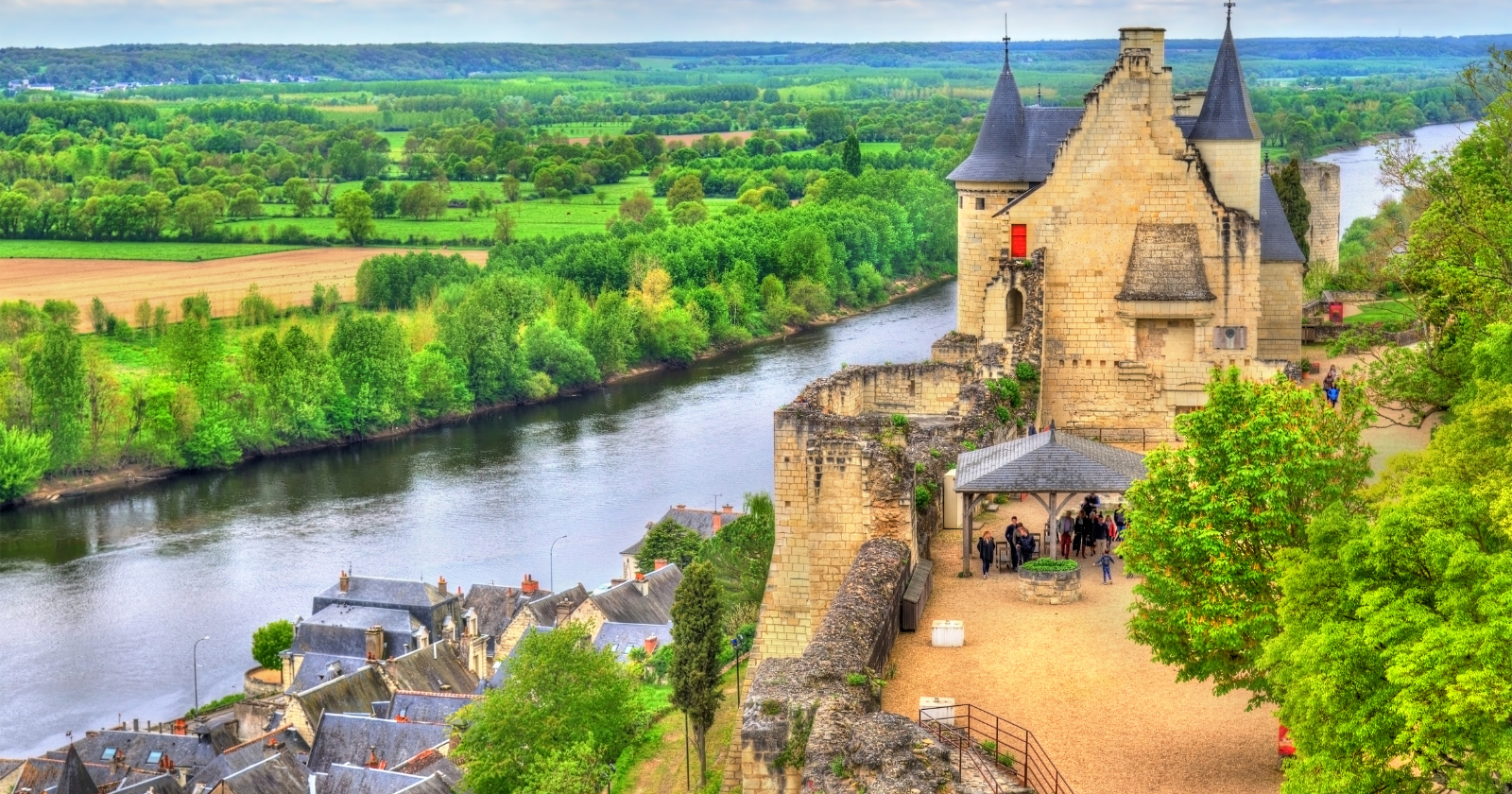
The Loire is a little over a thousand kilometres long, from its source at Mont Gerbier-de-Jonc in the Ardèche to its estuary at Saint-Nazaire, and it drains around a fifth of France. There are still dams on parts of its upper course and on some of its tributaries: Villerest and Grangent in the upper basin, Naussac on the Allier, a partially reconfigured hydropower structure called Poutès further down the Allier. What the Loire does not have, and what makes the description “the longest free-flowing stretch of water in western Europe” defensible, is any dam of consequence on the middle and lower main stem, which is the section that runs from below Villerest all the way to the sea. That stretch is close to a thousand kilometres of connected river, and there is nothing else in western Europe that comes close. The Rhine has been dammed, canalised and re-engineered for two centuries. The Rhône runs through a chain of hydropower dams. The Thames and the Elbe were long ago cut off from their salmon runs entirely.
What the two removals actually settled
What Saint-Étienne-du-Vigan and Maisons-Rouges established, on the accumulated evidence of the two decades since, was that the biological response to reopening a river was not a hopeful projection but a measured fact. Salmon do come back. Shad and lamprey come back faster. The riverbed reforms into gravel bars and riffles within a couple of high-flow seasons. Sediment starts moving again downstream in the way it used to before impoundment stopped it. The specific French policy shift that made the two removals possible has since been followed by roughly a dozen other removals in the basin, including a partial demolition of the eighteen-metre Poutès dam on the upper Allier that was completed in 2022 to allow salmon a genuine chance at the highest spawning grounds. What was considered eccentric in 1998 is now an established branch of European river management. The 1,000 kilometres of connected water that runs down the middle and lower Loire is what a river doing that management looks like after a generation.