

A hidden molecular thread ties slow-moving cirrhosis to sudden liver collapse. In a new study published June 9 in the Journal of Translational Gastroenterology, researchers in China used transcriptomic analysis to show that both liver cirrhosis (LC) and acute-on-chronic liver failure (ACLF) are driven by disruptions in glucose metabolism and immune regulation.
The team, led by Qinghua Meng of Beijing Friendship Hospital and Xiuhua Guo of Capital Medical University, found that two microRNAs—miR-122 and miR-194—act as central regulators, offering new potential therapeutic targets.
The Deadly Link Between Cirrhosis and ACLF
Cirrhosis kills nearly two million people each year worldwide, largely from long-term viral infections, alcohol damage, and metabolic disorders. ACLF, which develops suddenly in patients with chronic disease, is even deadlier. Mortality rates reach 33 percent within 28 days and more than 50 percent within 90 days. Unlike cirrhosis, which develops gradually, ACLF is often triggered by acute events such as infections or alcohol binges.
Despite different clinical courses, LC and ACLF share overlapping biology. Previous work highlighted fibrosis, immune dysfunction, and oxidative stress as culprits. This study takes the next step by mapping the genes and regulatory RNAs that orchestrate the transition from cirrhosis to failure.
Genomic Maps of Liver Collapse
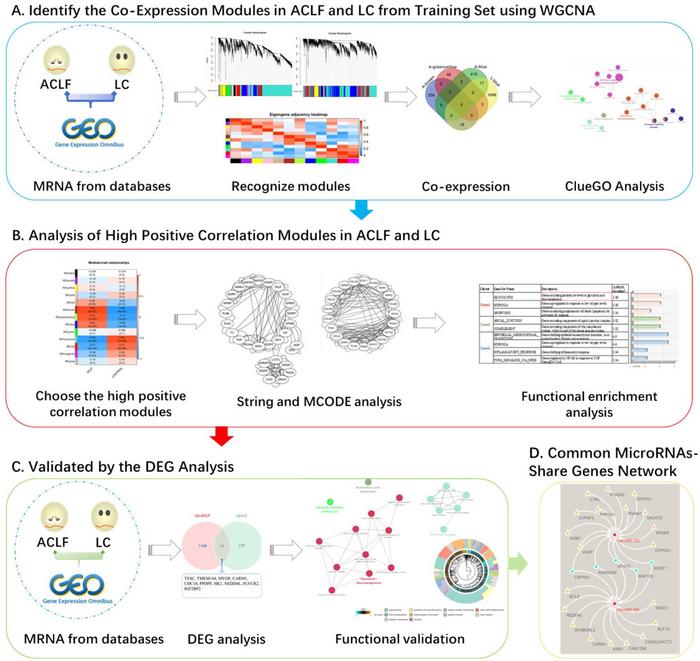
The team analyzed gene expression data from the Gene Expression Omnibus, focusing on more than 70 samples from cirrhosis patients, ACLF patients, and healthy controls. Using weighted gene co-expression network analysis, they identified modules of genes that switched on together in diseased livers.
A striking pattern emerged: pathways controlling glycolysis and gluconeogenesis—key processes in glucose metabolism—were consistently disrupted in both LC and ACLF. Validation tests confirmed that metabolic breakdown is not a side effect but a shared driver of disease progression.
MicroRNAs Take Center Stage
The analysis also revealed three microRNAs that play major roles: hsa-miR-122, hsa-miR-194-1, and hsa-miR-194-2. Of these, miR-122 is especially abundant in the liver and tightly linked to glucose and lipid metabolism. Both miR-122 and miR-194 also regulate inflammation and immune signaling, pointing to a dual role in energy use and defense response.
“Our transcriptomic analysis has uncovered a potential pathogenic association between glucose metabolism and both ACLF and LC. This association is mediated by miR-122 and miR-194,” the authors wrote (Journal of Translational Gastroenterology).
By constructing regulatory networks, the researchers showed how these microRNAs interact with clusters of genes tied to immune dysregulation, fibrosis, and programmed cell death. These mechanisms likely accelerate liver collapse once ACLF is triggered.
Key Findings
- Sample: 17 ACLF, 20 LC, and 13 controls from GEO datasets.
- Analysis: Weighted Gene Co-Expression Network Analysis and differential gene expression validation.
- Shared pathways: Glycolysis and gluconeogenesis disruptions in both LC and ACLF.
- Shared regulators: miR-122 and miR-194 identified as key microRNAs linking metabolism and immunity.
- Mortality: ACLF patients face 32.8% 28-day and 51.2% 90-day mortality.
- Location: Beijing Friendship Hospital and Capital Medical University, China.
Why It Matters
Metabolic dysfunction has long been observed in cirrhosis patients, but this study shows it is also central to ACLF’s catastrophic acceleration. If miR-122 and miR-194 can be targeted, physicians may be able to restore metabolic balance and prevent immune overreaction.
The findings align with broader research on liver disease mechanisms and mirror earlier studies linking miR-122 to hepatitis and hepatocellular carcinoma. Therapeutically, microRNA-based treatments are already under development in cancer and viral disease, making liver failure a plausible next frontier.
Takeaway
Cirrhosis and ACLF share a hidden genetic foundation centered on disrupted glucose metabolism and immune dysfunction. Two microRNAs—miR-122 and miR-194—emerge as key regulators, offering potential therapeutic targets to slow or prevent liver collapse.
Journal: Journal of Translational Gastroenterology
DOI: 10.14218/JTG.2024.00047