

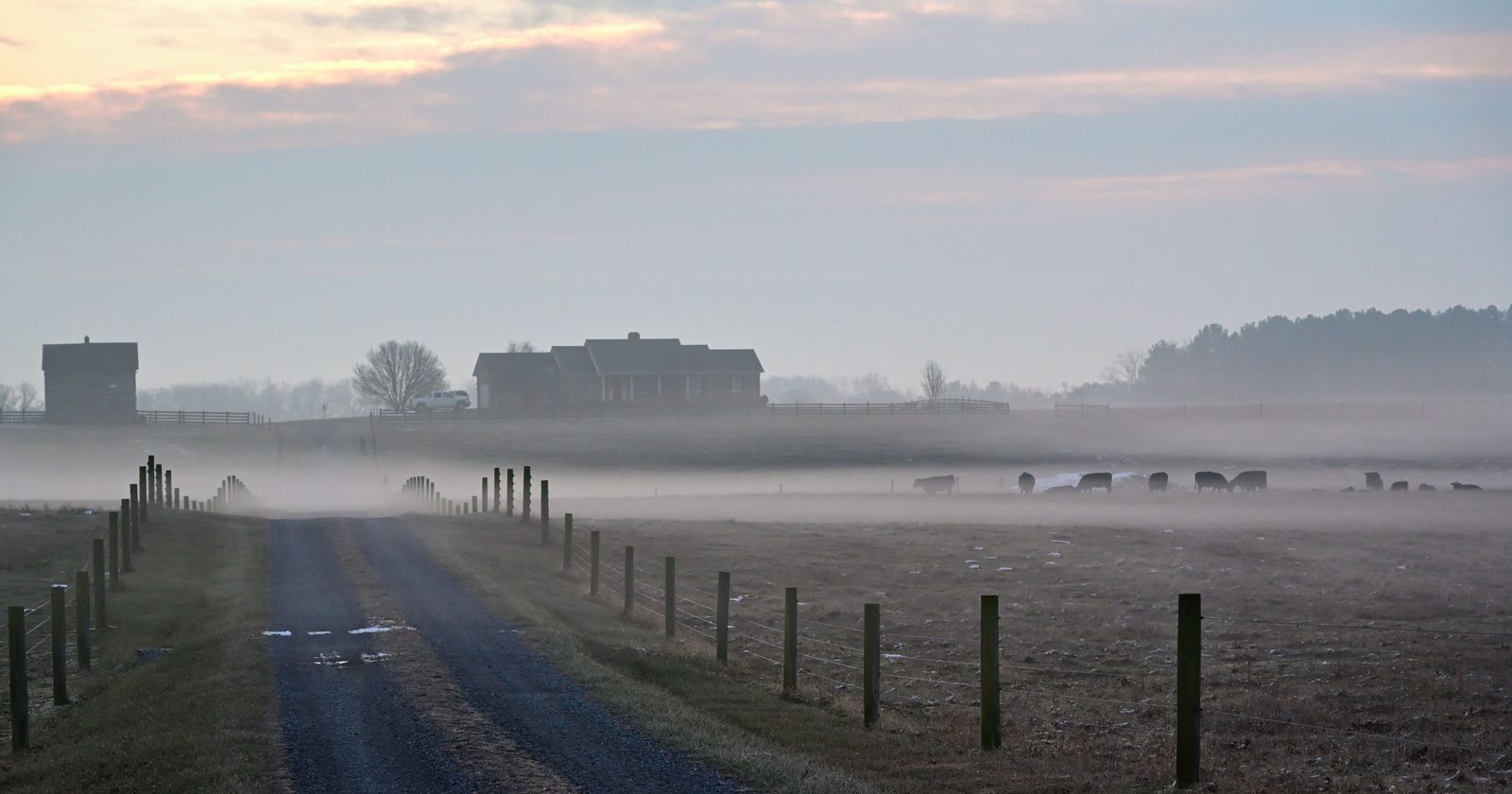
Pittsylvania County was built on tobacco and dairy cattle. It sits on Virginia’s southern border, near Danville and the North Carolina line, and for generations its economy ran on farmland worked by families who knew the soil. So there is something striking in the fact that this county, of all places, became the site of a fight over one of the largest gas-powered data center complexes proposed anywhere in the country. Land that once grew tobacco was, briefly, on the table to be rezoned for server farms and a power plant.
The developers lost. In April 2025, the county Board of Supervisors voted the project down. What follows is our read of how that happened, and what it does and doesn’t mean for the many rural counties now fielding similar pitches.
What Balico actually proposed
The developer was Balico LLC, based in Herndon in northern Virginia and its first swing was enormous. The October 2024 application proposed to rezone more than 2,200 acres of farmland for 84 data center buildings.
After the first wave of opposition, Balico withdrew and came back in November with something smaller on paper. The revised plan covered about 750 acres near the town of Chatham, with 12 data center buildings rather than 84. But the piece that alarmed people most stayed the same: the 3,500-megawatt gas plant.
The scale is easier to grasp through what it would use and give off. The data centers alone would have needed at least 6 million gallons of water a day, with SELC estimating each large data center could need upwards of 500,000 gallons daily. On pollution, a report from the Harvard Data Science Initiative and the lab of Dr. Francesca Dominici estimated the gas plant would release at least 326.53 tons a year of fine particle pollution, the tiny particles that lodge deep in the lungs. SELC’s summary of that report said more than 17,500 county residents, more than one in four, would see increases in that pollution, along with more than $31 million a year in related healthcare costs.
We are not clinicians, toxicologists, or air-quality scientists, and none of the above is a verdict on any individual’s health. It’s our reading of one modeling report, cited by the group opposing the project, describing estimates across a whole population rather than what would happen to any one person or family.
Why a tobacco-and-dairy county became the fight
To a developer, rural land often looks like the path of least resistance. It is fairly cheap, it sits close to transmission lines in a state that has become the world’s densest data center market, and the counties that hold it are often hungry for tax revenue. Balico told the county the finished project could eventually deliver up to $120 million a year in tax revenue, a figure supporters leaned on hard.
That number is real leverage. For a county built on farming, $120 million is not a rounding error. But the same rural qualities that make the land attractive also pile the burden on one place. As SELC put it, most of the power plant’s costs would have fallen on the same county hosting the data center. The water, the air, the trucks, the transmission lines, the plant itself: all local. The servers would have crunched data for customers who could be anywhere. That mismatch, revenue on one side and daily consequences on the other, is what turned a zoning question into a vote on what the county wanted to be.
How residents organized, and where SELC came in
The opposition did not appear on the night of the vote. It built over months. Residents worked through the Coalition for the Protection of Pittsylvania County and other local groups, and the Southern Environmental Law Center represented five local landowners. In January 2025, before it ever reached the supervisors, the county planning commission unanimously recommended denial, pointing to a lack of specifics in Balico’s plans.
By the April hearing, the turnout was large enough that the county moved the meeting to Chatham High School. More than 40 residents signed up to speak before a crowd of hundreds. We should be clear about what SELC was here: an advocacy law firm representing the landowners opposing the project, not a neutral referee. Its senior attorney, Morgan Butler, framed the stakes in terms of where power actually sits. Local boards, Butler argued, are where “Virginians currently have the most leverage on data center proposals when they insist on transparency and responsible decision-making from their local boards of supervisors and city councils.” That’s the pitch of a lawyer who just won at exactly that level, so read it as strategy as much as observation. It also happens to describe how this fight was decided.
The 6–1 vote, and what a denial settles
The night moved in two steps. The supervisors first refused, by 5–2, to let Balico withdraw its application without penalty. That mattered, because a clean withdrawal would have left the door open. Then they voted 6–1 to deny the rezoning outright, which bars a substantially similar proposal for one year.
The tone from the board was not triumphant. Chairman Robert Tucker drew the line around his own role rather than the developer’s, telling the room, “I am not responsible for what Balico or any other investor does. However, I am responsible for the board.” His reason for voting no was plain: “we don’t have community buy-in,” he said.
The cost of the fight showed too. Supervisor Kenneth Bowman, describing how the months had split the county, said, “It’s going to take a long time to heal that pain. It may take a generation.” That’s one member’s read of local division, not a forecast, but it captures something the tally alone doesn’t: a 6–1 vote can look decisive and still leave a community split into camps.
A denial also settles less than it seems to. The one-year bar runs only to April 2026.Resident and opposition organizer Lexi Shelhorse put it plainly: “We won the battle, but not the war.”
What the vote signals for other rural counties
It would be easy to read Pittsylvania as proof that communities can simply say no. We’d be careful there.
By SELC’s own account, this county is one of relatively few communities to have beaten a data center proposal so far. Elizabeth Putfark, an attorney on SELC’s gas team, framed the result as encouragement rather than a rule, saying “the gas buildout is not a done deal; it’s not inevitable. And communities are a formidable force when they come together to fight large, high polluting projects like this one.” Coming from the winning side’s lawyer, that’s a rallying line. Communities can be a formidable force but most that face these proposals have not stopped them.
What the vote does show is where the decision actually gets made. With little oversight from the state, the rezoning question lands on a county board that meets in public, can be voted out at the next election, and has to look at the people in the room. That’s not much of a firewall on its own. It became one in Pittsylvania because residents spent months turning a zoning docket item into the thing everyone in the county was talking about, hired lawyers who knew the process, and put a health-impact report and a crowd of hundreds in front of seven elected neighbors. The leverage was real, but it was earned, not automatic.
For any rural county weighing a similar deal, that’s probably the more useful lesson than the headline result: the vote can go this way, but only where a community does the slow work to make it go this way.