

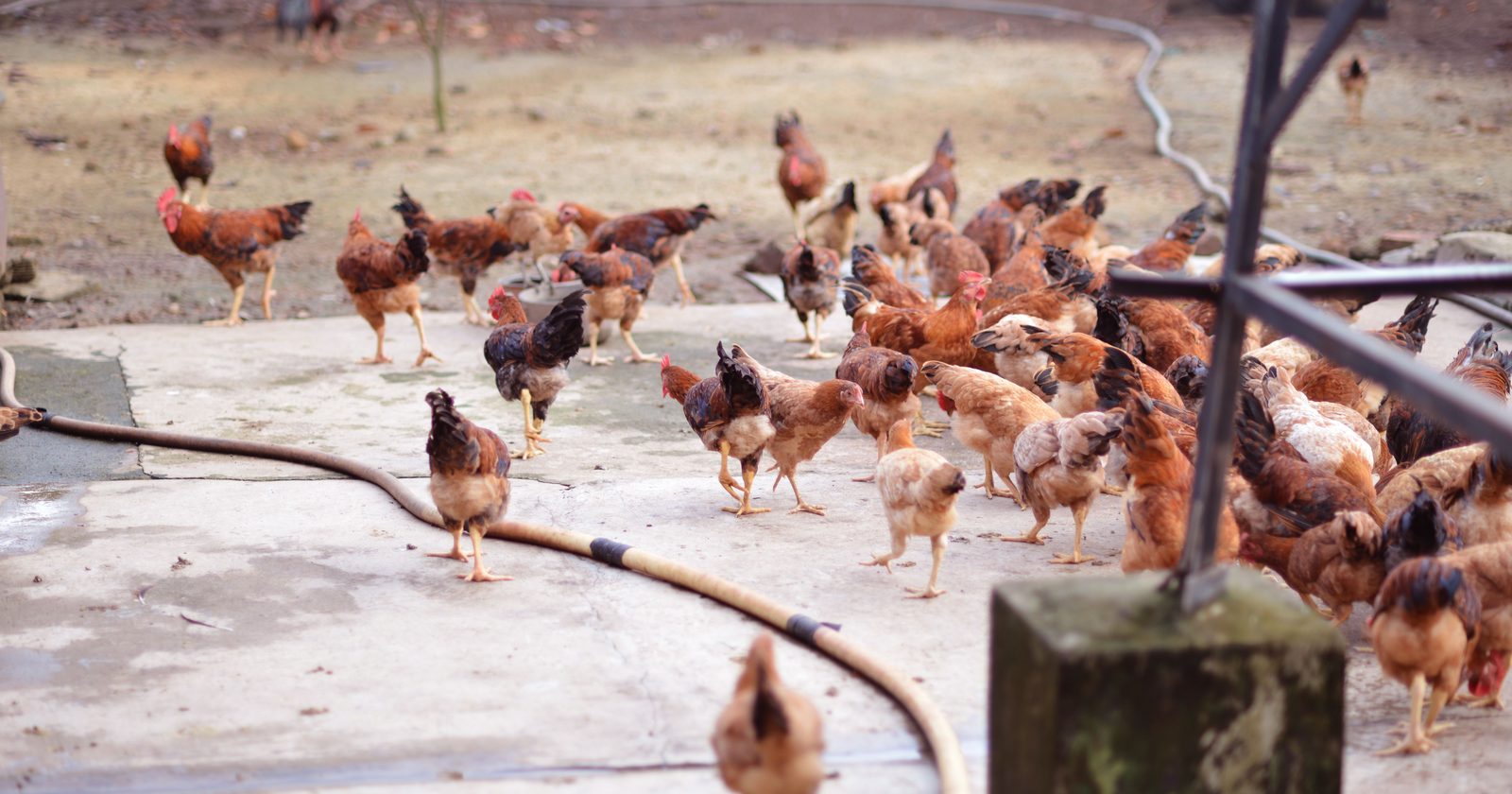
One farmed animal now weighs more than every wild bird on Earth put together. Not more numerous, though chickens run that race close too. Heavier. If you piled all the sparrows, crows, eagles, penguins and owls in the wild onto one side of a scale, and put only the world’s farmed chickens on the other, the chickens would win by somewhere between two and three to one.
That is not a metaphor or a guess. It is a measurement, and it comes from a way of tallying life that most of us never encounter: weighing it instead of counting it.
Why scientists weigh life instead of counting it
In 2018, three researchers published a census unlike the usual wildlife count. Instead of counting individual animals, Ron Milo and colleagues worked out the total weight of every major group of living things. The idea is simple: take the weight of one typical animal, multiply by how many there are, and you have the weight of the whole group in a single figure.
Weighing rather than counting changes what you see. A group can be enormous in headcount and light on the scale, or small in number and heavy. Their study put Earth’s total weight of living matter at around 550 gigatons of carbon, most of it plants. Warm-blooded creatures like birds, wild and farmed, barely register.
The wild side of the scale, and why it’s fuzzy
Nobody knows exactly how much the world’s wild birds weigh. A 2021 study led by researchers at UNSW Sydney used birdwatchers’ observations from the eBird database to estimate about 50 billion wild birds across roughly 9,700 species, or around six for every person alive. Will Cornwell, an ecologist and co-senior author, called it “the first comprehensive effort to count a suite of other species.”
Fifty billion sounds like a lot until you notice how it spreads out. The same work found that only four species top a billion birds each: the house sparrow, European starling, ring-billed gull and barn swallow, with the house sparrow leading at around 1.6 billion. Most bird species are rare.
Turning that population into a single weight is where the fog rolls in. Estimates for the total weight of wild birds vary widely. According to Our World in Data, the figures run from about 5 million tonnes at the low end to roughly 24 million tonnes at the high end, nearly a fivefold gap.
That is why the headline ratio is a range and not one clean number. Depending on which wild-bird estimate you trust, wild birds make up somewhere between 14% and 44% of all bird weight on the planet.
The farmed side: a standing crop of chickens
The chicken figure is much firmer, because farmed animals are counted for business. FAO data for 2020 put the number of chickens alive at any one moment at over 33 billion. That total is constantly emptied and refilled, since a meat chicken lives only weeks before slaughter. The number that passes through the world in a year is many times larger.
Put weight on those numbers and the balance tips hard. The 2018 census found that farmed poultry weighs about three times as much as all wild birds combined. Chickens alone against wild birds narrows the ratio to a bit more than double; count all farmed poultry, and it runs better than three to one over everything wild. The published range of two to three simply reflects which slice you measure.
Two things make chickens so heavy in total. There are staggeringly many of them, and each modern meat chicken is bred to carry far more mass than any wild songbird. A sparrow weighs a few dozen grams. A market-weight chicken is measured in kilograms. Multiply that gap across tens of billions of birds and the wild flocks of the whole planet cannot keep up.
What the ratio documents
Perhaps the most useful way to read this number is not as a fact about birds at all, but as a fact about us. The wild side of the scale is what a few million years of evolution left standing. The farmed side is almost entirely a product of the last hundred years, built to feed a species that now eats chicken on a scale no other predator has ever approached.
Milo reached for a homely image to make the same point about mammals. “When I do a puzzle with my daughters,” he told the Guardian, “there is usually an elephant next to a giraffe next to a rhino. But if I was trying to give them a more realistic sense of the world, it would be a cow next to a cow next to a cow and then a chicken.” The picture-book animals barely register on the scale. The realistic ones are the ones on our plates.
He was careful to say what he wanted the work to do rather than what it proved. “I would hope this gives people a perspective on the very dominant role that humanity now plays on Earth,” he said. The bird ratio is one small, readable entry in that ledger. It records, in weight, what a century of appetite has done to the balance of a single group of animals.