

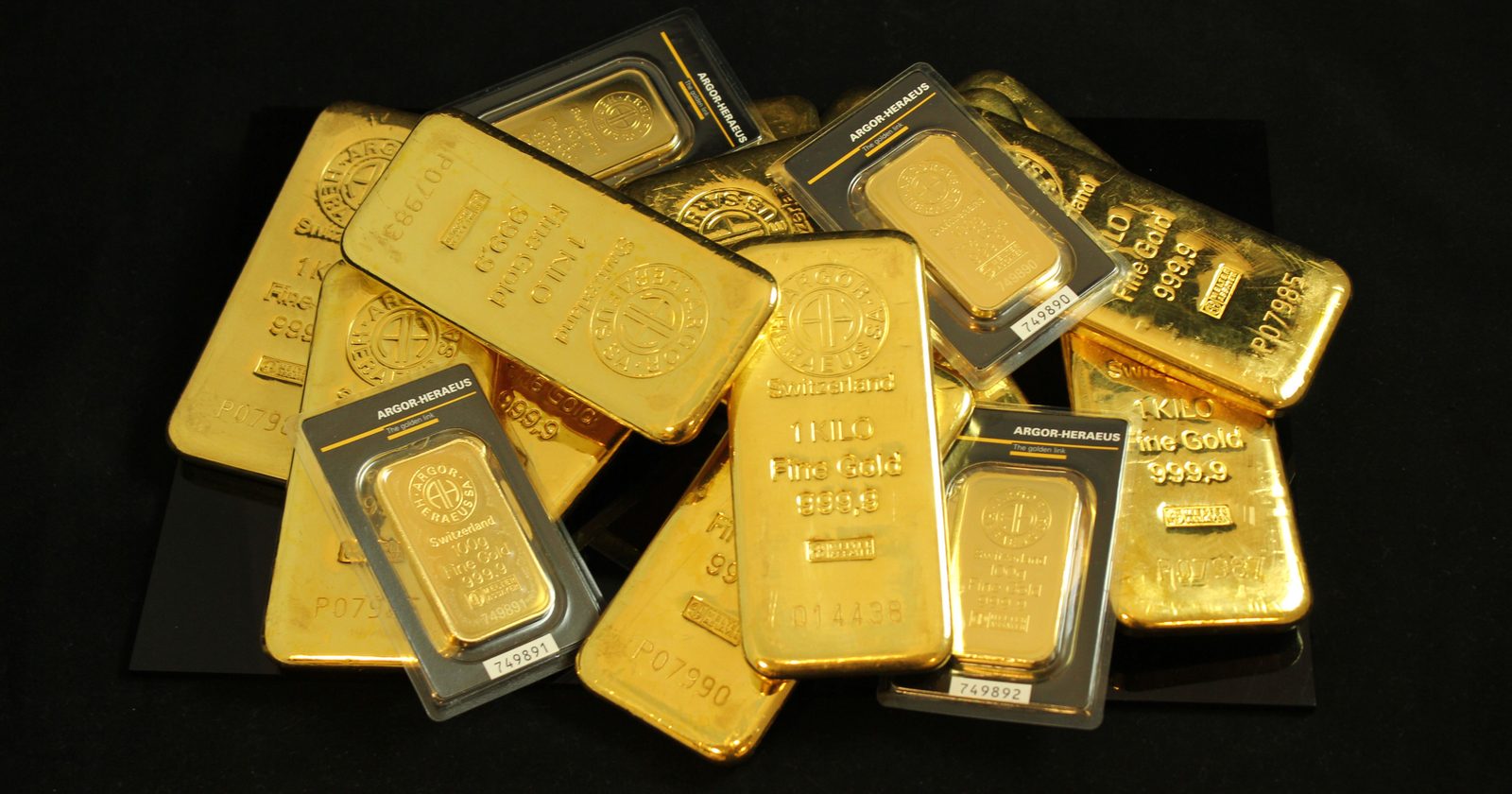
Every ring, tooth filling, coin, gold brick in a vault and speck of gold wiring in a phone adds up to about 220,700 tonnes of gold, according to the World Gold Council’s estimate. Melt all of it into one solid block and it wouldn’t fill a football stadium. It would make a cube about 22.5 metres, or 74 feet, on each side.
The World Gold Council is the industry body that tracks this, and even it is a little surprised by the number. It writes that “if every single ounce of this gold were placed next to each other, the resulting cube of pure gold would only measure around 22.5 metres on each side.” It’s a rounded, illustrative figure, not a precise measurement, so read the 22.5 metres as “about.” The Council calls it “a surprisingly small volume for such a valuable and historically significant metal.”
Our read is that the smallness isn’t a side note to gold’s story. It’s most of the plot.
Why the pile is so small
Two things keep the cube down to building height. The first is that gold is astonishingly heavy. Pure gold has a density of about 19.32 grams per cubic centimetre, close to twenty times the weight of the same volume of water. A shoebox full of it would be a real struggle to lift. So a huge amount of mass packs into a small space, and 220,700 tonnes ends up looking, in cube form, almost disappointing.
The second reason is that there was never much to find. Gold is genuinely rare in the Earth’s crust, and it doesn’t come out of the ground easily. New deposits big enough to be worth mining are getting harder to locate. The Council notes that major discoveries are steadily declining, so most of what’s out there stays put. Gold barely corrodes and doesn’t rust away, which is why the Council says “since gold is virtually indestructible, this means that almost all of this metal is still around in one form or another.” The wedding band on someone’s hand may hold atoms that were once a Roman coin, then a Victorian brooch, then a bar in a bank. The stock builds up and hardly ever leaves.
Where the cube sits today
That single block is a useful fiction, because the gold is really scattered across the world in very different forms.
The Council’s breakdown puts the biggest share, about 45%, or roughly 99,700 tonnes, into jewellery. Necklaces, rings and heirlooms hold nearly half of all the gold ever mined.
Next come bars, coins and the gold held by investment funds, about 23%, near 51,000 tonnes, held purely as an investment. Central banks hold a further 17%, around 38,600 tonnes, the reserves governments keep in their vaults. The rest, roughly 14%, about 31,400 tonnes, covers everything else, including the tiny amounts used in electronics and other technology. The “single cube” splits, very roughly, into a large slice of jewellery, two medium slices of savings, and a thin slice of wiring.
How slowly it grows
You might expect a metal this coveted to be piling up fast. It isn’t.
Mines around the world produced 3,644 tonnes in 2023, up just 1% on the year. The Council reports that output has barely moved for years, with mined production showing almost no change annually between 2018 and 2024. Set 3,600 tonnes against 220,700 and you’re adding under two percent a year. In cube terms, each year’s mining raises the height of that seven-storey block by only a few centimetres.
What’s still underground doesn’t change the picture much. The reserves figure from the US Geological Survey, cited by the Council, puts the gold still worth extracting at around 66,000 tonnes, less than a third of what’s already been brought to the surface. The easy discoveries have mostly been made. The cube will keep growing, but slowly, and there’s a ceiling in sight.
Why the smallness is the point
It’s tempting to read the 74-foot cube as a letdown, as if all that history should have added up to more. We’d argue the opposite. A stock that is small, hard to add to, and almost impossible to destroy is close to the ideal recipe for something people trust to hold its value over long stretches of time.
Think about what makes a poor store of value: things you can print more of, or that rot, rust, or get used up. Gold avoids all three problems. Nobody can conjure up a new seam of it, the yearly top-up is small and predictable, and what exists tends to stick around for centuries. The very qualities that keep the cube so modest, its rarity and its permanence, are the ones that turned a soft yellow metal into money in the first place. The building-sized block isn’t a sign that gold is scarce despite its status. It’s a large part of why gold earned that status at all.